Zanetti Marcus V, Otaduy Maria C, de Sousa Rafael T, Gattaz Wagner F, Busatto Geraldo F, Leite Claudia C, Machado-Vieira Rodrigo
Mood Disorders Program, Laboratory of Neuroscience (LIM-27), Department and Institute of Psychiatry, University of Sao Paulo, Brazil (Drs Zanetti, de Sousa, Gattaz, and Machado-Vieira); Center for Interdisciplinary Research on Applied Neurosciences (NAPNA), University of São Paulo, Brazil (Drs Zanetti, Gattaz, Busatto, and Machado-Vieira); Laboratory of Psychiatric Neuroimaging, LIM-21, Department and Institute of Psychiatry, University of Sao Paulo, Brazil (Drs Zanetti and Busatto); Department of Radiology, University of Sao Paulo, Brazil (Drs Otaduy and Leite); Experimental Therapeutics and Pathophysiology Branch (ETPB), National Institute of Mental Health, NIH, Bethesda, MD (Dr Machado-Vieira).
Int J Neuropsychopharmacol. 2014 Oct 31;18(6):pyu058. doi: 10.1093/ijnp/pyu058.
The hippocampus has been highly implicated in the pathophysiology of bipolar disorder (BD). Nevertheless, no study has longitudinally evaluated hippocampal metabolite levels in bipolar depression under treatment with lithium.
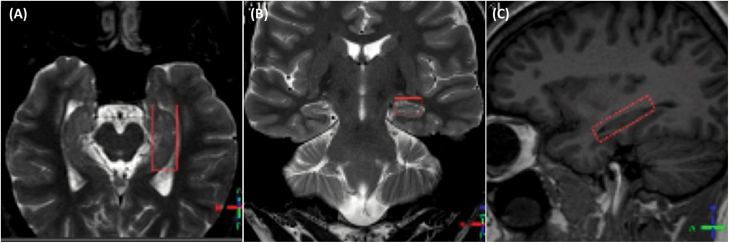
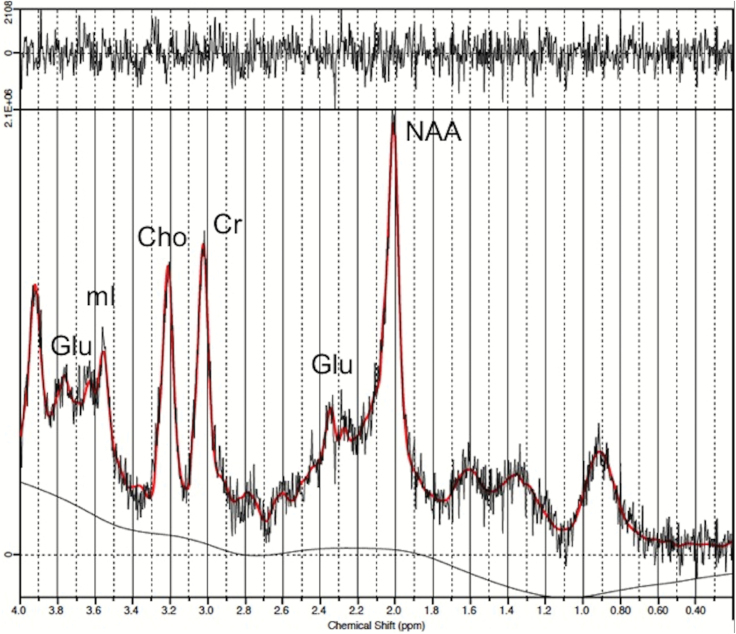
Nineteen medication-free BD patients (78.9% treatment-naïve and 73.7% with BD type II) presenting an acute depressive episode and 17 healthy controls were studied. Patients were treated for 6 weeks with lithium in an open-label trial. N-acetyl aspartate (NAA), creatine, choline, myo-Inositol, and glutamate levels were assessed in the left hippocampus before (week 0) and after (week 6) lithium treatment using 3T proton magnetic resonance spectroscopy (1H-MRS). The metabolite concentrations were estimated using internal water as reference and voxel segmentation for partial volume correction.
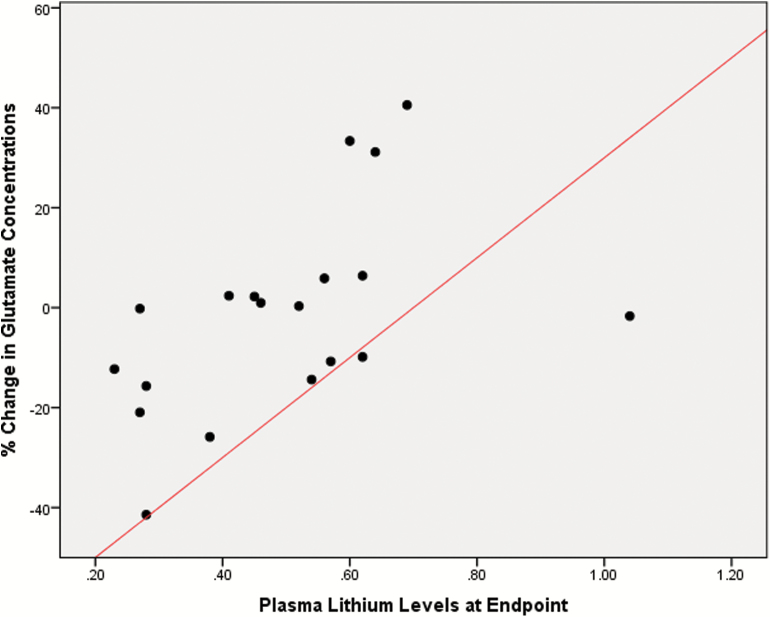
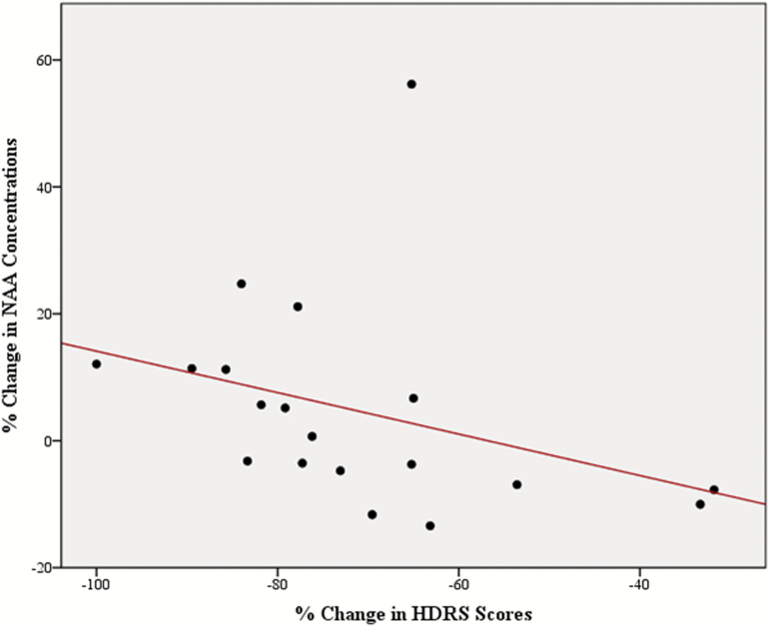
At baseline, acutely depressed BD patients and healthy controls exhibited similar hippocampal metabolites concentrations, with no changes after 6 weeks of lithium monotherapy. A significant correlation between antidepressant efficacy and increases in NAA concentration over time was observed. Also, there was a significant positive correlation between the changes in glutamate concentrations over follow-up and plasma lithium levels at endpoint. Mixed effects model analysis revealed a bimodal effect of lithium plasma levels in hippocampal glutamate concentrations: levels of 0.2 to 0.49 mmol/L (n=9) were associated with a decrease in glutamate concentrations, whereas the subgroup of BD subjects with "standard" lithium levels (≥ 0.50 mmol/L; n = 10) showed an overall increase in glutamate concentrations over time.
These preliminary results suggest that lithium has a bimodal action in hippocampal glutamate concentration depending on the plasma levels.
海马体与双相情感障碍(BD)的病理生理学高度相关。然而,尚无研究纵向评估锂盐治疗下双相抑郁患者海马体代谢物水平。
对19例无用药史的BD患者(78.9%为初治患者,73.7%为II型BD患者)进行研究,这些患者正处于急性抑郁发作期,另有17名健康对照者。在一项开放标签试验中,患者接受锂盐治疗6周。在锂盐治疗前(第0周)和治疗后(第6周),使用3T质子磁共振波谱(1H-MRS)评估左侧海马体中N-乙酰天门冬氨酸(NAA)、肌酸、胆碱、肌醇和谷氨酸水平。代谢物浓度以体内水为参照进行估算,并采用体素分割法进行部分容积校正。
基线时,急性抑郁的BD患者和健康对照者海马体代谢物浓度相似,锂盐单药治疗6周后无变化。观察到抗抑郁疗效与NAA浓度随时间增加之间存在显著相关性。此外,随访期间谷氨酸浓度变化与终点时血浆锂水平之间存在显著正相关。混合效应模型分析显示,血浆锂水平对海马体谷氨酸浓度有双峰效应:0.2至0.49 mmol/L组(n = 9)谷氨酸浓度降低,而“标准”锂水平(≥ 0.50 mmol/L;n = 10)的BD患者亚组谷氨酸浓度随时间总体升高。
这些初步结果表明,锂盐对海马体谷氨酸浓度的作用取决于血浆水平,呈双峰模式。