Sampei Zenjiro, Igawa Tomoyuki, Soeda Tetsuhiro, Funaki Miho, Yoshihashi Kazutaka, Kitazawa Takehisa, Muto Atsushi, Kojima Tetsuo, Nakamura Satoshi, Hattori Kunihiro
a Research Division; Chugai Pharmaceutical Co., Ltd ; Tokyo , Japan.
MAbs. 2015;7(1):120-8. doi: 10.4161/19420862.2015.989028.
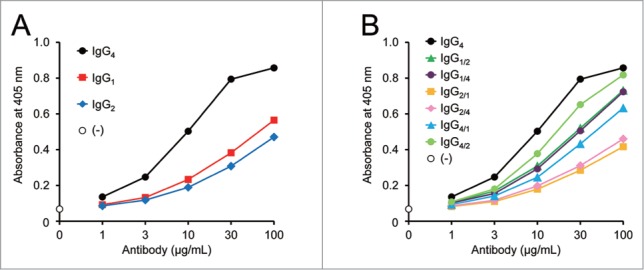
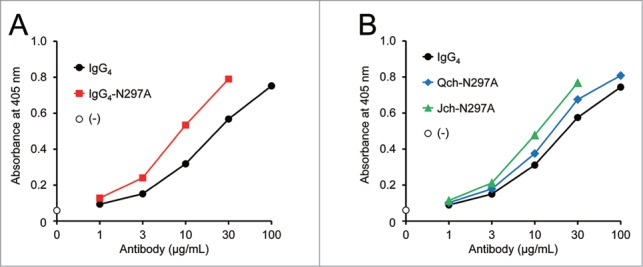
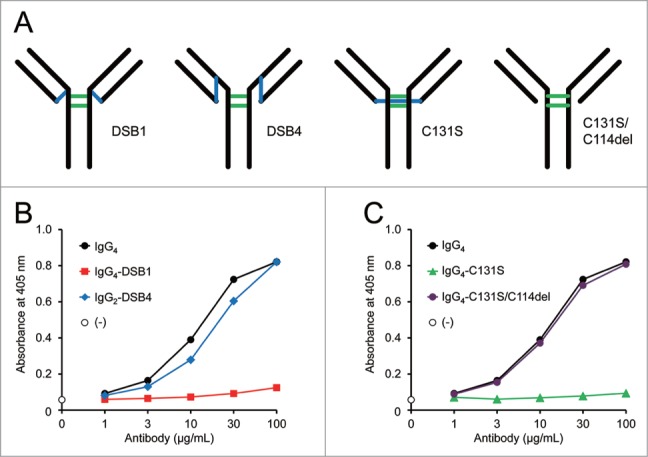
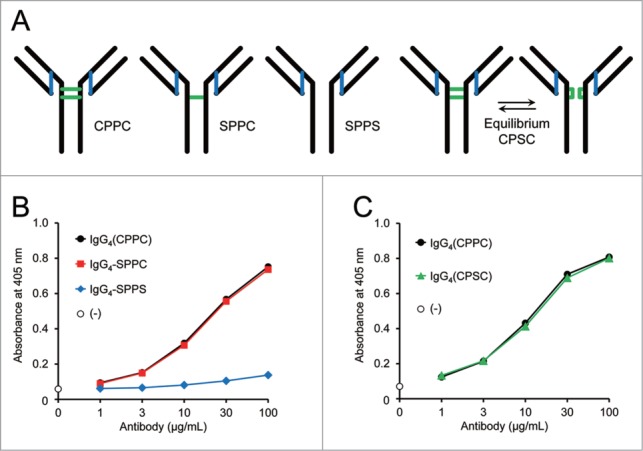
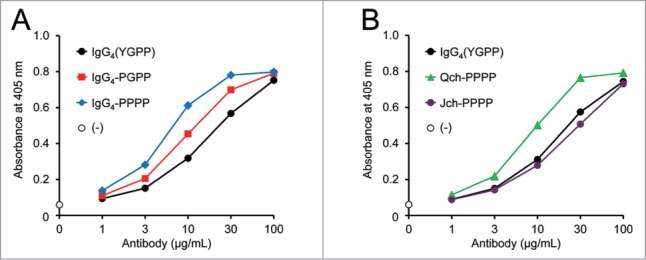
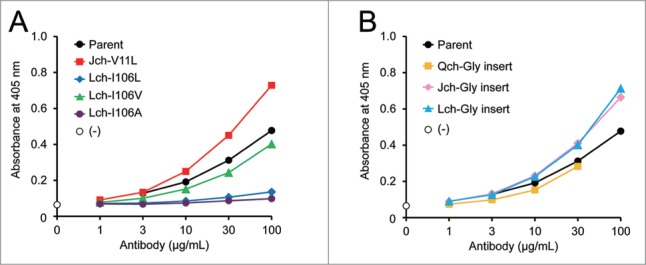
While antibody engineering improves the properties of therapeutic antibodies, optimization of regions that do not contact antigens has been mainly focused on modifying the effector functions and pharmacokinetics of antibodies. We recently reported an asymmetric anti-FIXa/FX bispecific IgG4 antibody, ACE910, which mimics the cofactor function of FVIII by placing the two factors into spatial proximity for the treatment of hemophilia A. During the optimization process, we found that the activity was significantly affected by IgG subclass and by modifications to the inter-chain disulfide bonds, upper hinge region, elbow hinge region, and Fc glycan, even though these regions were unlikely to come into direct contact with the antigens. Of these non-antigen-contacting regions, the tertiary structure determined by the inter-chain disulfide bonds was found to strongly affect the FVIII-mimetic activity. Interestingly, IgG4-like disulfide bonds between Cys131 in the heavy chain and Cys114 in the light chain, and disulfide bonds between the two heavy chains at the hinge region were indispensable for the high FVIII-mimetic activity. Moreover, proline mutations in the upper hinge region and removal of the Fc glycan enhanced the FVIII-mimetic activity, suggesting that flexibility of the upper hinge region and the Fc portion structure are important for the FVIII-mimetic activity. This study suggests that these non-antigen-contacting regions can be engineered to improve the biological activity of IgG antibodies with functions similar to ACE910, such as placing two antigens into spatial proximity, retargeting effector cells to target cells, or co-ligating two identical or different antigens on the same cell.
虽然抗体工程改善了治疗性抗体的特性,但对抗原非接触区域的优化主要集中在修饰抗体的效应功能和药代动力学上。我们最近报道了一种不对称抗FIXa/FX双特异性IgG4抗体ACE910,它通过将两种因子置于空间接近位置来模拟FVIII的辅因子功能,用于治疗A型血友病。在优化过程中,我们发现活性受到IgG亚类以及链间二硫键、上铰链区、肘铰链区和Fc聚糖修饰的显著影响,尽管这些区域不太可能与抗原直接接触。在这些非抗原接触区域中,发现由链间二硫键决定的三级结构强烈影响FVIII模拟活性。有趣的是,重链中的Cys131与轻链中的Cys114之间的IgG4样二硫键以及铰链区两条重链之间的二硫键对于高FVIII模拟活性是不可或缺的。此外,上铰链区的脯氨酸突变和Fc聚糖的去除增强了FVIII模拟活性,表明上铰链区的灵活性和Fc部分结构对于FVIII模拟活性很重要。这项研究表明,可以对这些非抗原接触区域进行工程改造,以改善具有类似于ACE910功能的IgG抗体的生物学活性,例如将两种抗原置于空间接近位置、将效应细胞重定向至靶细胞或在同一细胞上共同连接两种相同或不同的抗原。