Gianfelice Antonella, Le Phuong H B, Rigano Luciano A, Saila Susan, Dowd Georgina C, McDivitt Tina, Bhattacharya Nilakshee, Hong Wanjin, Stagg Scott M, Ireton Keith
Department of Microbiology and Immunology, University of Otago, Dunedin, New Zealand.
Department of Molecular Genetics, University of Toronto, Toronto, ON, Canada.
Cell Microbiol. 2015 Jun;17(6):876-92. doi: 10.1111/cmi.12409. Epub 2015 Jan 26.
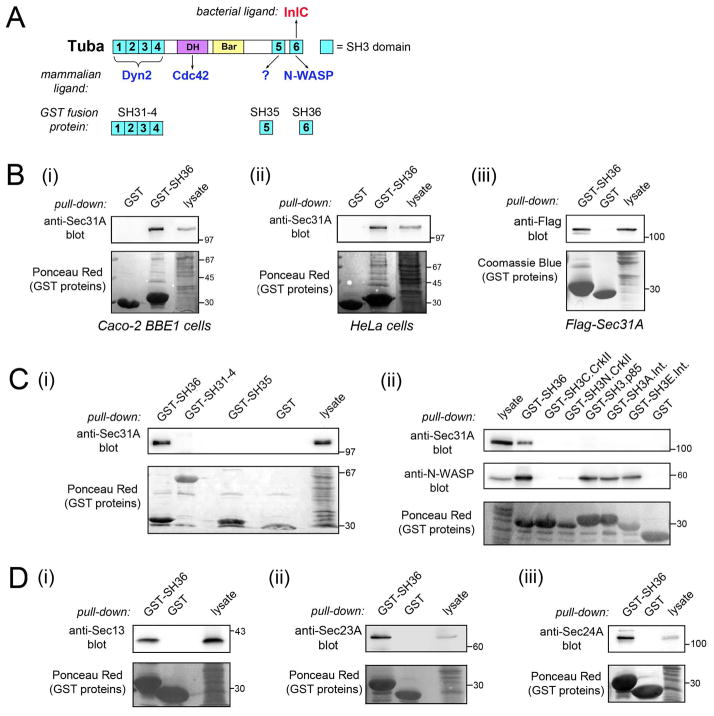
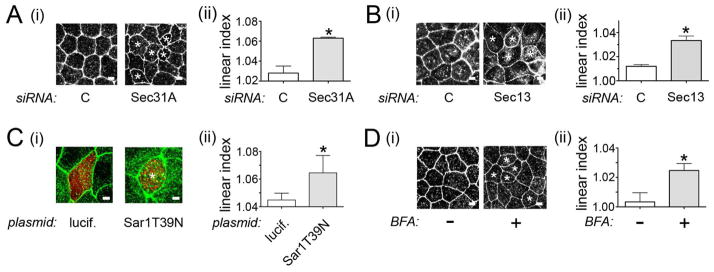
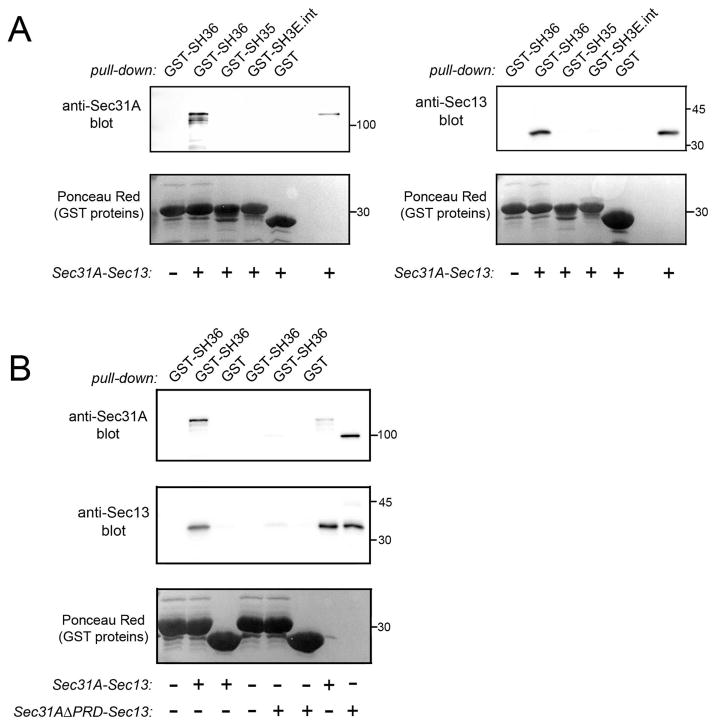
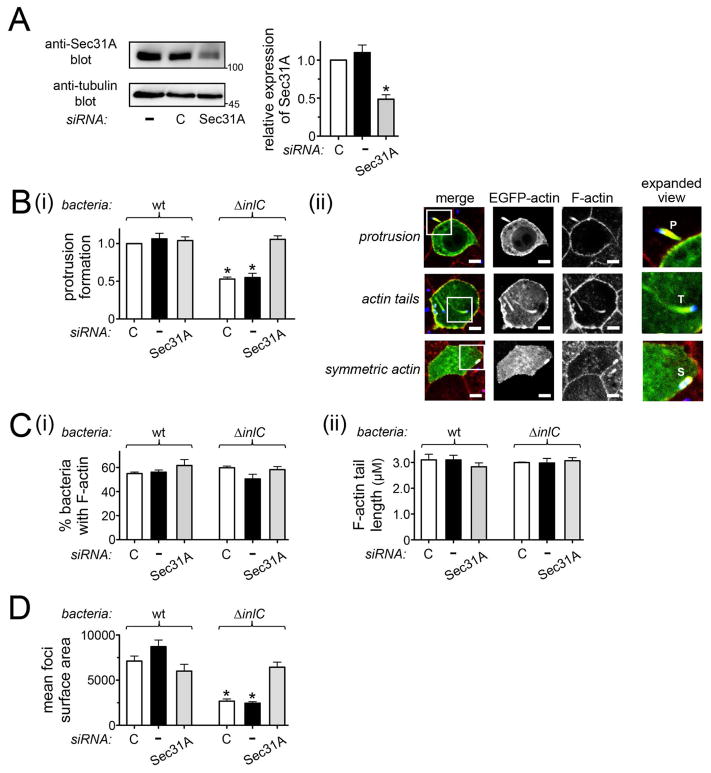
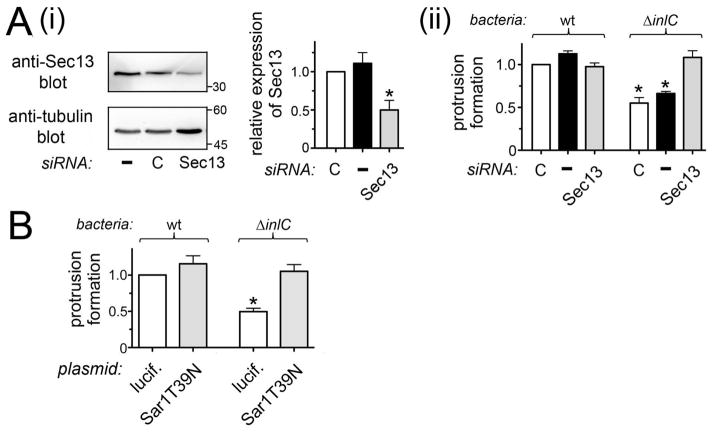
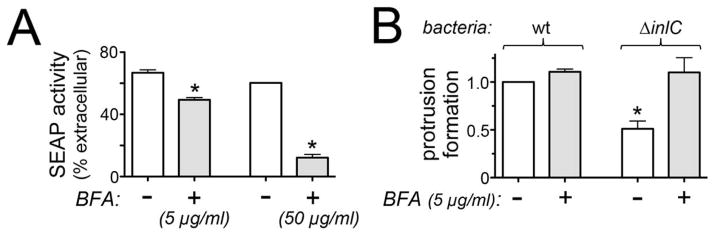
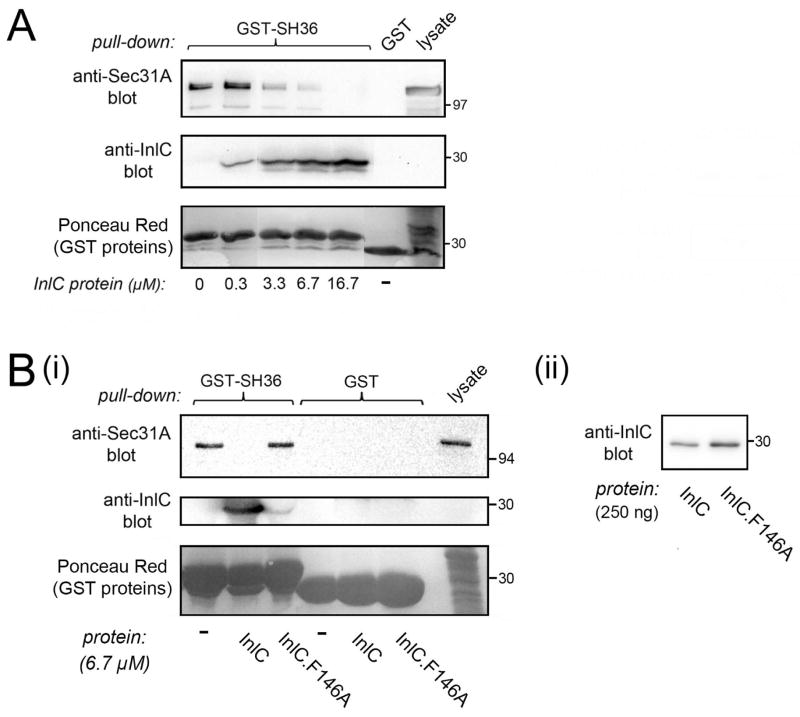
Listeria monocytogenes is a food-borne pathogen that uses actin-dependent motility to spread between human cells. Cell-to-cell spread involves the formation by motile bacteria of plasma membrane-derived structures termed 'protrusions'. In cultured enterocytes, the secreted Listeria protein InlC promotes protrusion formation by binding and inhibiting the human scaffolding protein Tuba. Here we demonstrate that protrusions are controlled by human COPII components that direct trafficking from the endoplasmic reticulum. Co-precipitation experiments indicated that the COPII proteins Sec31A and Sec13 interact directly with a Src homology 3 domain in Tuba. This interaction was antagonized by InlC. Depletion of Sec31A or Sec13 restored normal protrusion formation to a Listeria mutant lacking inlC, without affecting spread of wild-type bacteria. Genetic impairment of the COPII component Sar1 or treatment of cells with brefeldin A affected protrusions similarly to Sec31A or Sec13 depletion. These findings indicated that InlC relieves a host-mediated restriction of Listeria spread otherwise imposed by COPII. Inhibition of Sec31A, Sec13 or Sar1 or brefeldin A treatment also perturbed the structure of cell-cell junctions. Collectively, these findings demonstrate an important role for COPII in controlling Listeria spread. We propose that COPII may act by delivering host proteins that generate tension at cell junctions.
单核细胞增生李斯特菌是一种食源性病原体,它利用肌动蛋白依赖性运动在人体细胞间传播。细胞间传播涉及运动性细菌形成源自质膜的结构,称为“突起”。在培养的肠上皮细胞中,分泌的李斯特菌蛋白InlC通过结合并抑制人类支架蛋白Tuba来促进突起形成。在此,我们证明突起受人类COPII组分控制,这些组分指导从内质网的转运。共沉淀实验表明,COPII蛋白Sec31A和Sec13直接与Tuba中的一个Src同源3结构域相互作用。这种相互作用被InlC拮抗。Sec31A或Sec13的缺失使缺乏InlC的李斯特菌突变体恢复正常的突起形成,而不影响野生型细菌的传播。COPII组分Sar1的基因损伤或用布雷菲德菌素A处理细胞对突起的影响与Sec31A或Sec13缺失类似。这些发现表明,InlC解除了宿主介导的对李斯特菌传播的限制,否则这种限制由COPII施加。抑制Sec31A、Sec13或Sar1或用布雷菲德菌素A处理也扰乱了细胞间连接的结构。总的来说,这些发现证明了COPII在控制李斯特菌传播中起重要作用。我们提出,COPII可能通过递送在细胞连接处产生张力的宿主蛋白来发挥作用。