Daher Jalil, Martin Maud, Rousseau Alexandre, Nuyens Vincent, Fayyad-Kazan Hussein, Van Antwerpen Pierre, Courbebaisse Guy, Martiat Philippe, Badran Bassam, Dequiedt Frank, Zouaoui Boudjeltia Karim, Vanhamme Luc
Institute for Molecular Biology and Medicine (IBMM), Université Libre de Bruxelles, rue des Professeurs Jeener et Brachet 12, 6041 Gosselies, Belgium.
Laboratory of Protein Signaling and Interactions, Interdisciplinary Cluster for Applied Genoproteomics (GIGA-R), University of Liège, Avnue de l'Hopital 1 (B34), 4000 Sart-Tilman, Belgium.
Mediators Inflamm. 2014;2014:134635. doi: 10.1155/2014/134635. Epub 2014 Nov 2.
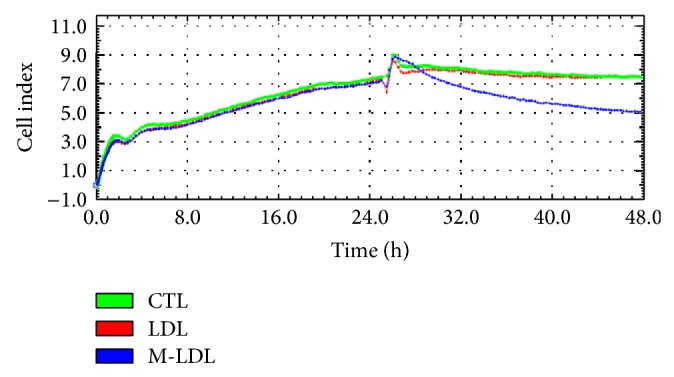
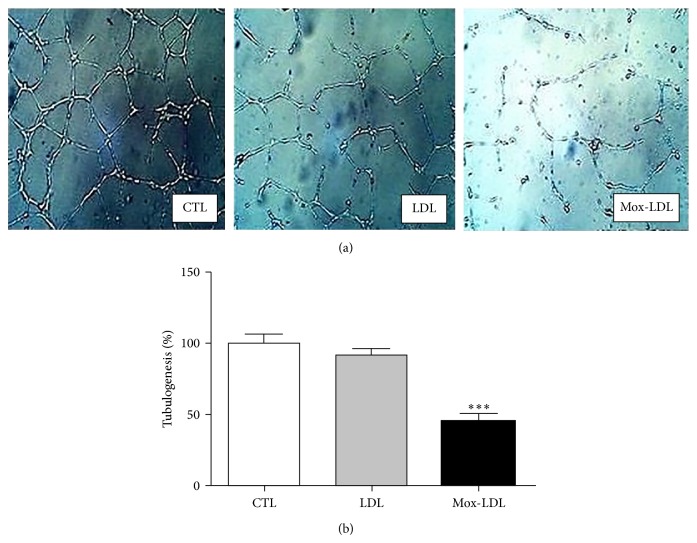
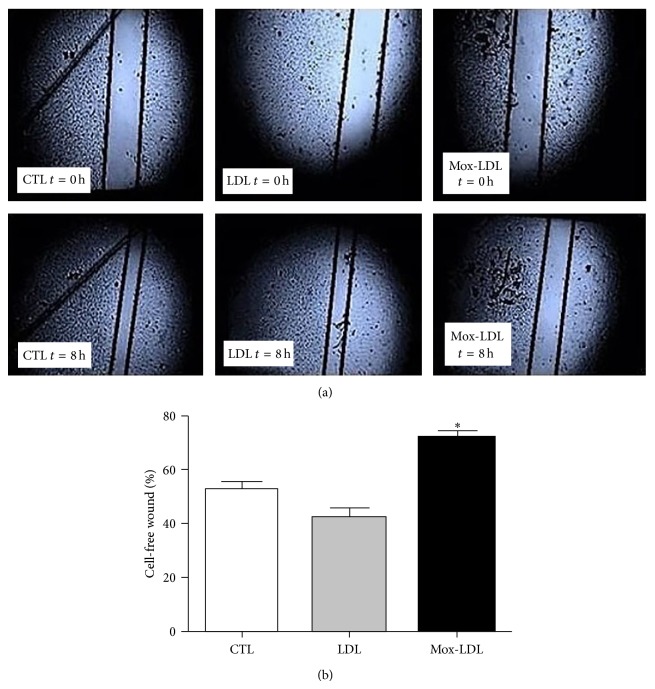
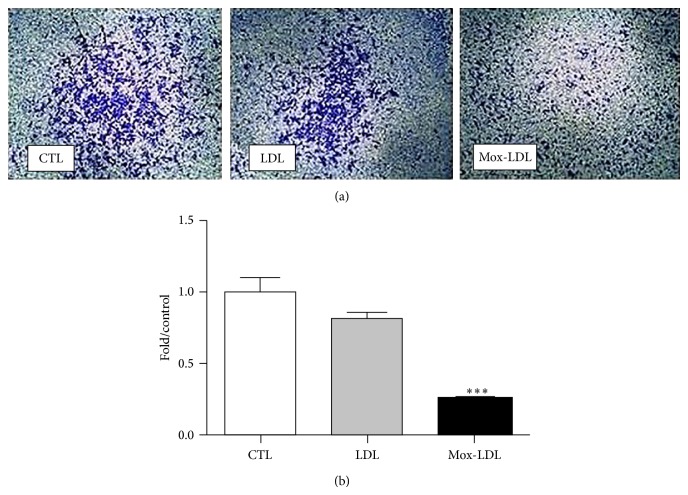
Cardiovascular disease linked to atherosclerosis is the leading cause of death worldwide. Atherosclerosis is mainly linked to dysfunction in vascular endothelial cells and subendothelial accumulation of oxidized forms of LDL. In the present study, we investigated the role of myeloperoxidase oxidized LDL (Mox-LDL) in endothelial cell dysfunction. We studied the effect of proinflammatory Mox-LDL treatment on endothelial cell motility, a parameter essential for normal vascular processes such as angiogenesis and blood vessel repair. This is particularly important in the context of an atheroma plaque, where vascular wall integrity is affected and interference with its repair could contribute to progression of the disease. We investigated in vitro the effect of Mox-LDL on endothelial cells angiogenic properties and we also studied the signalling pathways that could be affected by analysing Mox-LDL effect on the expression of angiogenesis-related genes. We report that Mox-LDL inhibits endothelial cell motility and tubulogenesis through an increase in miR-22 and heme oxygenase 1 expression. Our in vitro data indicate that Mox-LDL interferes with parameters associated with angiogenesis. They suggest that high LDL levels in patients would impair their endothelial cell capacity to cope with a damaged endothelium contributing negatively to the progression of the atheroma plaque.
与动脉粥样硬化相关的心血管疾病是全球主要的死亡原因。动脉粥样硬化主要与血管内皮细胞功能障碍以及低密度脂蛋白氧化形式在血管内皮细胞下的积累有关。在本研究中,我们调查了髓过氧化物酶氧化型低密度脂蛋白(Mox-LDL)在内皮细胞功能障碍中的作用。我们研究了促炎性Mox-LDL处理对内皮细胞迁移的影响,内皮细胞迁移是血管生成和血管修复等正常血管过程所必需的参数。在动脉粥样斑块的情况下,这一点尤为重要,因为此时血管壁完整性受到影响,干扰其修复可能会导致疾病进展。我们在体外研究了Mox-LDL对内皮细胞血管生成特性的影响,并且还通过分析Mox-LDL对血管生成相关基因表达的影响来研究可能受影响的信号通路。我们报告称,Mox-LDL通过增加miR-22和血红素加氧酶1的表达来抑制内皮细胞迁移和管状结构形成。我们的体外数据表明,Mox-LDL会干扰与血管生成相关的参数。这些数据表明,患者体内的高LDL水平会损害其内皮细胞应对受损内皮的能力,对动脉粥样斑块的进展产生负面影响。