Irion Uwe, Frohnhöfer Hans Georg, Krauss Jana, Çolak Champollion Tuǧba, Maischein Hans-Martin, Geiger-Rudolph Silke, Weiler Christian, Nüsslein-Volhard Christiane
Max Planck Institute for Developmental Biology, Tübingen, Germany.
Elife. 2014 Dec 23;3:e05125. doi: 10.7554/eLife.05125.
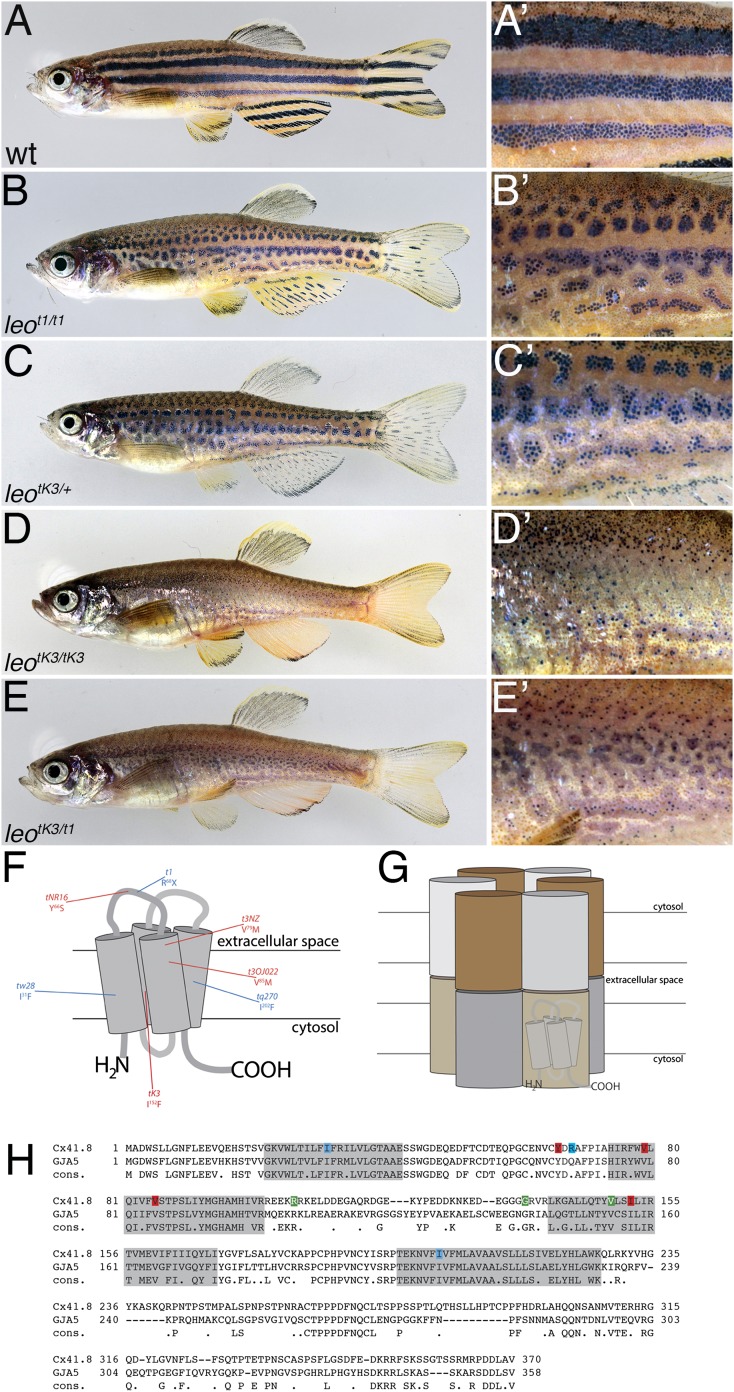
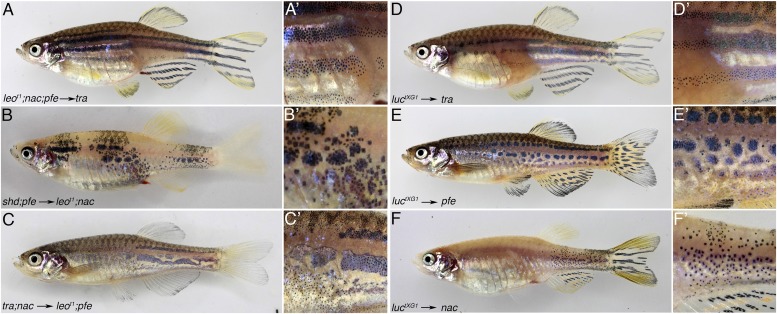
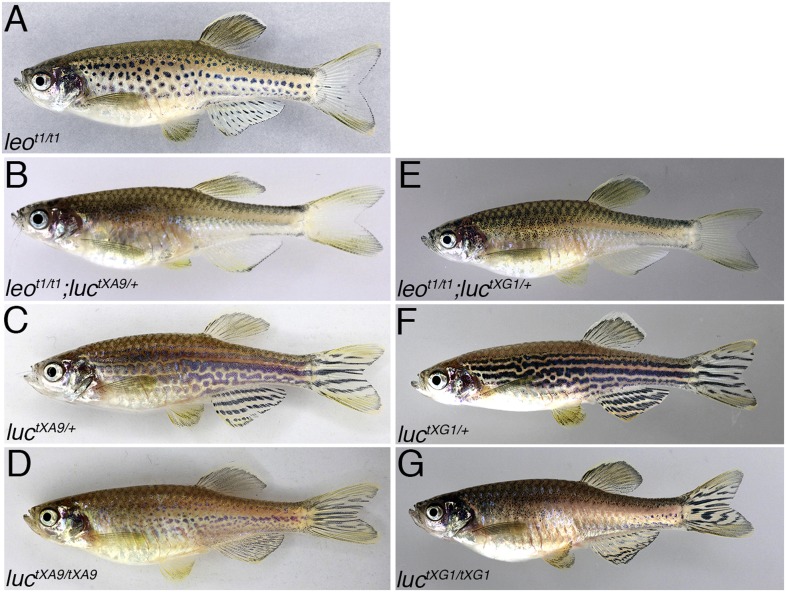
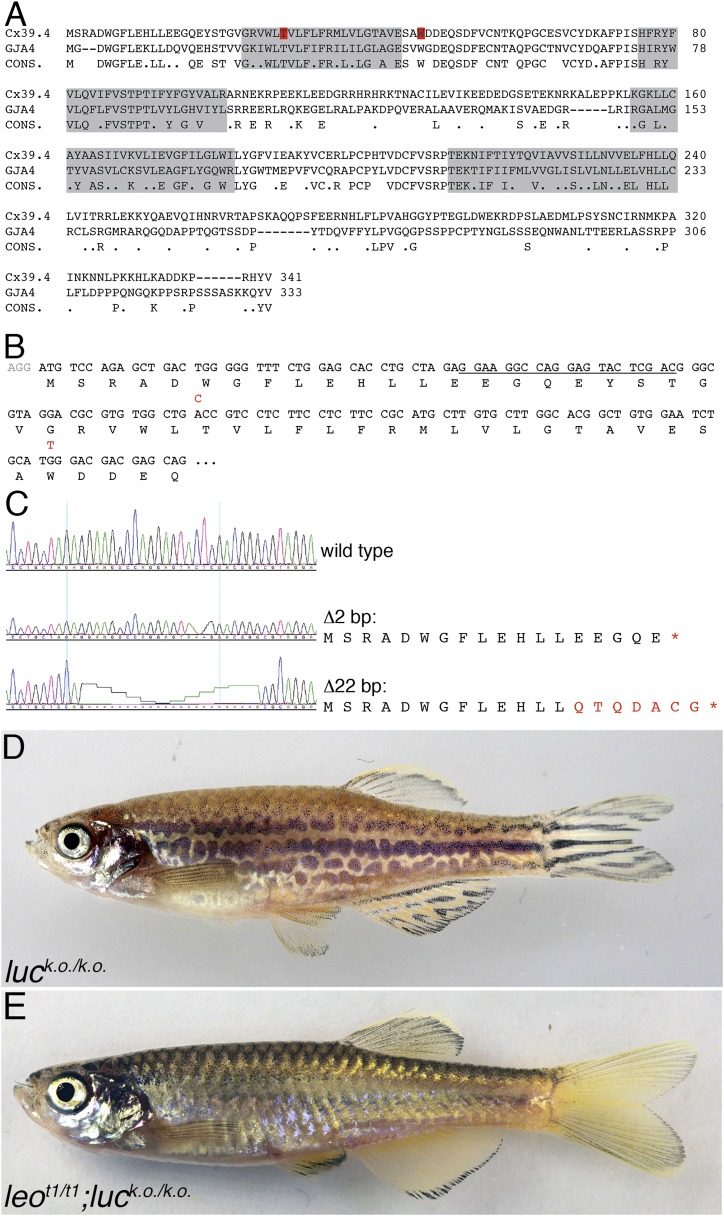
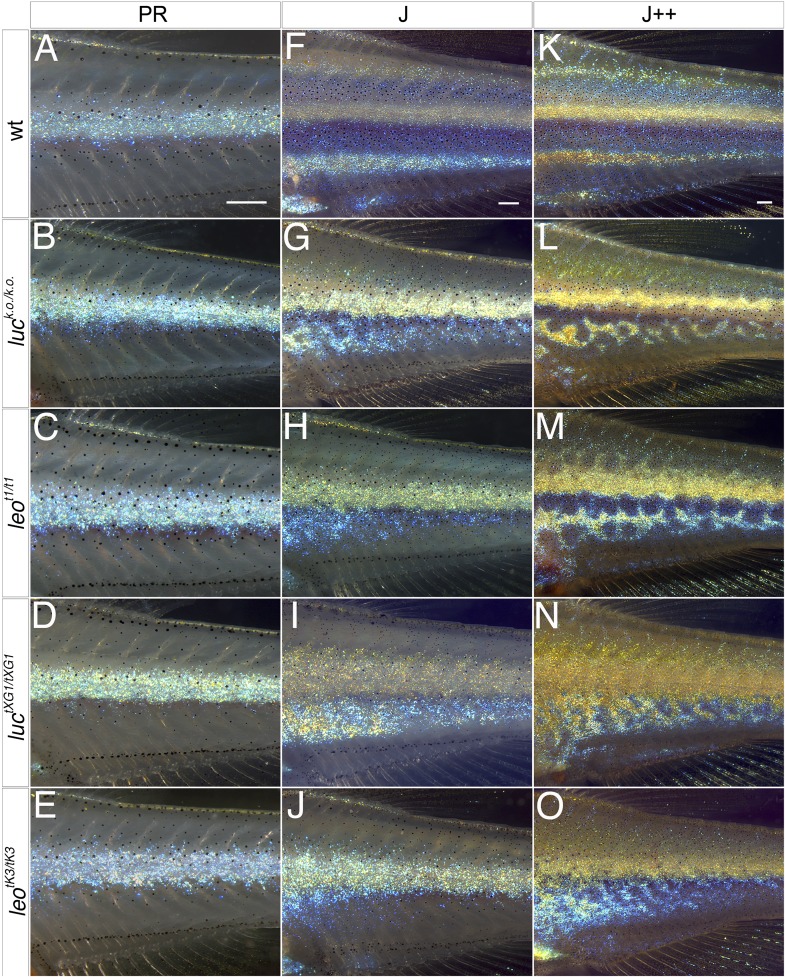
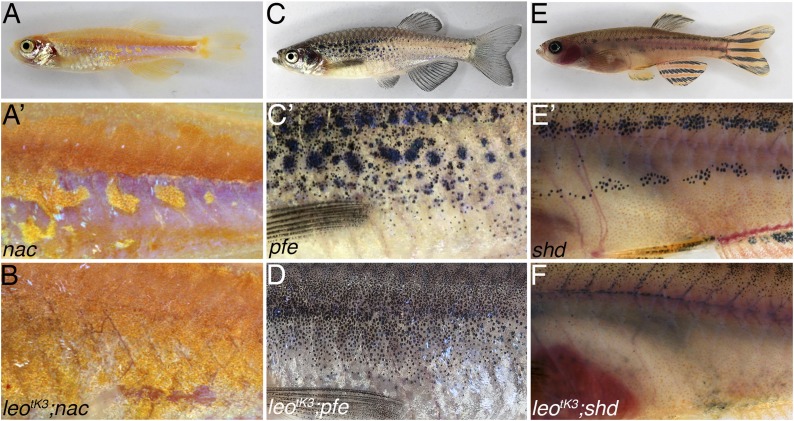
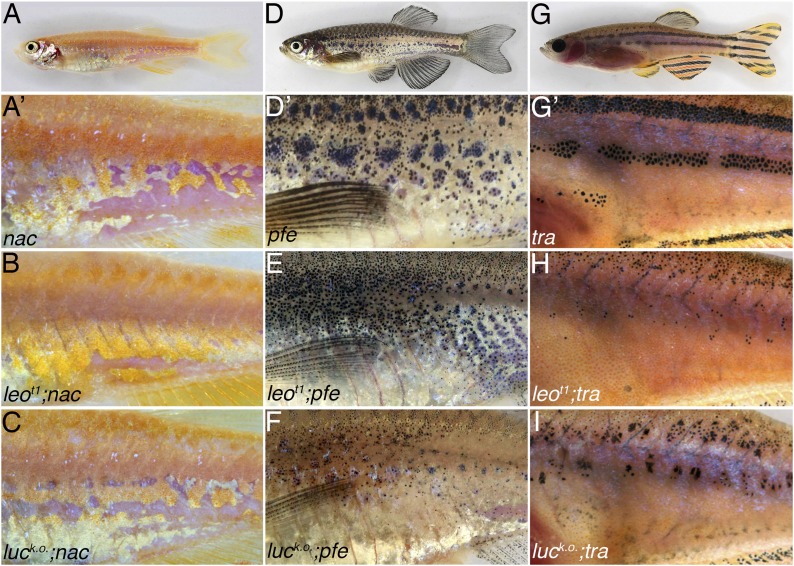
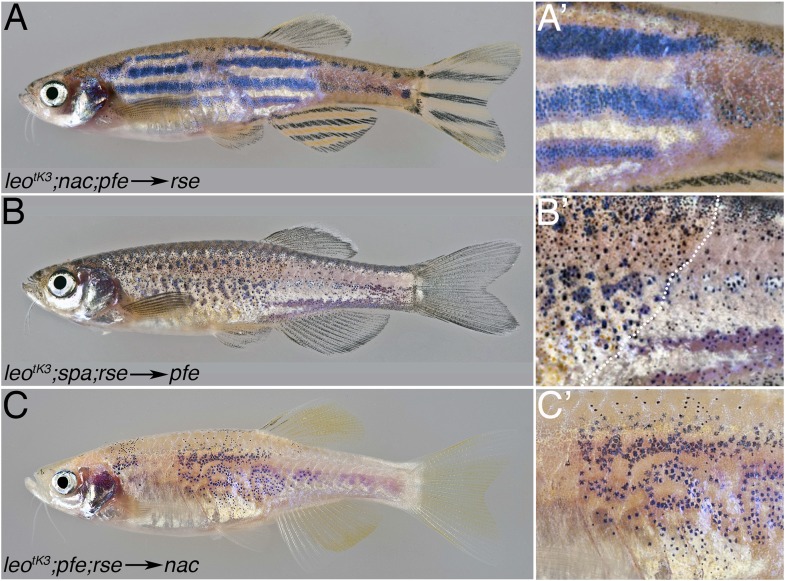
Interactions between all three pigment cell types are required to form the stripe pattern of adult zebrafish (Danio rerio), but their molecular nature is poorly understood. Mutations in leopard (leo), encoding Connexin 41.8 (Cx41.8), a gap junction subunit, cause a phenotypic series of spotted patterns. A new dominant allele, leo(tK3), leads to a complete loss of the pattern, suggesting a dominant negative impact on another component of gap junctions. In a genetic screen, we identified this component as Cx39.4 (luchs). Loss-of-function alleles demonstrate that luchs is required for stripe formation in zebrafish; however, the fins are almost not affected. Double mutants and chimeras, which show that leo and luchs are only required in xanthophores and melanophores, but not in iridophores, suggest that both connexins form heteromeric gap junctions. The phenotypes indicate that these promote homotypic interactions between melanophores and xanthophores, respectively, and those cells instruct the patterning of the iridophores.
成年斑马鱼(Danio rerio)形成条纹图案需要所有三种色素细胞类型之间的相互作用,但其分子本质却知之甚少。编码缝隙连接亚基Connexin 41.8(Cx41.8)的leopard(leo)基因发生突变会导致一系列斑点图案的表型。一个新的显性等位基因leo(tK3)会导致图案完全消失,这表明它对缝隙连接的另一个成分有显性负效应。在一次遗传筛选中,我们确定这个成分是Cx39.4(luchs)。功能丧失等位基因表明luchs是斑马鱼条纹形成所必需的;然而,鳍几乎不受影响。双突变体和嵌合体表明leo和luchs仅在黄色素细胞和黑色素细胞中起作用,而在虹彩细胞中不起作用,这表明这两种连接蛋白形成了异源缝隙连接。这些表型表明,它们分别促进黑色素细胞和黄色素细胞之间的同型相互作用,并且这些细胞指导虹彩细胞的图案形成。