Tan-Sindhunata M Brigita, Mathijssen Inge B, Smit Margriet, Baas Frank, de Vries Johanna I, van der Voorn J Patrick, Kluijt Irma, Hagen Marleen A, Blom Eveline W, Sistermans Erik, Meijers-Heijboer Hanne, Waisfisz Quinten, Weiss Marjan M, Groffen Alexander J
Department of Clinical Genetics, VU University Medical Center, Amsterdam, The Netherlands.
Department of Clinical Genetics, Academic Medical Center, Amsterdam, The Netherlands.
Eur J Hum Genet. 2015 Sep;23(9):1151-7. doi: 10.1038/ejhg.2014.273. Epub 2014 Dec 24.
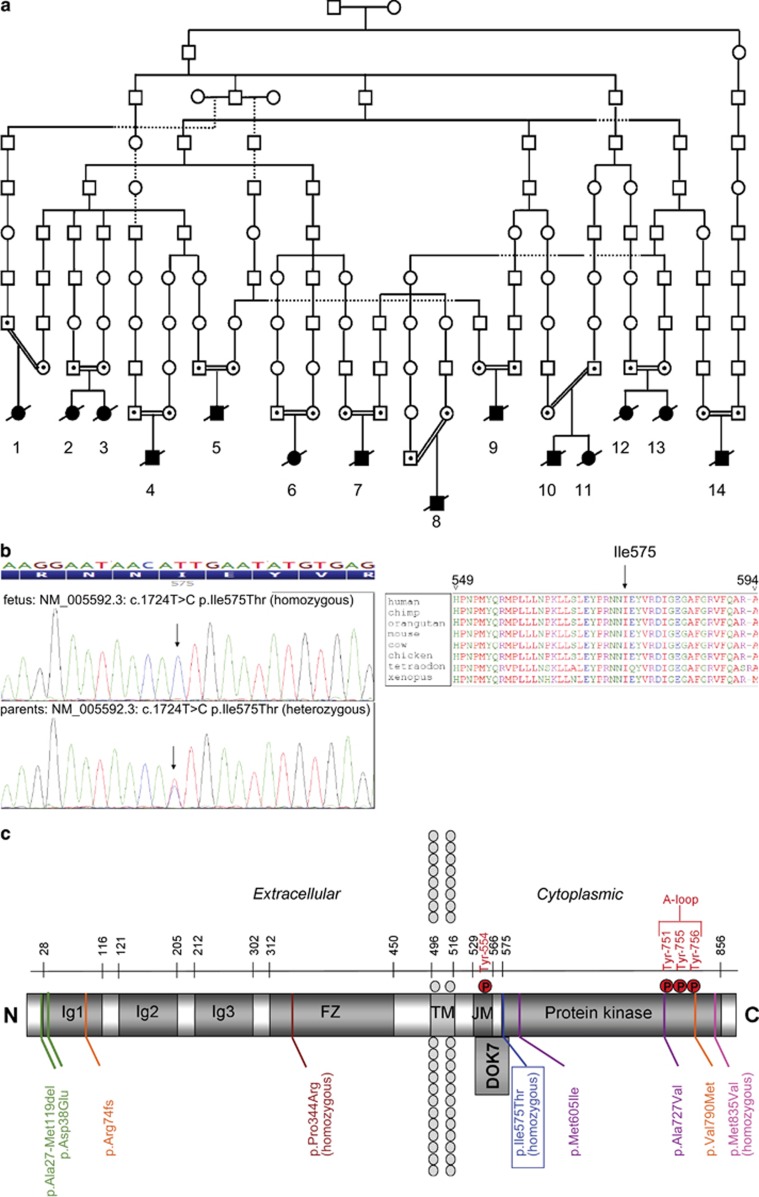
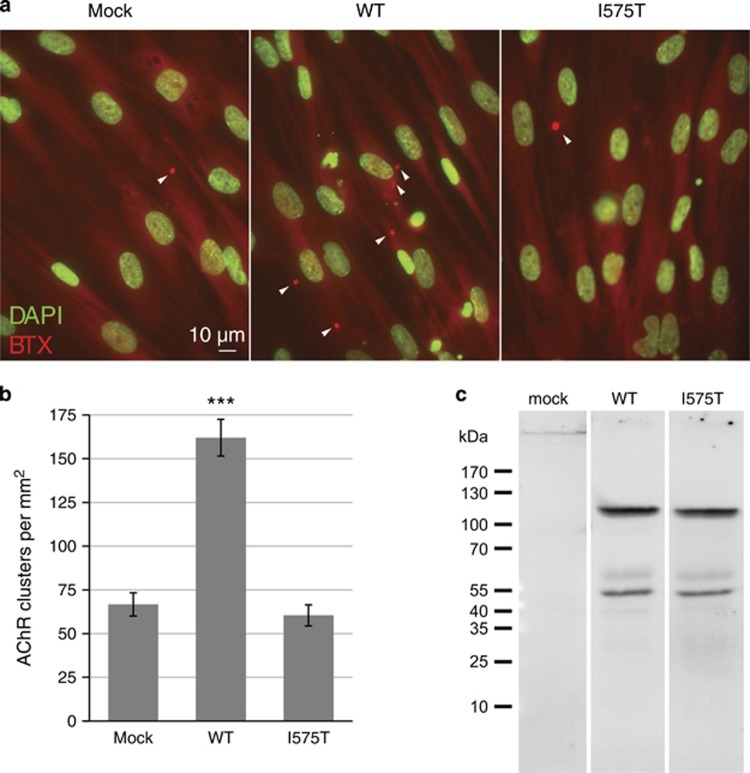
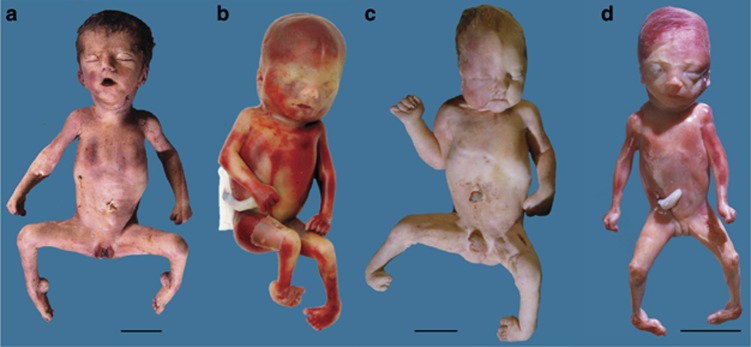
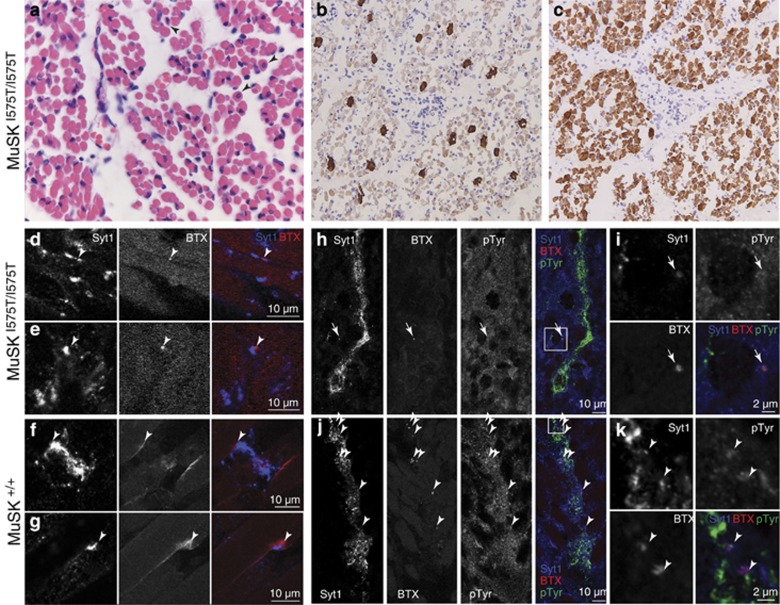
Fetal akinesia deformation sequence (FADS) refers to a clinically and genetically heterogeneous group of disorders with congenital malformations related to impaired fetal movement. FADS can result from mutations in CHRNG, CHRNA1, CHRND, DOK7 and RAPSN; however, these genes only account for a minority of cases. Here we identify MUSK as a novel cause of lethal FADS. Fourteen affected fetuses from a Dutch genetic isolate were traced back to common ancestors 11 generations ago. Homozygosity mapping in two fetuses revealed MUSK as a candidate gene. All tested cases carried an identical homozygous variant c.1724T>C; p.(Ile575Thr) in the intracellular domain of MUSK. The carrier frequency in the genetic isolate was 8%, exclusively found in heterozygous carriers. Consistent with the established role of MUSK as a tyrosine kinase that orchestrates neuromuscular synaptogenesis, the fetal myopathy was accompanied by impaired acetylcholine receptor clustering and reduced tyrosine kinase activity at motor nerve endings. A functional assay in myocytes derived from human fetuses confirmed that the variant blocks MUSK-dependent motor endplate formation. Taken together, the results strongly support a causal role of this founder mutation in MUSK, further expanding the gene set associated with FADS and offering new opportunities for prenatal genetic testing.
胎儿运动不能变形序列征(FADS)指的是一组临床和遗传异质性疾病,伴有与胎儿运动受损相关的先天性畸形。FADS可由CHRNG、CHRNA1、CHRND、DOK7和RAPSN的突变引起;然而,这些基因仅占少数病例。在此,我们确定MUSK是致死性FADS的一个新病因。来自荷兰一个遗传隔离群体的14例患病胎儿可追溯到11代以前的共同祖先。对两名胎儿进行纯合性定位分析,发现MUSK是一个候选基因。所有检测病例在MUSK细胞内结构域均携带相同的纯合变异c.1724T>C;p.(Ile575Thr)。该遗传隔离群体中的携带频率为8%,仅见于杂合携带者。与MUSK作为协调神经肌肉突触形成的酪氨酸激酶的既定作用一致,胎儿肌病伴有乙酰胆碱受体聚集受损以及运动神经末梢酪氨酸激酶活性降低。对源自人类胎儿的心肌细胞进行的功能试验证实,该变异阻断了MUSK依赖的运动终板形成。综上所述,这些结果有力地支持了这个奠基者突变在MUSK中的因果作用,进一步扩展了与FADS相关的基因集,并为产前基因检测提供了新的机会。