Zhou Luyi, Sun Wei-Lun, Young Amy B, Lee Kunhee, McGinty Jacqueline F, See Ronald E
Department of Neurosciences, Medical University of South Carolina, Charleston, South Carolina (Drs Zhou, Sun, Young, Lee, McGinty, and See).
Int J Neuropsychopharmacol. 2014 Oct 31;18(1):pyu009. doi: 10.1093/ijnp/pyu009.
Oxytocin, a neurohypophyseal neuropeptide, is a potential mediator and regulator of drug addiction. However, the cellular mechanisms of oxytocin in drug seeking remain unknown.
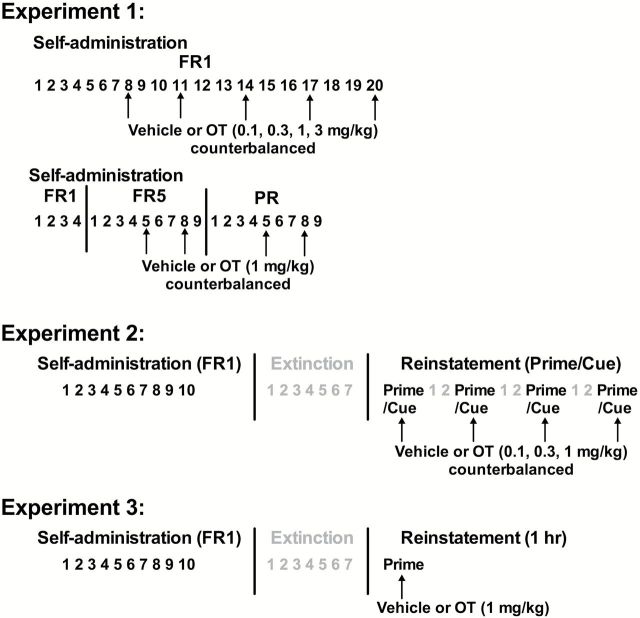
In the present study, we used a self-administration/reinstatement model to study the effects of oxytocin on cocaine seeking and its potential interaction with glutamate function at the receptor level.
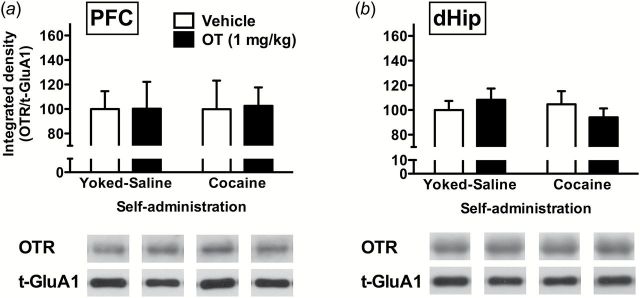
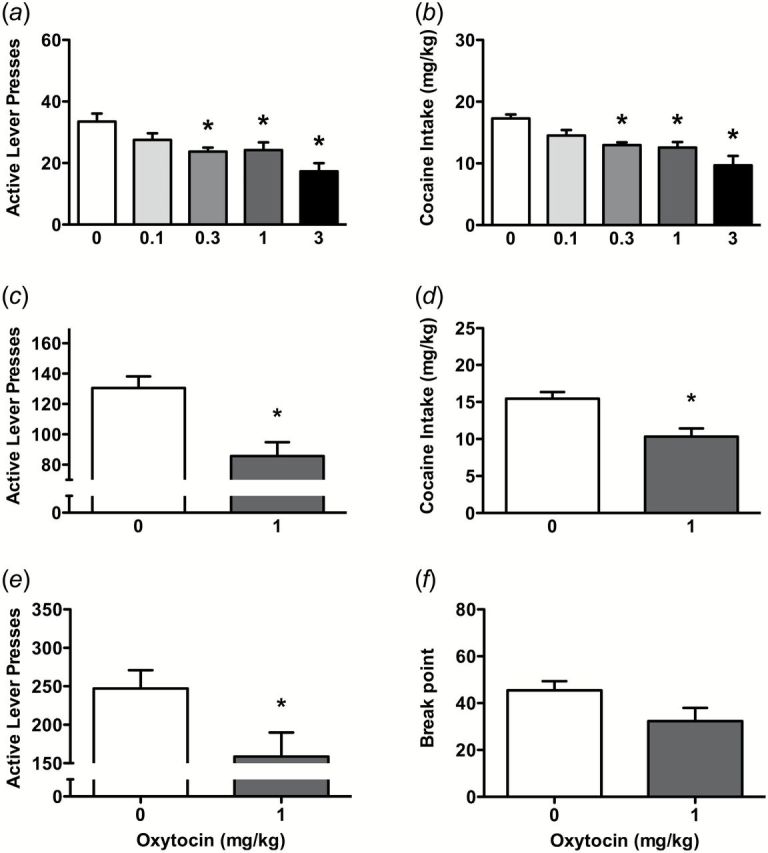
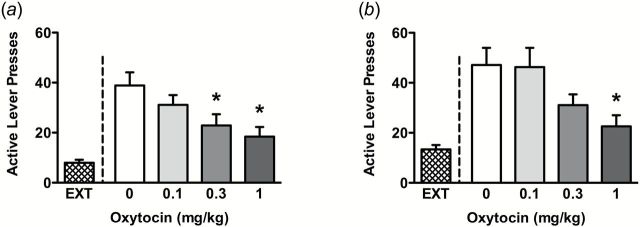
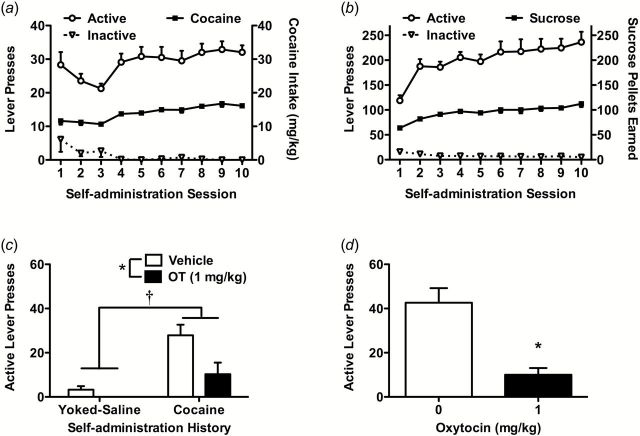
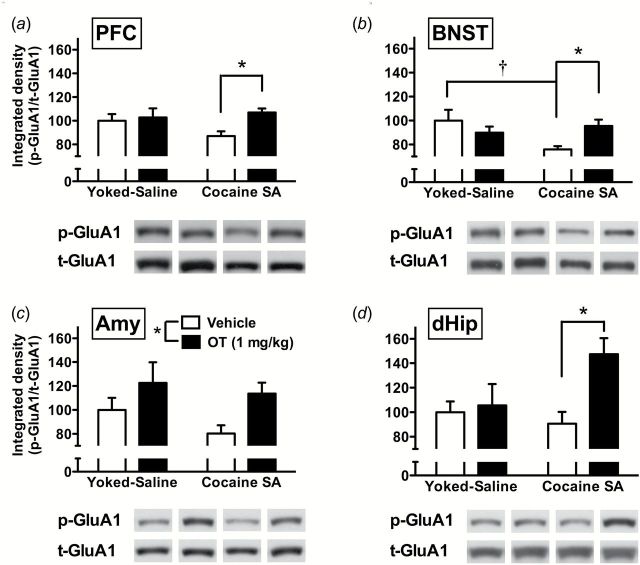
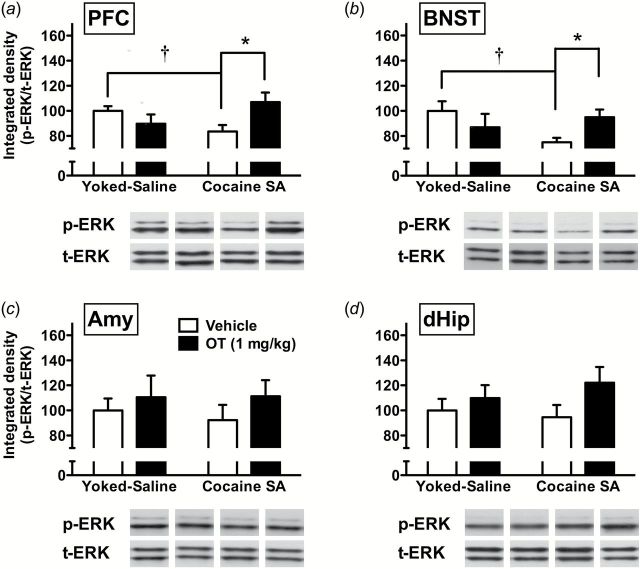
Systemic oxytocin dose-dependently reduced cocaine self-administration during various schedules of reinforcement, including fixed ratio 1, fixed ratio 5, and progressive ratio. Oxytocin also attenuated reinstatement to cocaine seeking induced by cocaine prime or conditioned cues. Western-blot analysis indicated that oxytocin increased phosphorylation of the α-amino-3-hydroxy-5-methyl-4-isoxazolepropionic acid-type glutamate receptor GluA1 subunit at the Ser 845 site with or without accompanying increases in phosphorylation of extracellular signal-regulated kinase, in several brain regions, including the prefrontal cortex, bed nucleus of the stria terminalis, amygdala, and dorsal hippocampus. Immunoprecipitation of oxytocin receptor and GluA1 subunit receptors further demonstrated a physical interaction between these 2 receptors, although the interaction was not influenced by chronic cocaine or oxytocin treatment. Oxytocin also attenuated sucrose seeking in a GluA1- or extracellular-signal-regulated kinase-independent manner.
These findings suggest that oxytocin mediates cocaine seeking through interacting with glutamate receptor systems via second messenger cascades in mesocorticolimbic regions.
催产素是一种神经垂体神经肽,是药物成瘾的潜在介导物和调节剂。然而,催产素在觅药行为中的细胞机制尚不清楚。
在本研究中,我们使用自我给药/复吸模型来研究催产素对可卡因觅药行为的影响及其在受体水平与谷氨酸功能的潜在相互作用。
全身给予催产素在各种强化程序中均能剂量依赖性地减少可卡因的自我给药,包括固定比率1、固定比率5和累进比率。催产素还能减弱由可卡因激发或条件性线索诱导的可卡因觅药行为的复吸。蛋白质免疫印迹分析表明,在包括前额叶皮质、终纹床核、杏仁核和背侧海马体在内的几个脑区,无论细胞外信号调节激酶的磷酸化是否伴随增加,催产素都能增加α-氨基-3-羟基-5-甲基-4-异恶唑丙酸型谷氨酸受体GluA1亚基在丝氨酸845位点的磷酸化。催产素受体和GluA1亚基受体的免疫沉淀进一步证明了这两种受体之间存在物理相互作用,尽管这种相互作用不受慢性可卡因或催产素治疗的影响。催产素还能以一种不依赖GluA1或细胞外信号调节激酶的方式减弱蔗糖觅药行为。
这些发现表明,催产素通过中脑边缘叶区域的第二信使级联反应与谷氨酸受体系统相互作用来介导可卡因觅药行为。