Yip Danny Kit-Sang, Pang Iris K, Yip Kevin Y
Department of Computer Science and Engineering, The Chinese University of Hong Kong, Shatin, New Territories, Hong Kong.
BMC Genomics. 2014 Dec 24;15(1):1178. doi: 10.1186/1471-2164-15-1178.
In the competing endogenous RNA (ceRNA) hypothesis, different transcripts communicate through a competition for their common targeting microRNAs (miRNAs). Individual examples have clearly shown the functional importance of ceRNA in gene regulation and cancer biology. It remains unclear to what extent gene expression levels are regulated by ceRNA in general. One major hurdle to studying this problem is the intertwined connections in miRNA-target networks, which makes it difficult to isolate the effects of individual miRNAs.
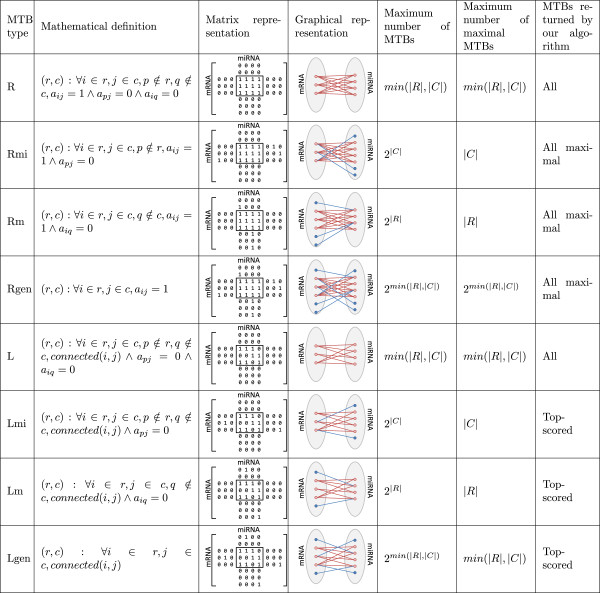
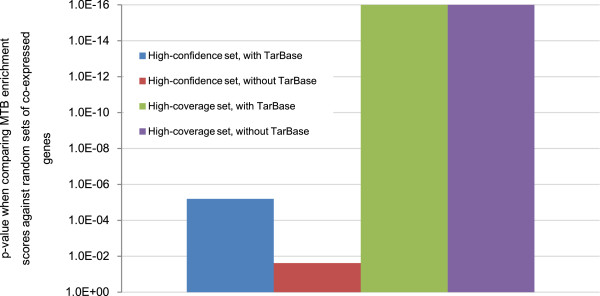
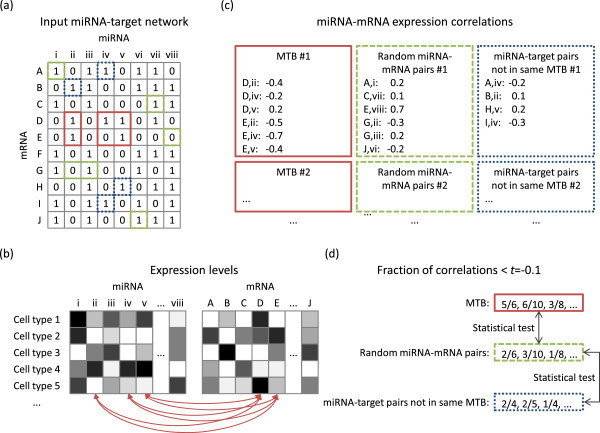
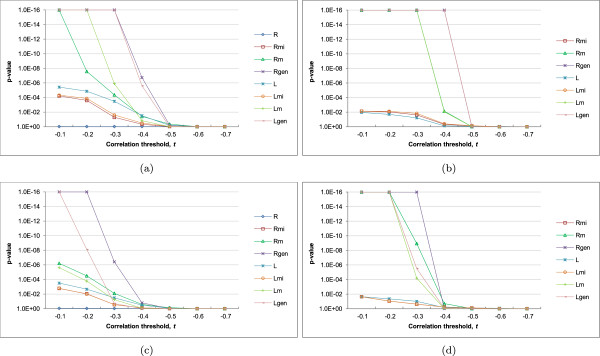
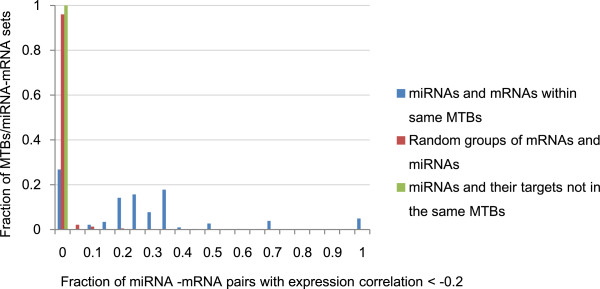
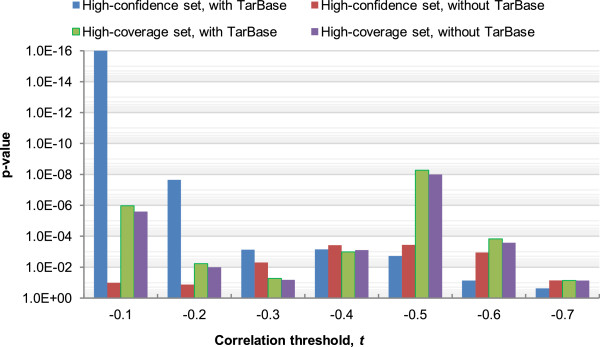
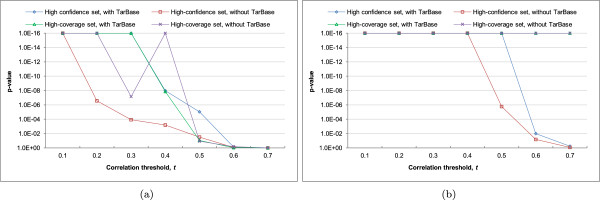
Here we propose computational methods for decomposing a complex miRNA-target network into largely autonomous modules called microRNA-target biclusters (MTBs). Each MTB contains a relatively small number of densely connected miRNAs and mRNAs with few connections to other miRNAs and mRNAs. Each MTB can thus be individually analyzed with minimal crosstalk with other MTBs. Our approach differs from previous methods for finding modules in miRNA-target networks by not making any pre-assumptions about expression patterns, thereby providing objective information for testing the ceRNA hypothesis. We show that the expression levels of miRNAs and mRNAs in an MTB are significantly more anti-correlated than random miRNA-mRNA pairs and other validated and predicted miRNA-target pairs, demonstrating the biological relevance of MTBs. We further show that there is widespread correlation of expression between mRNAs in same MTBs under a wide variety of parameter settings, and the correlation remains even when co-regulatory effects are controlled for, which suggests potential widespread expression buffering between these mRNAs, which is consistent with the ceRNA hypothesis. Lastly, we also propose a potential use of MTBs in functional annotation of miRNAs.
MTBs can be used to help identify autonomous miRNA-target modules for testing the generality of the ceRNA hypothesis experimentally. The identified modules can also be used to test other properties of miRNA-target networks in general.
在竞争性内源RNA(ceRNA)假说中,不同的转录本通过竞争其共同靶向的微小RNA(miRNA)进行交流。个别实例已清楚表明ceRNA在基因调控和癌症生物学中的功能重要性。但总体而言,ceRNA在多大程度上调控基因表达水平仍不清楚。研究此问题的一个主要障碍是miRNA-靶标网络中相互交织的连接,这使得难以分离单个miRNA的作用。
在此,我们提出了计算方法,用于将复杂的miRNA-靶标网络分解为称为微小RNA-靶标双聚类(MTB)的基本自主模块。每个MTB包含相对少量紧密连接的miRNA和mRNA,与其他miRNA和mRNA的连接很少。因此,每个MTB可以在与其他MTB的串扰最小的情况下单独进行分析。我们的方法与先前在miRNA-靶标网络中寻找模块的方法不同,因为我们不对表达模式做任何预先假设,从而为检验ceRNA假说提供客观信息。我们表明,MTB中miRNA和mRNA的表达水平比随机的miRNA- mRNA对以及其他经过验证和预测的miRNA-靶标对具有更显著的负相关性,证明了MTB的生物学相关性。我们进一步表明,在各种参数设置下,同一MTB中的mRNA之间存在广泛的表达相关性,并且即使在控制了共调控效应后这种相关性仍然存在,这表明这些mRNA之间可能存在广泛的表达缓冲,这与ceRNA假说一致。最后,我们还提出了MTB在miRNA功能注释中的潜在用途。
MTB可用于帮助识别自主的miRNA-靶标模块,以通过实验检验ceRNA假说的普遍性。所识别的模块通常也可用于测试miRNA-靶标网络的其他特性。