Das Rituparna, Verma Rakesh, Sznol Mario, Boddupalli Chandra Sekhar, Gettinger Scott N, Kluger Harriet, Callahan Margaret, Wolchok Jedd D, Halaban Ruth, Dhodapkar Madhav V, Dhodapkar Kavita M
Department of Medicine, Yale University School of Medicine, New Haven, CT 06520; Smilow Cancer Center, Yale University School of Medicine, New Haven, CT 06520;
Ludwig Center for Cancer Immunotherapy, Memorial Sloan-Kettering Cancer Center, New York, NY 10065;
J Immunol. 2015 Feb 1;194(3):950-9. doi: 10.4049/jimmunol.1401686. Epub 2014 Dec 24.
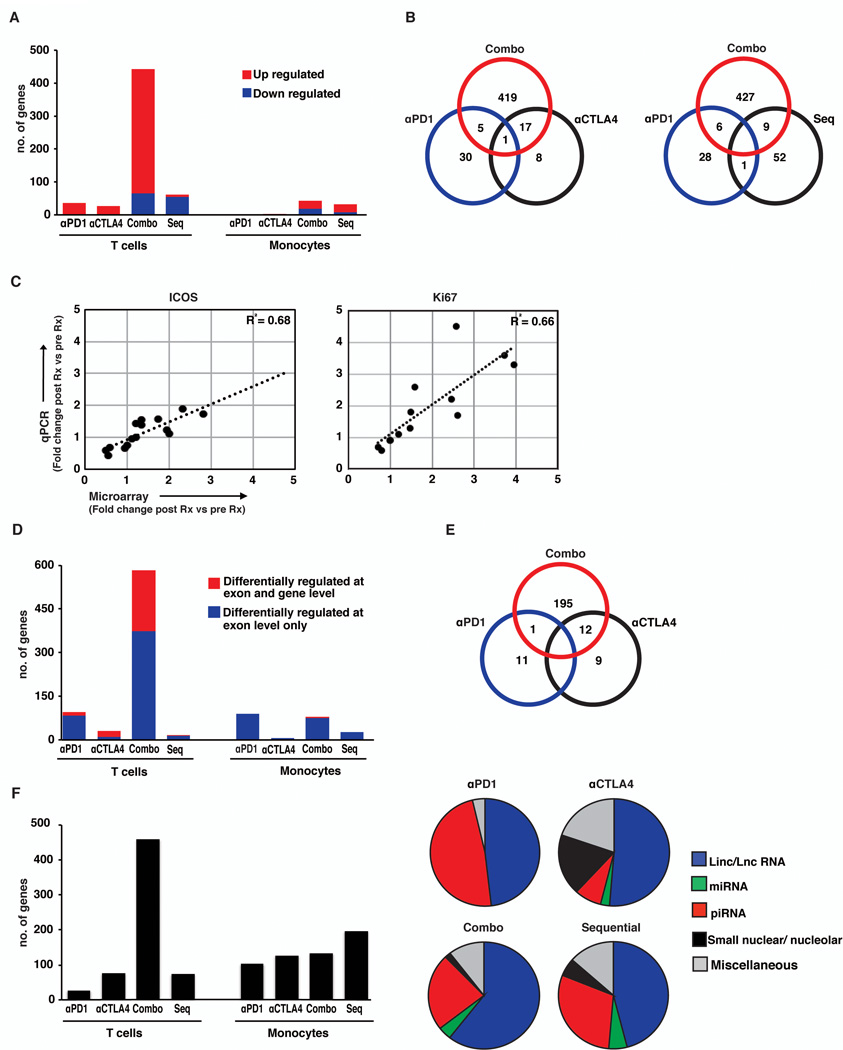
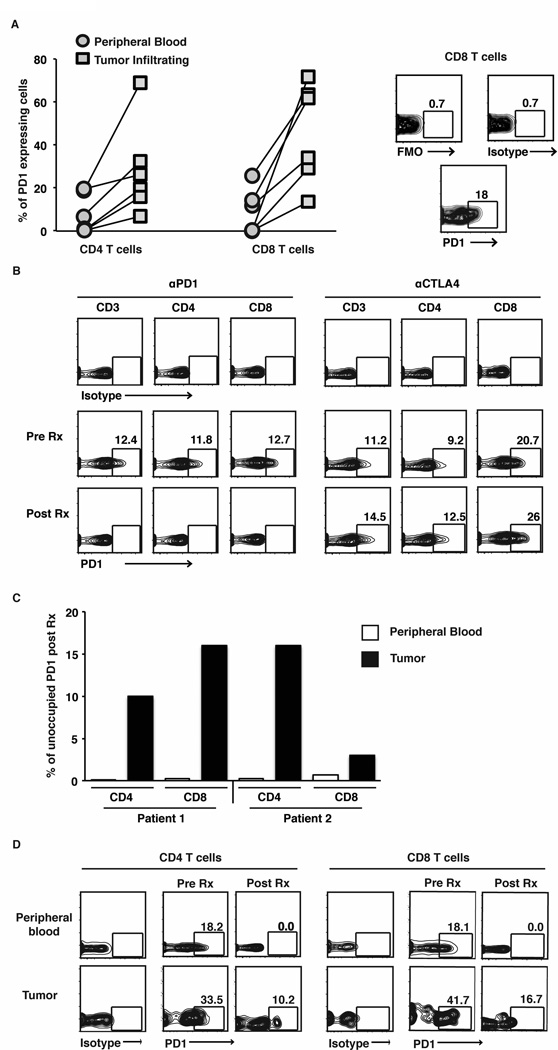
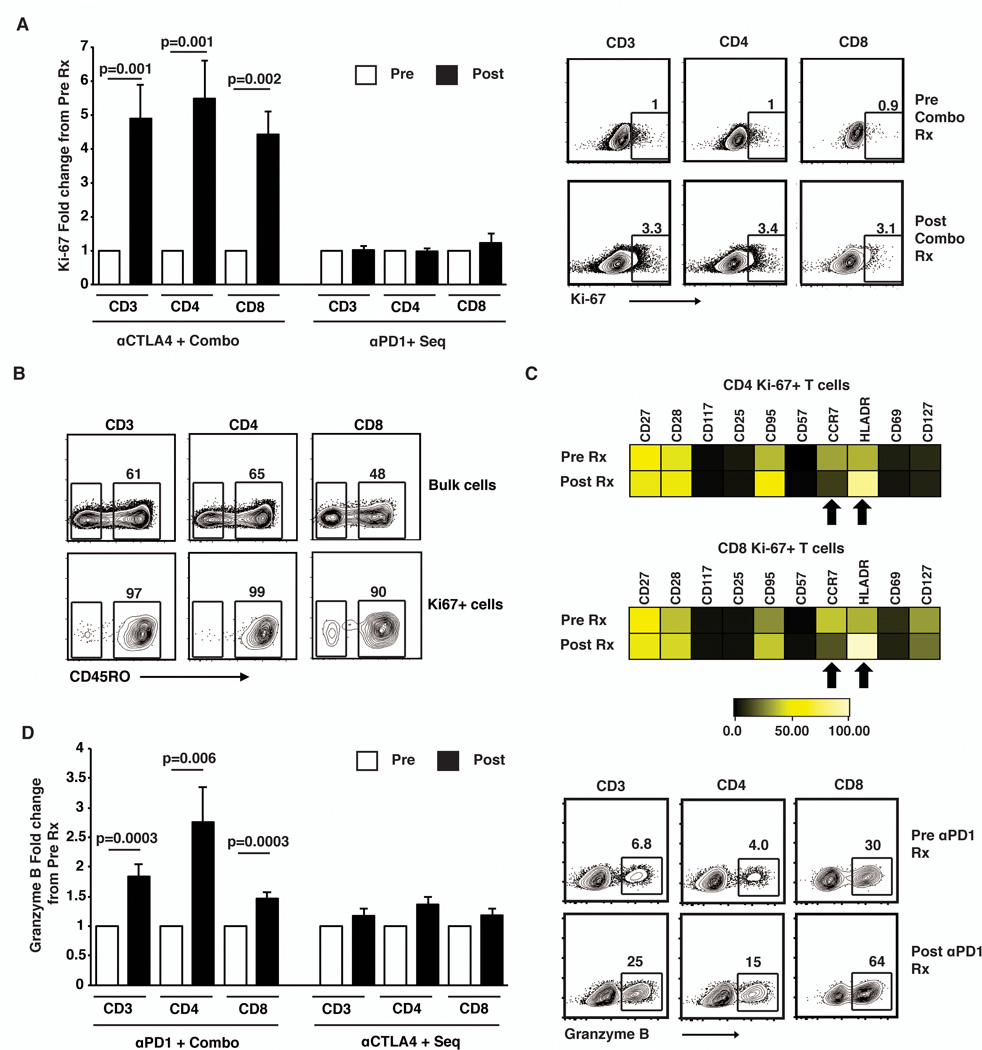
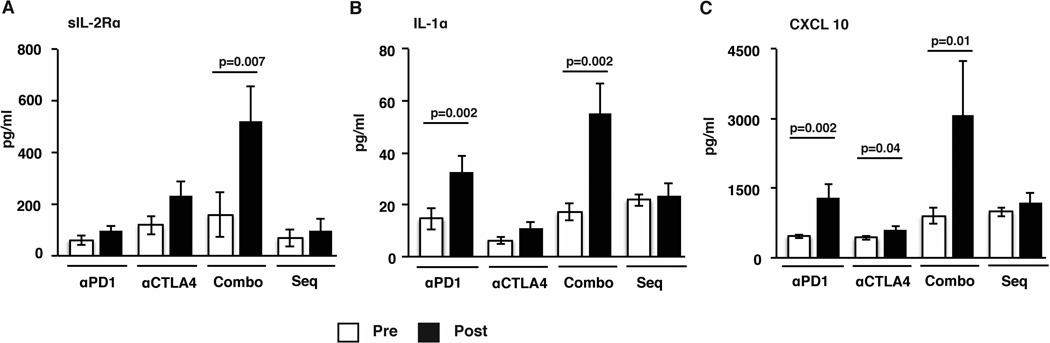
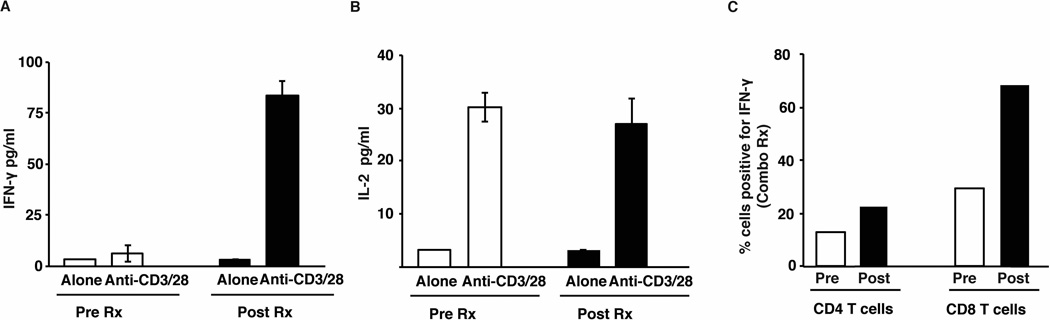
Combination therapy concurrently targeting PD-1 and CTLA-4 immune checkpoints leads to remarkable antitumor effects. Although both PD-1 and CTLA-4 dampen the T cell activation, the in vivo effects of these drugs in humans remain to be clearly defined. To better understand biologic effects of therapy, we analyzed blood/tumor tissue from 45 patients undergoing single or combination immune checkpoint blockade. We show that blockade of CTLA-4, PD-1, or combination of the two leads to distinct genomic and functional signatures in vivo in purified human T cells and monocytes. Therapy-induced changes are more prominent in T cells than in monocytes and involve largely nonoverlapping changes in coding genes, including alternatively spliced transcripts and noncoding RNAs. Pathway analysis revealed that CTLA-4 blockade induces a proliferative signature predominantly in a subset of transitional memory T cells, whereas PD-1 blockade instead leads to changes in genes implicated in cytolysis and NK cell function. Combination blockade leads to nonoverlapping changes in gene expression, including proliferation-associated and chemokine genes. These therapies also have differential effects on plasma levels of CXCL10, soluble IL-2R, and IL-1α. Importantly, PD-1 receptor occupancy following anti-PD-1 therapy may be incomplete in the tumor T cells even in the setting of complete receptor occupancy in circulating T cells. These data demonstrate that, despite shared property of checkpoint blockade, Abs against PD-1, CTLA-4 alone, or in combination have distinct immunologic effects in vivo. Improved understanding of pharmacodynamic effects of these agents in patients will support rational development of immune-based combinations against cancer.
同时靶向PD-1和CTLA-4免疫检查点的联合疗法可产生显著的抗肿瘤效果。尽管PD-1和CTLA-4均会抑制T细胞活化,但这些药物在人体内的体内效应仍有待明确界定。为了更好地理解治疗的生物学效应,我们分析了45例接受单药或联合免疫检查点阻断治疗患者的血液/肿瘤组织。我们发现,阻断CTLA-4、PD-1或两者联合阻断在纯化的人T细胞和单核细胞中会在体内导致不同的基因组和功能特征。治疗诱导的变化在T细胞中比在单核细胞中更显著,并且在编码基因中涉及很大程度上不重叠的变化,包括可变剪接转录本和非编码RNA。通路分析显示,阻断CTLA-4主要在一部分过渡性记忆T细胞中诱导增殖特征,而阻断PD-1则导致与细胞溶解和NK细胞功能相关的基因发生变化。联合阻断导致基因表达出现不重叠的变化,包括与增殖相关的基因和趋化因子基因。这些疗法对CXCL10、可溶性IL-2R和IL-1α的血浆水平也有不同影响。重要的是,即使在循环T细胞中完全占据受体的情况下,抗PD-1治疗后肿瘤T细胞中的PD-1受体占据情况可能仍不完全。这些数据表明,尽管检查点阻断具有共同特性,但抗PD-1、单独的CTLA-4或两者联合使用的抗体在体内具有不同的免疫效应。更好地了解这些药物在患者中的药效学效应将有助于合理开发基于免疫的癌症联合疗法。