Williamson David H, Ceccarelli Daniela M, Evans Richard D, Hill Jos K, Russ Garry R
Australian Research Council Centre of Excellence for Coral Reef Studies, Townsville, Queensland 4811, Australia.
Department of Parks and Wildlife, 17 Dick Perry Ave., Kensington, Perth, Western Australia 6151, Australia; Oceans Institute, School of Plant Biology, University of Western Australia, Crawley, WA 6009, Australia.
PLoS One. 2014 Dec 29;9(12):e114395. doi: 10.1371/journal.pone.0114395. eCollection 2014.
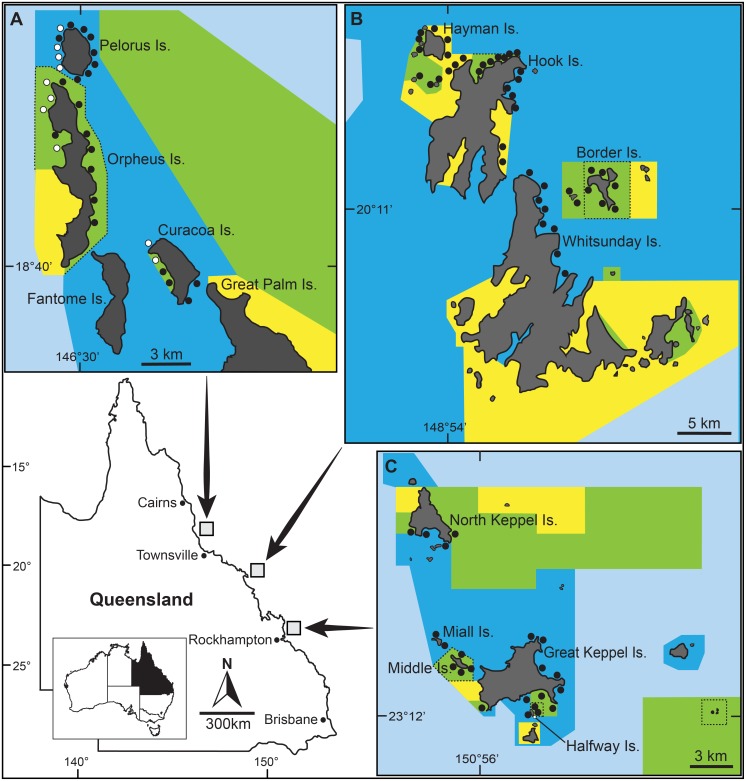
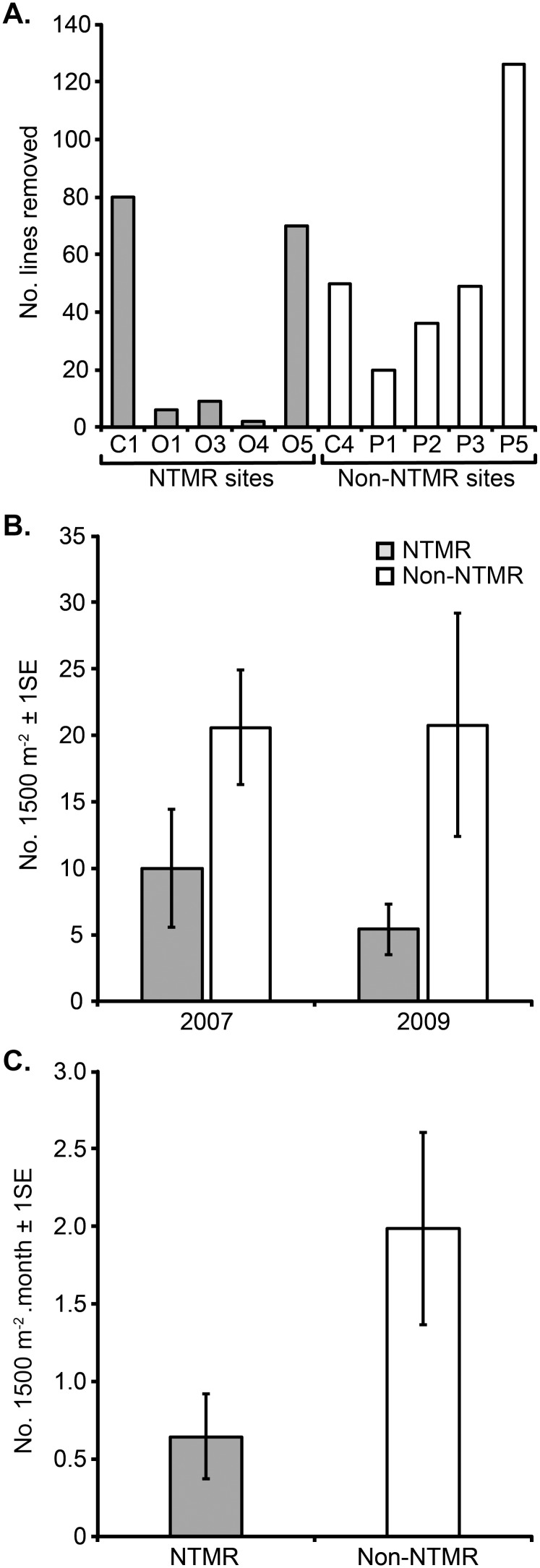
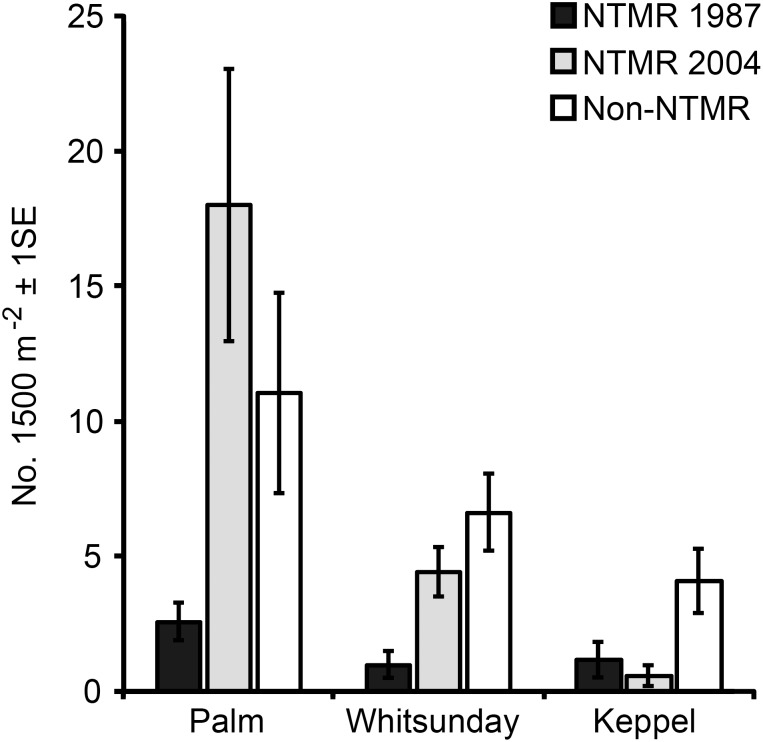
No-take marine reserves (NTMRs) are increasingly being established to conserve or restore biodiversity and to enhance the sustainability of fisheries. Although effectively designed and protected NTMR networks can yield conservation and fishery benefits, reserve effects often fail to manifest in systems where there are high levels of non-compliance by fishers (poaching). Obtaining reliable estimates of NTMR non-compliance can be expensive and logistically challenging, particularly in areas with limited or non-existent resources for conducting surveillance and enforcement. Here we assess the utility of density estimates and re-accumulation rates of derelict (lost and abandoned) fishing line as a proxy for fishing effort and NTMR non-compliance on fringing coral reefs in three island groups of the Great Barrier Reef Marine Park (GBRMP), Australia. Densities of derelict fishing line were consistently lower on reefs within old (>20 year) NTMRs than on non-NTMR reefs (significantly in the Palm and Whitsunday Islands), whereas line densities did not differ significantly between reefs in new NTMRs (5 years of protection) and non-NTMR reefs. A manipulative experiment in which derelict fishing lines were removed from a subset of the monitoring sites demonstrated that lines re-accumulated on NTMR reefs at approximately one third (32.4%) of the rate observed on non-NTMR reefs over a thirty-two month period. Although these inshore NTMRs have long been considered some of the best protected within the GBRMP, evidence presented here suggests that the level of non-compliance with NTMR regulations is higher than previously assumed.
禁捕海洋保护区(NTMRs)越来越多地被设立,以保护或恢复生物多样性,并提高渔业的可持续性。尽管设计有效且得到保护的NTMR网络能够带来保护和渔业效益,但在渔民违规(偷猎)程度较高的系统中,保护区的效果往往难以显现。获得NTMR违规行为的可靠估计成本高昂且在后勤方面具有挑战性,尤其是在开展监测和执法资源有限或不存在的地区。在此,我们评估废弃(丢失和遗弃)钓鱼线的密度估计和重新积累率作为澳大利亚大堡礁海洋公园(GBRMP)三个岛屿群边缘珊瑚礁上捕捞努力和NTMR违规行为代理指标的效用。旧的(超过20年)NTMR内珊瑚礁上废弃钓鱼线的密度始终低于非NTMR珊瑚礁(在棕榈岛和圣灵群岛显著更低),而新的NTMR(5年保护期)内珊瑚礁和非NTMR珊瑚礁上的线密度没有显著差异。一项在部分监测点移除废弃钓鱼线的操纵性实验表明,在32个月的时间里,NTMR珊瑚礁上的线重新积累的速度约为非NTMR珊瑚礁上观察到速度的三分之一(32.4%)。尽管这些近海NTMR长期以来一直被认为是GBRMP内保护最好的区域之一,但此处提供的证据表明,NTMR法规的违规程度高于此前的设想。