Huichalaf Claudia, Micheloni Stefano, Ferri Giulia, Caccia Roberta, Gabellini Davide
Dulbecco Telethon Institute at San Raffaele Scientific Institute, Division of Regenerative Medicine, Stem Cells, and Gene Therapy, DIBIT2, 5A3, Via Olgettina 58, 20132, Milano, Italy; Università Vita-Salute San Raffaele, Milano, Italy.
Dulbecco Telethon Institute at San Raffaele Scientific Institute, Division of Regenerative Medicine, Stem Cells, and Gene Therapy, DIBIT2, 5A3, Via Olgettina 58, 20132, Milano, Italy.
PLoS One. 2014 Dec 29;9(12):e115278. doi: 10.1371/journal.pone.0115278. eCollection 2014.
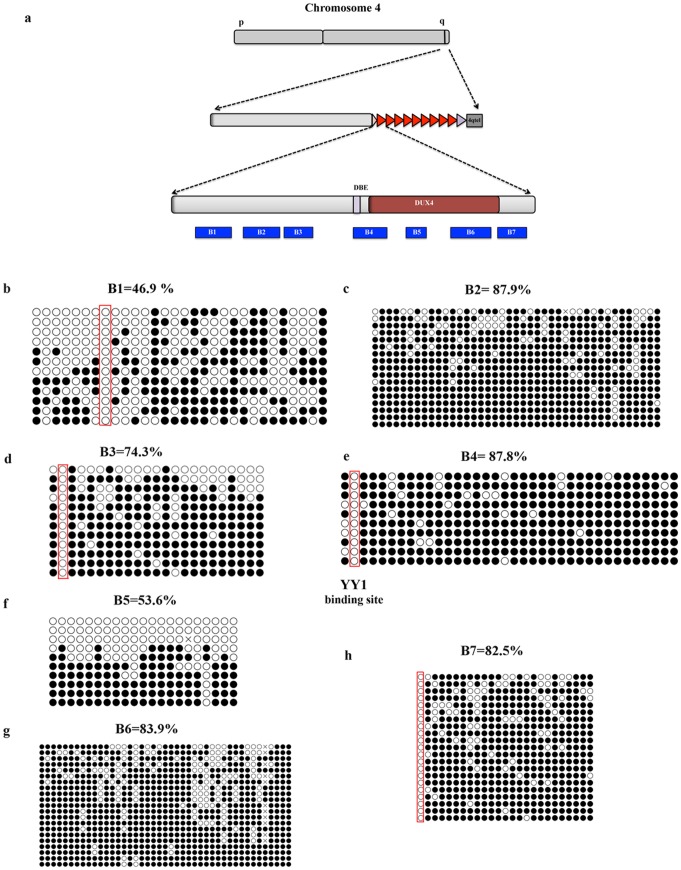
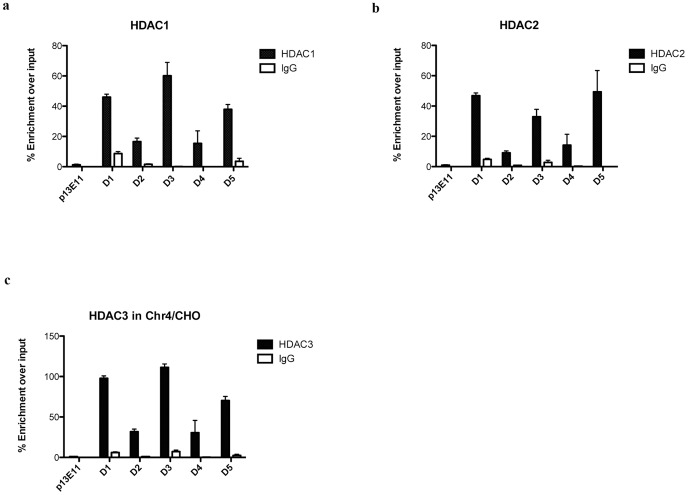
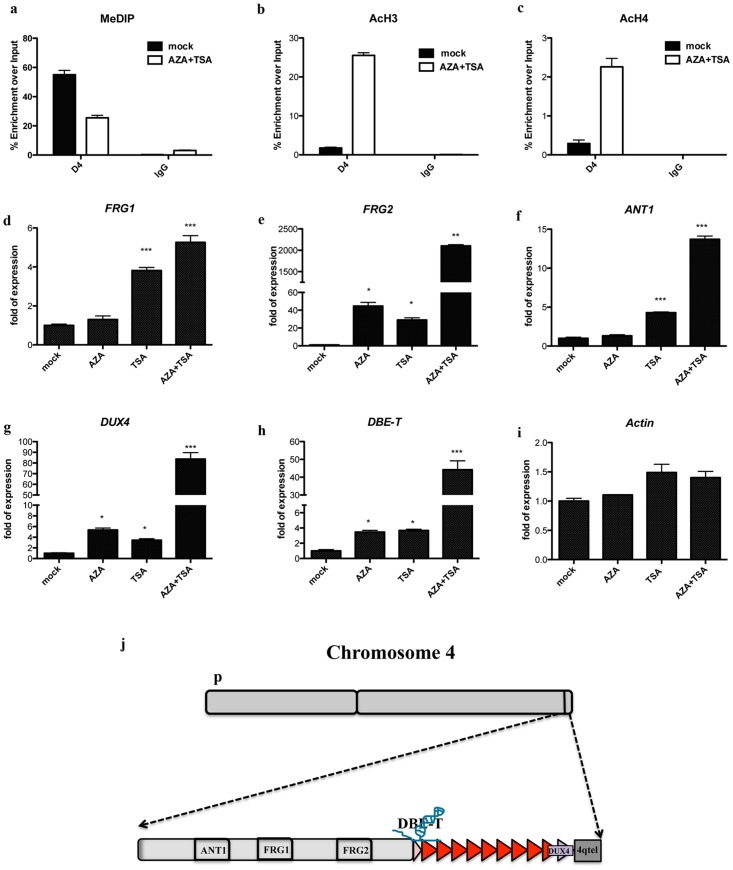
Facioscapulohumeral muscular dystrophy (FSHD) is one of the most common inherited diseases of the skeletal muscle. It is characterized by asymmetric muscle weakness and variable penetrance. FSHD is linked to a reduction in copy number of the D4Z4 3.3 kb macrosatellite repeat, located in 4q35. This causes the epigenetic de-repression of FSHD candidate genes leading to disease. Nevertheless, the molecular mechanism responsible for silencing of FSHD candidate genes in healthy subjects is not fully understood. While a role for DNA methylation has been suggested, so far there is limited information regarding the methylation status of the 325 CpGs contained in each D4Z4 unit. Using a human/rodent monochromosomal hybrid cell line containing a single human chromosome 4, we performed an in depth analysis of DNA methylation for the majority of the CpGs inside D4Z4 at single nucleotide level. We found that D4Z4 is not uniformly methylated and that the level of DNA methylation does not correlate with the density of CpG dinucleotides. Moreover, in several D4Z4 regions characterized by near complete methylation, we found specific unmethylated CpGs. These elements are enriched in transcription factor binding sites that could be involved in muscle-specific D4Z4 activity. Our approach also detected differential methylation among different D4Z4 units, suggesting that the D4Z4 array is a mosaic of euchromatic and heterochromatic domains. Finally, we found that DNA methylation and histone de-acetylation are required to maintain FSHD candidate genes repressed. Taken together, our data underscore new players involved in the epigenetic regulation of the FSHD locus that could be targeted for therapeutic purposes.
面肩肱型肌营养不良症(FSHD)是最常见的骨骼肌遗传性疾病之一。其特征为不对称性肌无力和可变外显率。FSHD与位于4q35的D4Z4 3.3 kb大卫星重复序列的拷贝数减少有关。这导致FSHD候选基因的表观遗传去抑制,进而引发疾病。然而,健康受试者中负责沉默FSHD候选基因的分子机制尚未完全明确。虽然有人提出DNA甲基化发挥了作用,但到目前为止,关于每个D4Z4单元中包含的325个CpG的甲基化状态的信息有限。我们使用含有单条人类4号染色体的人/啮齿动物单染色体杂交细胞系,在单核苷酸水平上对D4Z4内的大多数CpG进行了DNA甲基化的深入分析。我们发现D4Z4并非均匀甲基化,且DNA甲基化水平与CpG二核苷酸的密度无关。此外,在几个以近乎完全甲基化为特征的D4Z4区域中,我们发现了特定的未甲基化CpG。这些元件富含可能参与肌肉特异性D4Z4活性的转录因子结合位点。我们的方法还检测到不同D4Z4单元之间的差异甲基化,表明D4Z4阵列是常染色质和异染色质结构域的镶嵌体。最后,我们发现DNA甲基化和组蛋白去乙酰化是维持FSHD候选基因沉默所必需的。综上所述,我们的数据强调了参与FSHD基因座表观遗传调控的新因子,这些因子可能成为治疗靶点。