Dunne Christopher R, Cillo Anthony R, Glick Danielle R, John Katherine, Johnson Cody, Kanwal Jaspinder, Malik Brian T, Mammano Kristina, Petrovic Stefan, Pfister William, Rascoe Alexander S, Schrom Diane, Shapiro Scott, Simkins Jeffrey W, Strauss David, Talai Rene, Tomtishen John P, Vargas Josephine, Veloz Tony, Vogler Thomas O, Clenshaw Michael E, Gordon-Hamm Devin T, Lee Kathryn L, Marin Elizabeth C
Neuroscience Program, Bucknell University, Lewisburg, Pennsylvania, United States of America.
Cell Biology/Biochemistry Program, Bucknell University, Lewisburg, Pennsylvania, United States of America.
PLoS Biol. 2014 Dec 30;12(12):e1002030. doi: 10.1371/journal.pbio.1002030. eCollection 2014 Dec.
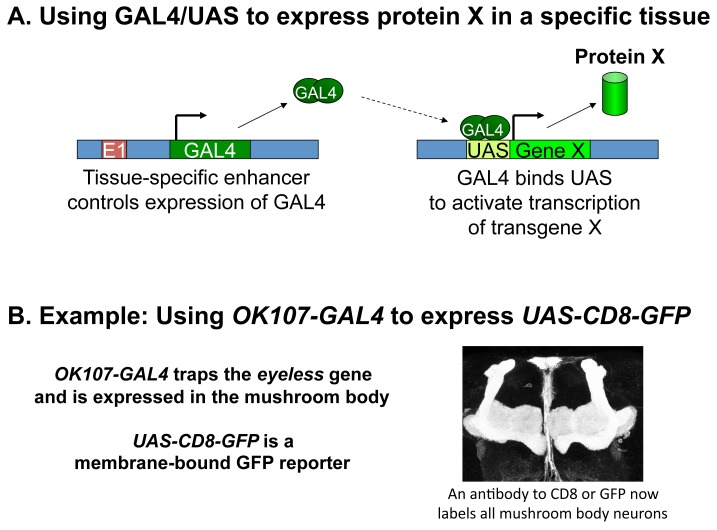
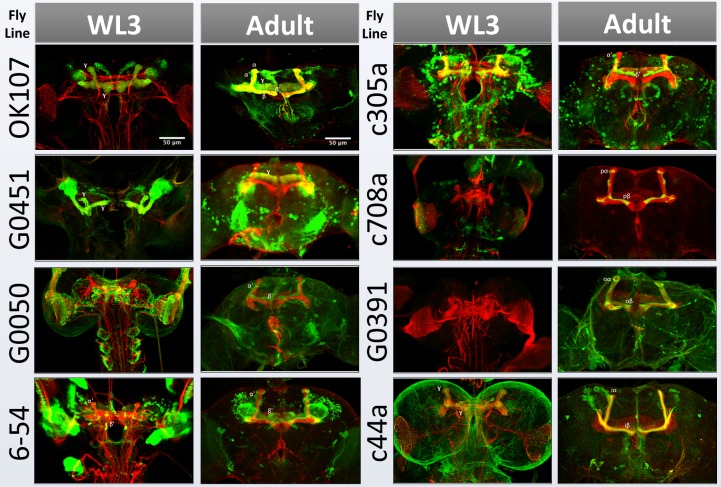
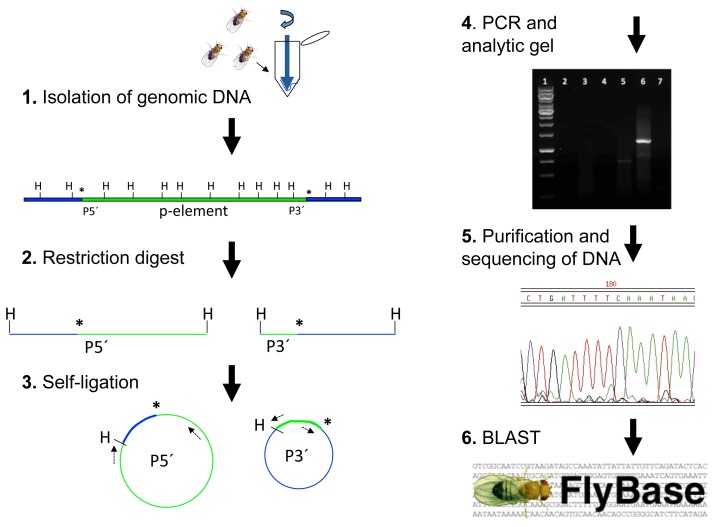
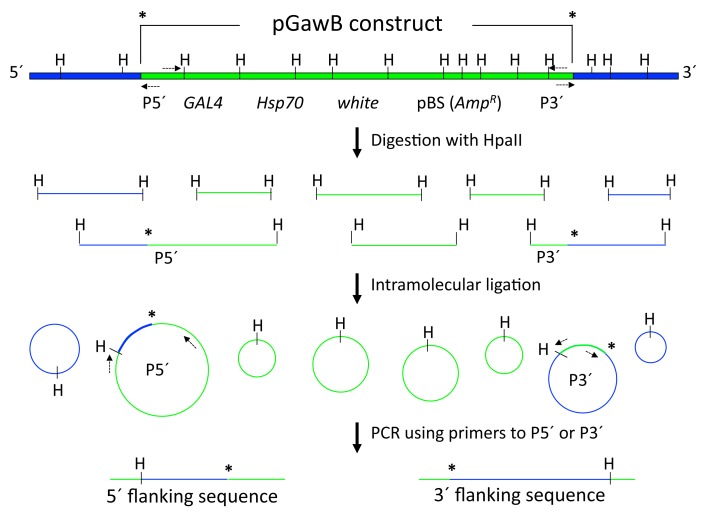
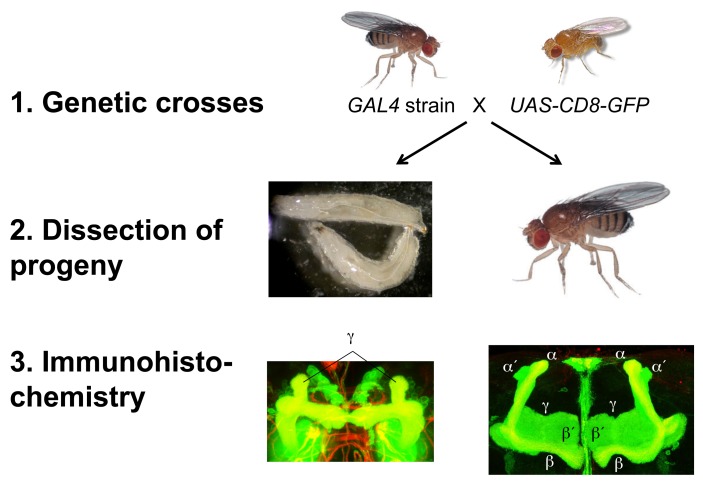
We have developed and tested two linked but separable structured inquiry exercises using a set of Drosophila melanogaster GAL4 enhancer trap strains for an upper-level undergraduate laboratory methods course at Bucknell University. In the first, students learn to perform inverse PCR to identify the genomic location of the GAL4 insertion, using FlyBase to identify flanking sequences and the primary literature to synthesize current knowledge regarding the nearest gene. In the second, we cross each GAL4 strain to a UAS-CD8-GFP reporter strain, and students perform whole mount CNS dissection, immunohistochemistry, confocal imaging, and analysis of developmental expression patterns. We have found these exercises to be very effective in teaching the uses and limitations of PCR and antibody-based techniques as well as critical reading of the primary literature and scientific writing. Students appreciate the opportunity to apply what they learn by generating novel data of use to the wider research community.
我们开发并测试了两个相互关联但又可分开的结构化探究练习,它们使用了一组黑腹果蝇GAL4增强子陷阱菌株,用于巴克内尔大学的本科高年级实验室方法课程。在第一个练习中,学生学习进行反向PCR以确定GAL4插入的基因组位置,利用FlyBase识别侧翼序列,并通过查阅主要文献来综合有关最邻近基因的现有知识。在第二个练习中,我们将每个GAL4菌株与一个UAS-CD8-GFP报告菌株杂交,学生进行全脑脊髓解剖、免疫组织化学、共聚焦成像以及发育表达模式分析。我们发现这些练习在教授PCR和基于抗体的技术的用途及局限性、批判性阅读主要文献以及科学写作方面非常有效。学生们很感激有机会通过生成对更广泛研究群体有用的新数据来应用所学知识。