Center of Inflammation, Infection & Immunity, Institute for Biomedical Sciences, Georgia State University, Atlanta, GA, USA.
Department of Microbiology, Chungnam National University School of Medicine, Daejeon 301-747, Korea. ; Infection Signaling Network Research Center, Chungnam National University School of Medicine, Daejeon 301-747, Korea.
Immune Netw. 2014 Dec;14(6):307-20. doi: 10.4110/in.2014.14.6.307. Epub 2014 Dec 22.
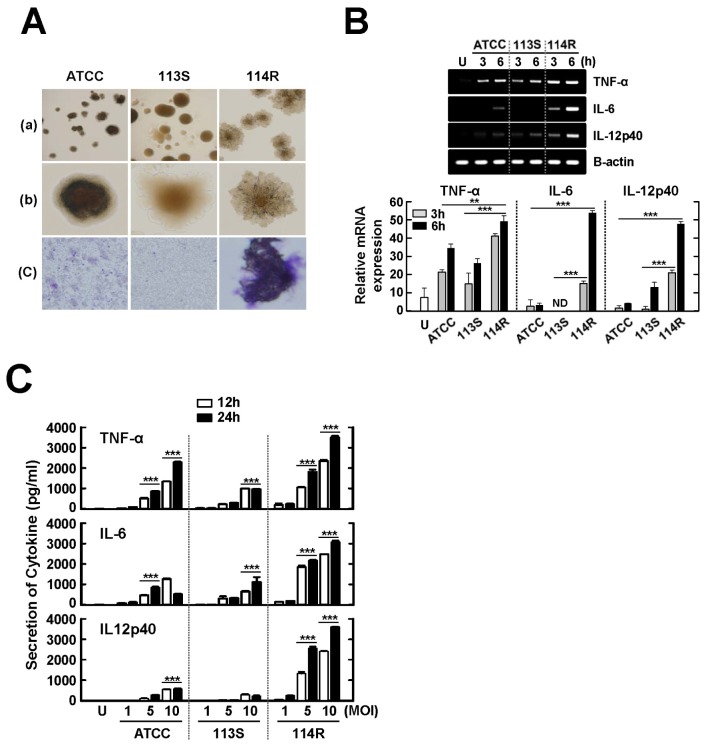
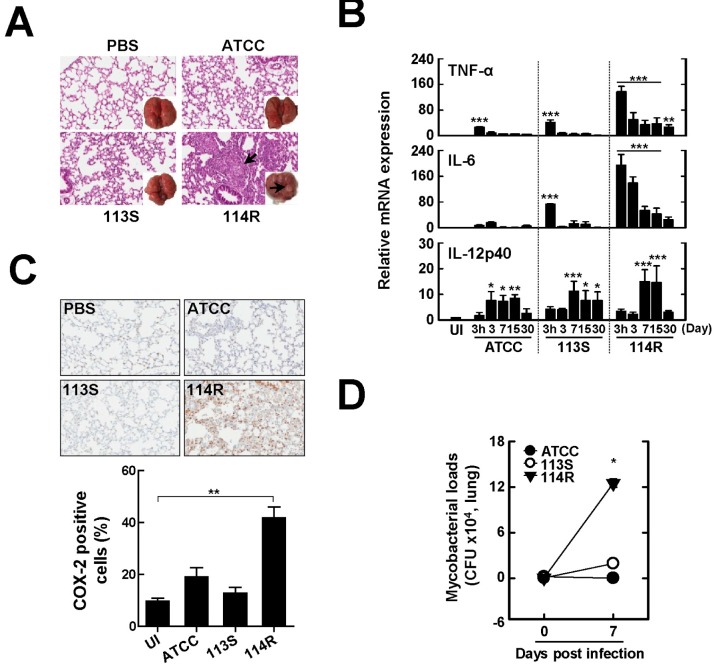
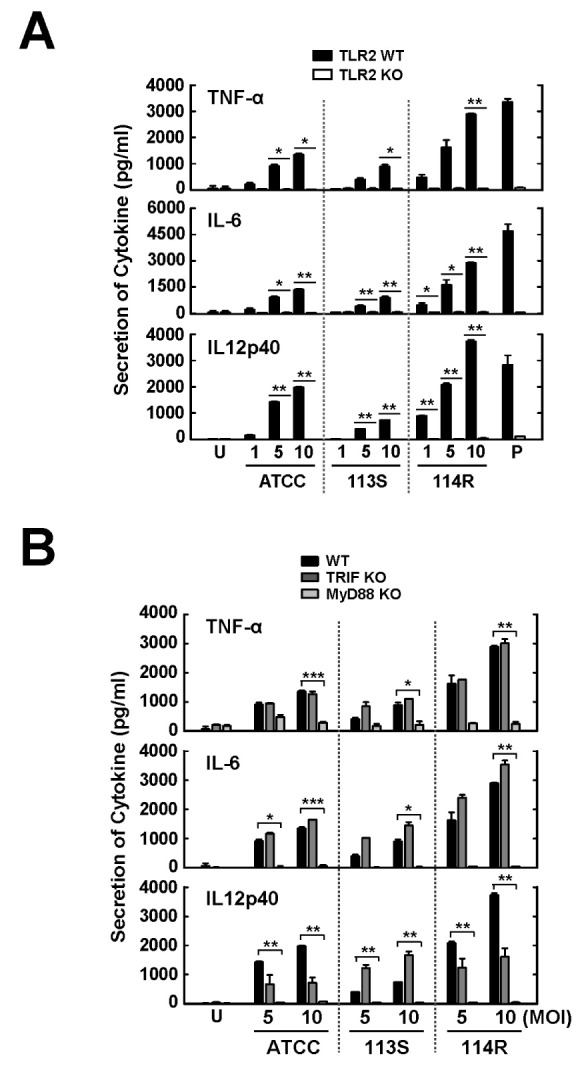
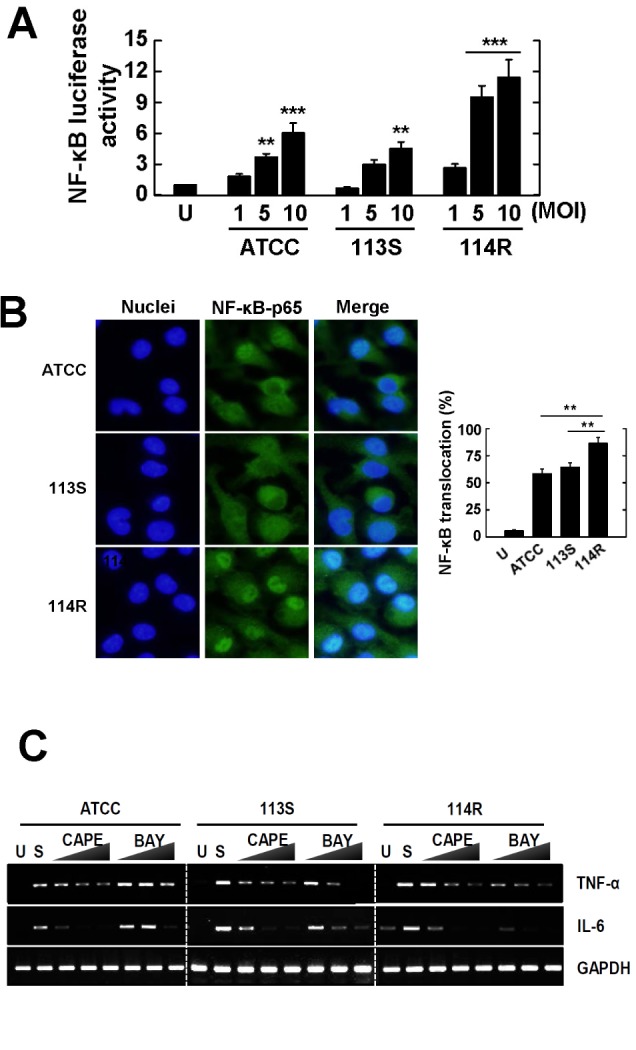
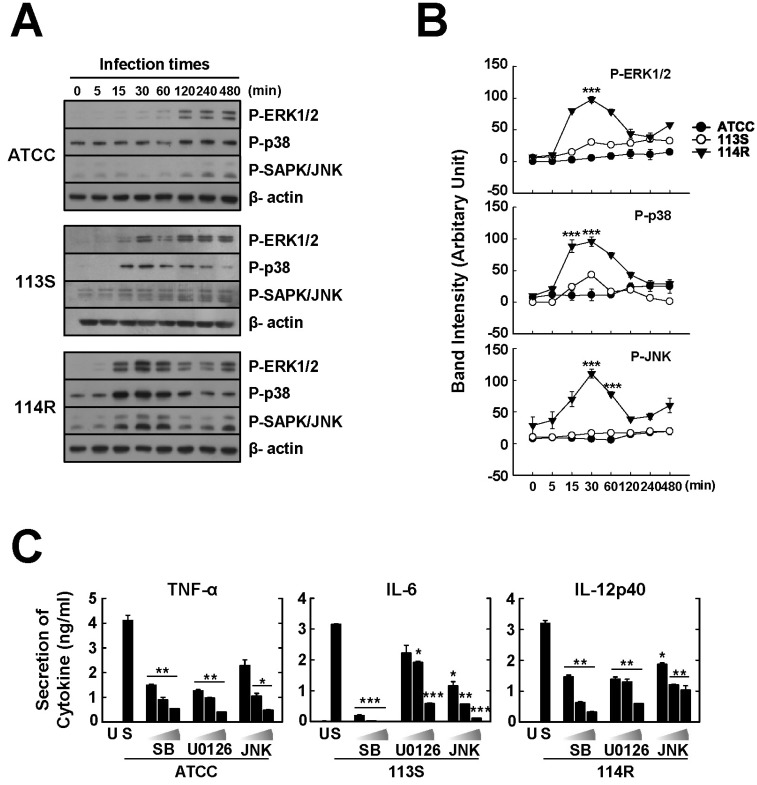
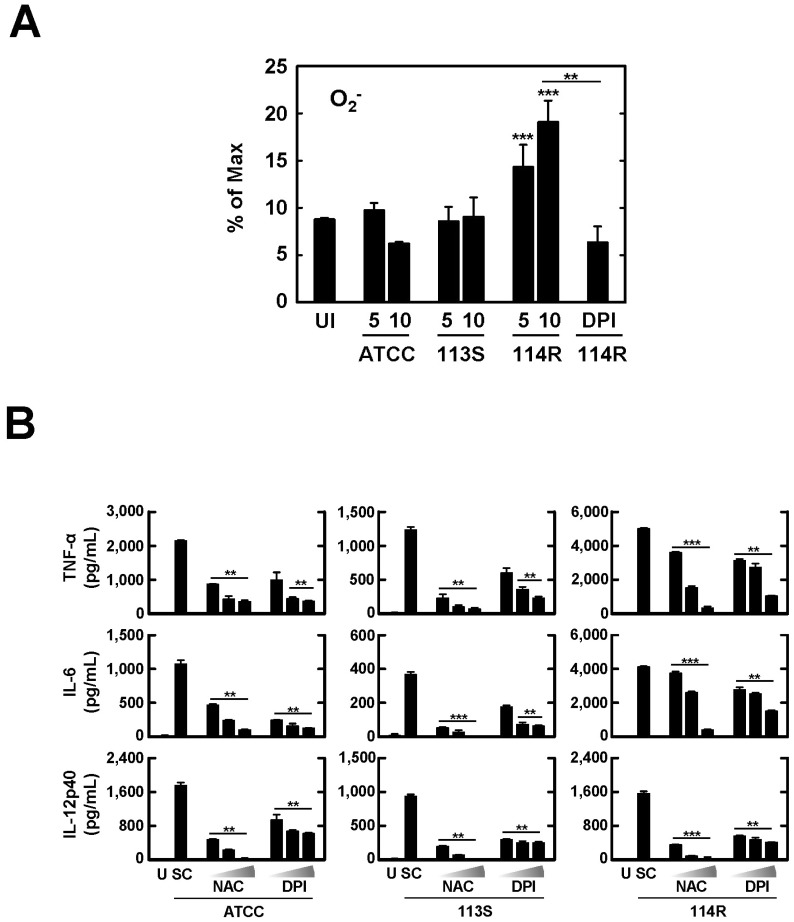
Mycobacterium scrofulaceum is an environmental and slow-growing atypical mycobacterium. Emerging evidence suggests that M. scrofulaceum infection is associated with cervical lymphadenitis in children and pulmonary or systemic infections in immunocompromised adults. However, the nature of host innate immune responses to M. scrofulaceum remains unclear. In this study, we examined the innate immune responses in murine bone marrow-derived macrophages (BMDMs) infected with different M. scrofulaceum strains including ATCC type strains and two clinically isolated strains (rough and smooth types). All three strains resulted in the production of proinflammatory cytokines in BMDMs mediated through toll-like receptor-2 and the adaptor MyD88. Activation of MAPKs (extracellular signal-regulated kinase 1/2, and p38, and c-Jun N-terminal kinase) and nuclear receptor (NF)-κB together with intracellular reactive oxygen species generation were required for the expression of proinflammatory cytokines in BMDMs. In addition, the rough morphotypes of M. scrofulaceum clinical strains induced higher levels of proinflammatory cytokines, MAPK and NF-κB activation, and ROS production than other strains. When mice were infected with different M. scrofulaceum strains, those infected with the rough strain showed the greatest hepatosplenomegaly, granulomatous lesions, and immune cell infiltration in the lungs. Notably, the bacterial load was higher in mice infected with rough colonies than in mice infected with ATCC or smooth strains. Collectively, these data indicate that rough M. scrofulaceum induces higher inflammatory responses and virulence than ATCC or smooth strains.
龟分枝杆菌是一种环境和生长缓慢的非典型分枝杆菌。新出现的证据表明,龟分枝杆菌感染与儿童颈部淋巴结炎以及免疫功能低下的成人肺部或全身感染有关。然而,宿主对龟分枝杆菌先天免疫反应的性质尚不清楚。在这项研究中,我们研究了不同龟分枝杆菌菌株(包括 ATCC 标准株和两种临床分离株[粗糙型和光滑型])感染的鼠骨髓来源的巨噬细胞(BMDM)中的先天免疫反应。所有三种菌株均通过 Toll 样受体-2 和接头 MyD88 导致 BMDM 中促炎细胞因子的产生。MAPK(细胞外信号调节激酶 1/2、p38 和 c-Jun N 末端激酶)和核受体(NF)-κB 的激活以及细胞内活性氧物质的产生是 BMDM 中促炎细胞因子表达所必需的。此外,龟分枝杆菌临床株的粗糙表型比其他菌株诱导更高水平的促炎细胞因子、MAPK 和 NF-κB 激活以及 ROS 产生。当小鼠感染不同的龟分枝杆菌菌株时,感染粗糙株的小鼠显示出最大的肝脾肿大、肺部肉芽肿病变和免疫细胞浸润。值得注意的是,感染粗糙菌落的小鼠的细菌载量高于感染 ATCC 或光滑株的小鼠。总的来说,这些数据表明粗糙型龟分枝杆菌比 ATCC 或光滑型菌株诱导更高的炎症反应和毒力。