Kim Jin Hee, Lee Jangbo
Department of Neurosurgery, College of Medicine, Korea University, Seoul, Korea.
Med Sci Monit. 2014 Dec 22;20:2759-66. doi: 10.12659/MSM.891343.
Neuronal cells are vulnerable to many stresses that can cause apoptosis. Reprogramming of fibroblasts into induced neural stem cells (iNSCs) is a potentially unlimited source of neurons. Discovering agents that can provide neuronal protection against these apoptotic stimuli is important for developing therapeutic strategies for various brain diseases.
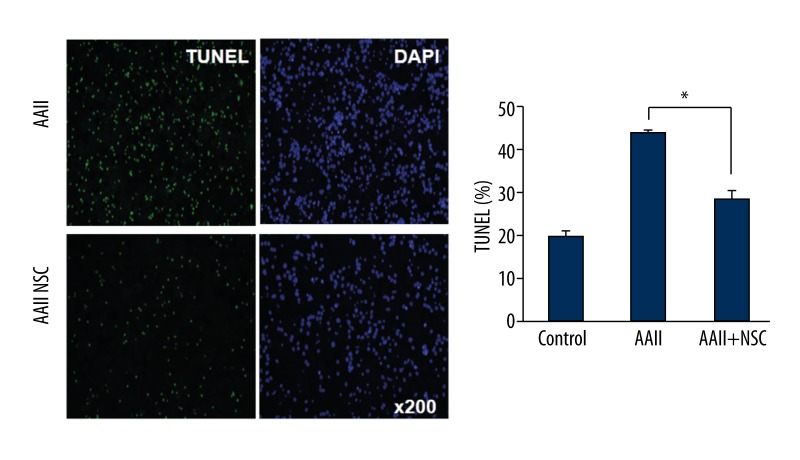
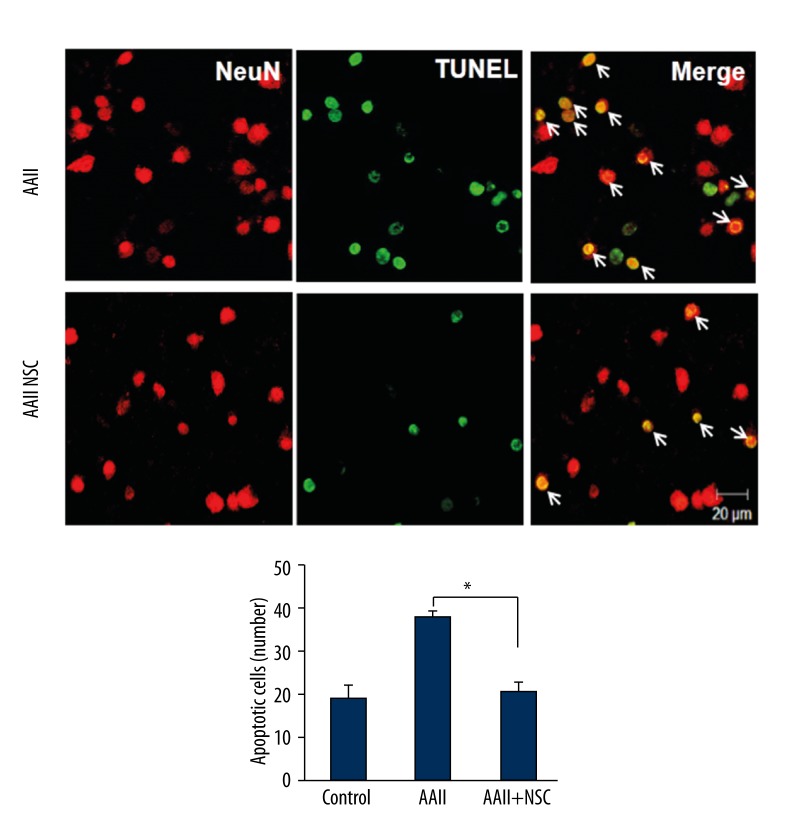
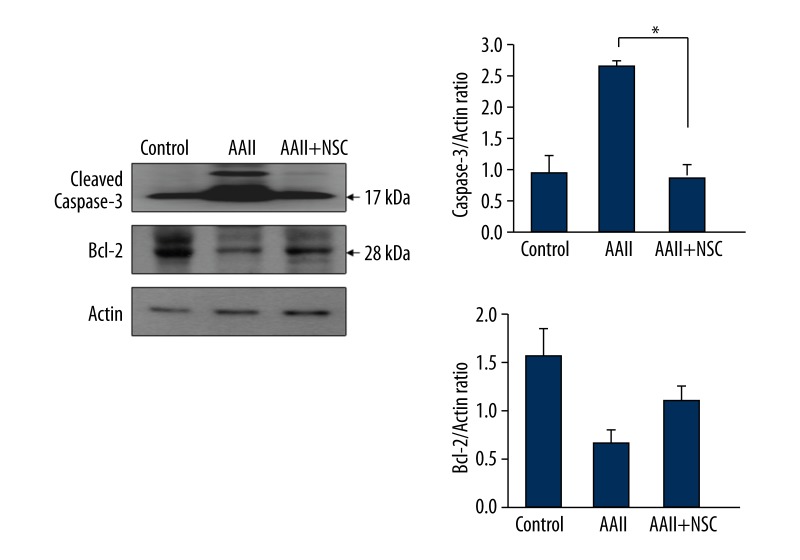
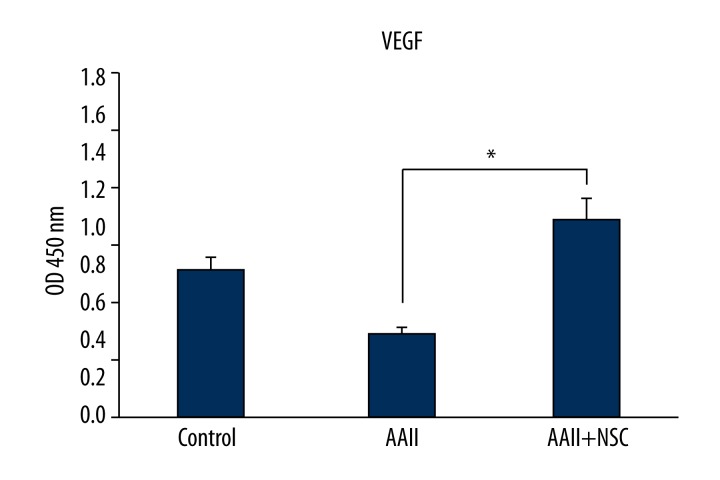
We investigated the therapeutic effects of iNSCs against apoptosis activator II (AAII)-induced apoptosis of cortical neuronal cells. Apoptosis was confirmed by double immunocytochemistry with NeuN and 4',6-diamidino-2-phenylindole using terminal deoxynucleotidyl transferase-mediated digoxigenin-dUTP-biotin nick-end labeling. We performed Western blot analyses for activated caspase-3, Bcl-2, phosphorylated Akt, and phosphorylated extracellular signal-regulated protein kinase (ERK). The level of vascular endothelial growth factor (VEGF) was analyzed using enzyme-linked immunosorbent assays (P<0.05).
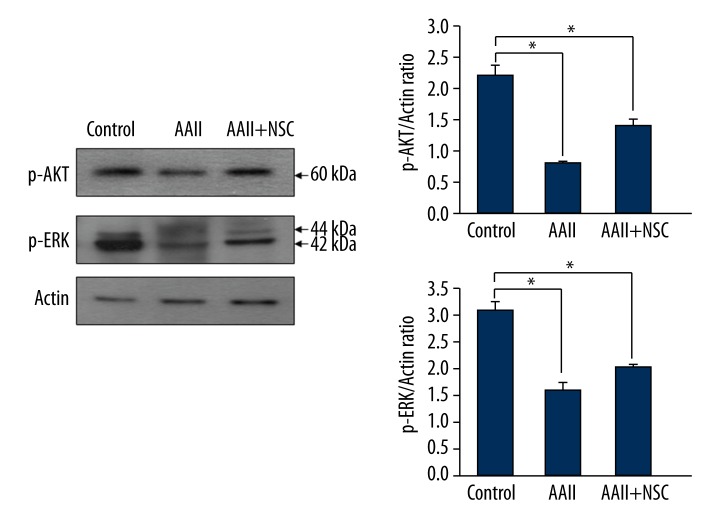
Cortical neuronal cells cultured with iNSCs had fewer apoptotic cells than those cultured without iNSCs. We found that cells cultured with iNSCs had a significantly lower caspase-3 level and a significantly higher Bcl-2 level than cells cultured without iNSCs. Cells cultured with iNSCs had higher VEGF levels than cells cultured without iNSCs. The levels of phosphorylated Akt and phosphorylated ERK were significantly higher in cells cultured with iNSCs than in cells cultured without iNSCs.
Our findings suggest that iNSCs activate Akt and ERK, which are associated with the inhibition of neuronal apoptosis. Thus, treatment with iNSCs may help reduce neuronal loss in brain disease. Further studies aimed at proving this hypothesis might help establish therapeutic agents that can prevent neuronal cell death and help cure neurodegenerative diseases.
神经元细胞易受多种可导致凋亡的应激因素影响。将成纤维细胞重编程为诱导神经干细胞(iNSC)是一种潜在的无限神经元来源。发现能够为神经元提供针对这些凋亡刺激的保护作用的药物,对于开发针对各种脑部疾病的治疗策略具有重要意义。
我们研究了iNSC对凋亡激活剂II(AAII)诱导的皮质神经元细胞凋亡的治疗作用。使用末端脱氧核苷酸转移酶介导的地高辛配基-dUTP-生物素缺口末端标记法,通过NeuN和4',6-二脒基-2-苯基吲哚的双重免疫细胞化学法确认凋亡。我们对活化的半胱天冬酶-3、Bcl-2、磷酸化的Akt和磷酸化的细胞外信号调节蛋白激酶(ERK)进行了蛋白质印迹分析。使用酶联免疫吸附测定法分析血管内皮生长因子(VEGF)水平(P<0.05)。
与未与iNSC共培养的皮质神经元细胞相比,与iNSC共培养的细胞凋亡细胞更少。我们发现,与未与iNSC共培养的细胞相比,与iNSC共培养的细胞中半胱天冬酶-3水平显著降低,Bcl-2水平显著升高。与未与iNSC共培养的细胞相比,与iNSC共培养的细胞中VEGF水平更高。与未与iNSC共培养的细胞相比,与iNSC共培养的细胞中磷酸化的Akt和磷酸化的ERK水平显著更高。
我们的研究结果表明,iNSC激活了与抑制神经元凋亡相关的Akt和ERK。因此,用iNSC进行治疗可能有助于减少脑部疾病中的神经元损失。旨在证实这一假设的进一步研究可能有助于建立能够预防神经元细胞死亡并有助于治愈神经退行性疾病的治疗药物。