Peng Shiwen, Wang Joshua W, Karanam Balasubramanyam, Wang Chenguang, Huh Warner K, Alvarez Ronald D, Pai Sara I, Hung Chien-fu, Wu T-C, Roden Richard B S
Department of Pathology, The Johns Hopkins University, Baltimore, Maryland, United States of America.
Department of Pathology, The Johns Hopkins University, Baltimore, Maryland, United States of America; Department of Biology and Center for Cancer Research, Carver Research Foundation, Tuskegee University, Tuskegee, Alabama, United States of America.
PLoS One. 2015 Jan 5;10(1):e116389. doi: 10.1371/journal.pone.0116389. eCollection 2015.
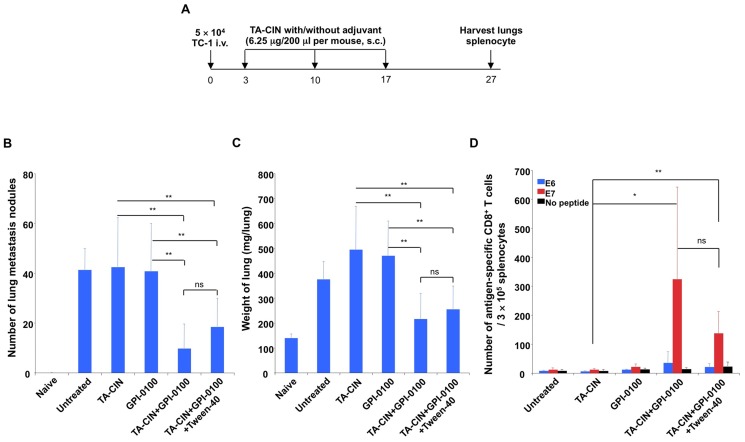
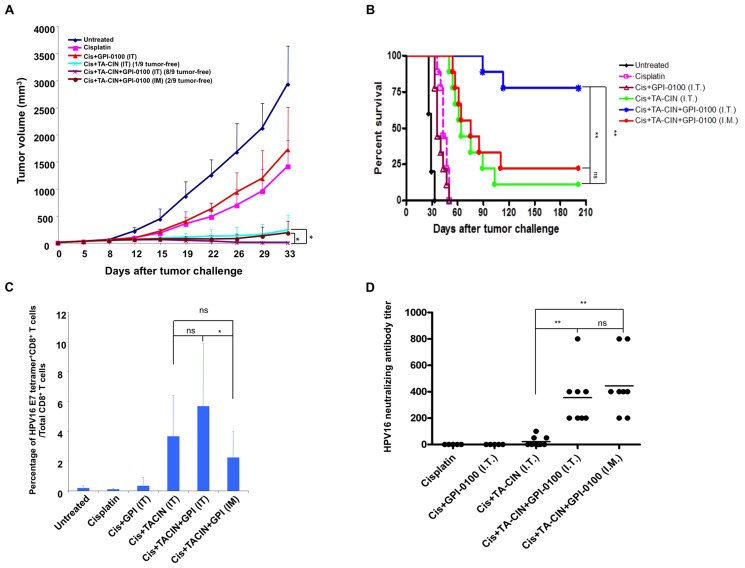
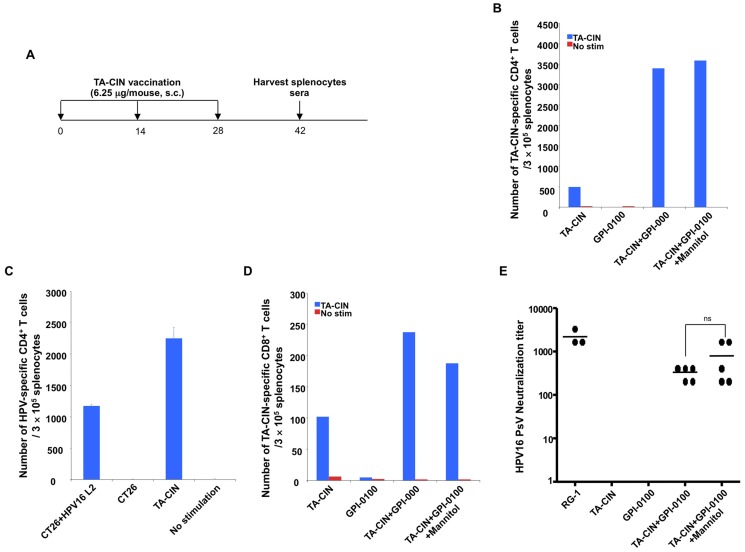
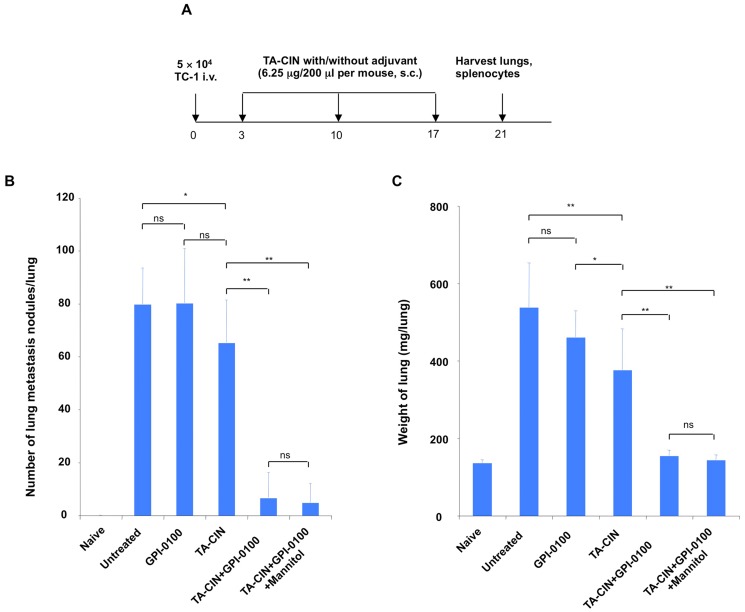
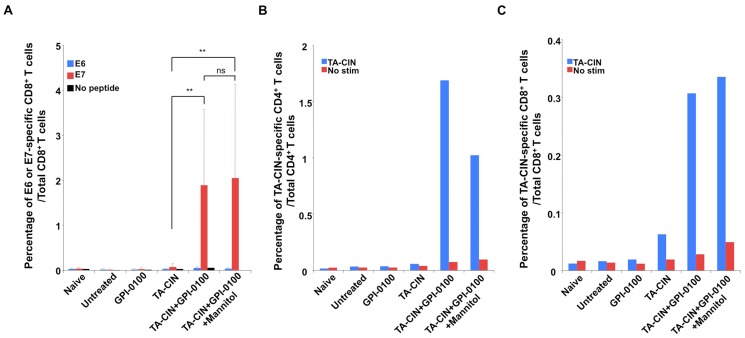
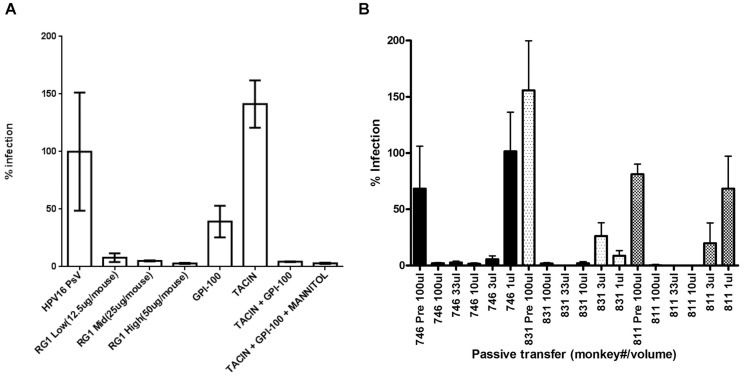
Clinical studies suggest that responses to HPV16 E6E7L2 fusion protein (TA-CIN) vaccination alone are modest, and GPI-0100 is a well-tolerated, potent adjuvant. Here we sought to optimize both the immunogenicity of TA-CIN via formulation with GPI-0100 and treatment of HPV16+ cancer by vaccination after cisplatin chemotherapy. HPV16 neutralizing serum antibody titers, CD4+ T cell proliferative and E6/E7-specific CD8+ T cell responses were significantly enhanced when mice were vaccinated subcutaneously (s.c.) or intramuscularly (i.m.) with TA-CIN formulated with GPI-0100. Vaccination was tested for therapy of mice bearing syngeneic HPV16 E6/E7+ tumors (TC-1) either in the lung or subcutaneously. Mice treated with TA-CIN/GPI-0100 vaccination exhibited robust E7-specific CD8+ T cell responses, which were associated with reduced tumor burden in the lung, whereas mice receiving either component alone were similar to controls. Since vaccination alone was not sufficient for cure, mice bearing s.c. TC-1 tumor were first treated with two doses of cisplatin and then vaccinated. Vaccination with TA-CIN/GPI-0100 i.m. substantially retarded tumor growth and extended survival after cisplatin therapy. Injection of TA-CIN alone, but not GPI-0100, into the tumor (i.t.) was similarly efficacious after cisplatin therapy, but the mice eventually succumbed. However, tumor regression and extended remission was observed in 80% of the mice treated with cisplatin and then intra-tumoral TA-CIN/GPI-0100 vaccination. These mice also exhibited robust E7-specific CD8+ T cell and HPV16 neutralizing antibody responses. Thus formulation of TA-CIN with GPI-0100 and intra-tumoral delivery after cisplatin treatment elicits potent therapeutic responses in a murine model of HPV16+ cancer.
临床研究表明,单独使用人乳头瘤病毒16型E6E7L2融合蛋白(TA-CIN)疫苗的反应有限,而GPI-0100是一种耐受性良好的强效佐剂。在此,我们试图通过与GPI-0100联合制剂来优化TA-CIN的免疫原性,并在顺铂化疗后通过疫苗接种治疗人乳头瘤病毒16型阳性癌症。当用与GPI-0100联合制剂的TA-CIN对小鼠进行皮下或肌肉注射时,人乳头瘤病毒16型中和血清抗体滴度、CD4+T细胞增殖以及E6/E7特异性CD8+T细胞反应均显著增强。对荷有同基因人乳头瘤病毒16型E6/E7+肿瘤(TC-1)的小鼠进行肺部或皮下接种疫苗的治疗效果进行了测试。用TA-CIN/GPI-0100疫苗接种治疗的小鼠表现出强烈的E7特异性CD8+T细胞反应,这与肺部肿瘤负担减轻相关,而单独接受任何一种成分治疗的小鼠与对照组相似。由于单独接种疫苗不足以治愈疾病,荷有皮下TC-1肿瘤的小鼠先接受两剂顺铂治疗,然后接种疫苗。肌肉注射TA-CIN/GPI-0100疫苗接种在顺铂治疗后显著延缓了肿瘤生长并延长了生存期。顺铂治疗后,单独向肿瘤内注射TA-CIN(而非GPI-0100)同样有效,但小鼠最终死亡。然而,在接受顺铂治疗后再进行肿瘤内TA-CIN/GPI-0100疫苗接种的小鼠中,80%观察到肿瘤消退和延长缓解期。这些小鼠还表现出强烈的E7特异性CD8+T细胞和人乳头瘤病毒16型中和抗体反应。因此,在顺铂治疗后,将TA-CIN与GPI-0100联合制剂并进行肿瘤内给药,可在人乳头瘤病毒16型阳性癌症的小鼠模型中引发有效的治疗反应。