Frederick A L, Yano H, Trifilieff P, Vishwasrao H D, Biezonski D, Mészáros J, Urizar E, Sibley D R, Kellendonk C, Sonntag K C, Graham D L, Colbran R J, Stanwood G D, Javitch J A
Neuroscience Graduate Program, Vanderbilt University School of Medicine, Nashville, TN, USA.
Departments of Psychiatry and Pharmacology, College of Physicians and Surgeons, Columbia University, New York, NY, USA.
Mol Psychiatry. 2015 Nov;20(11):1373-85. doi: 10.1038/mp.2014.166. Epub 2015 Jan 6.
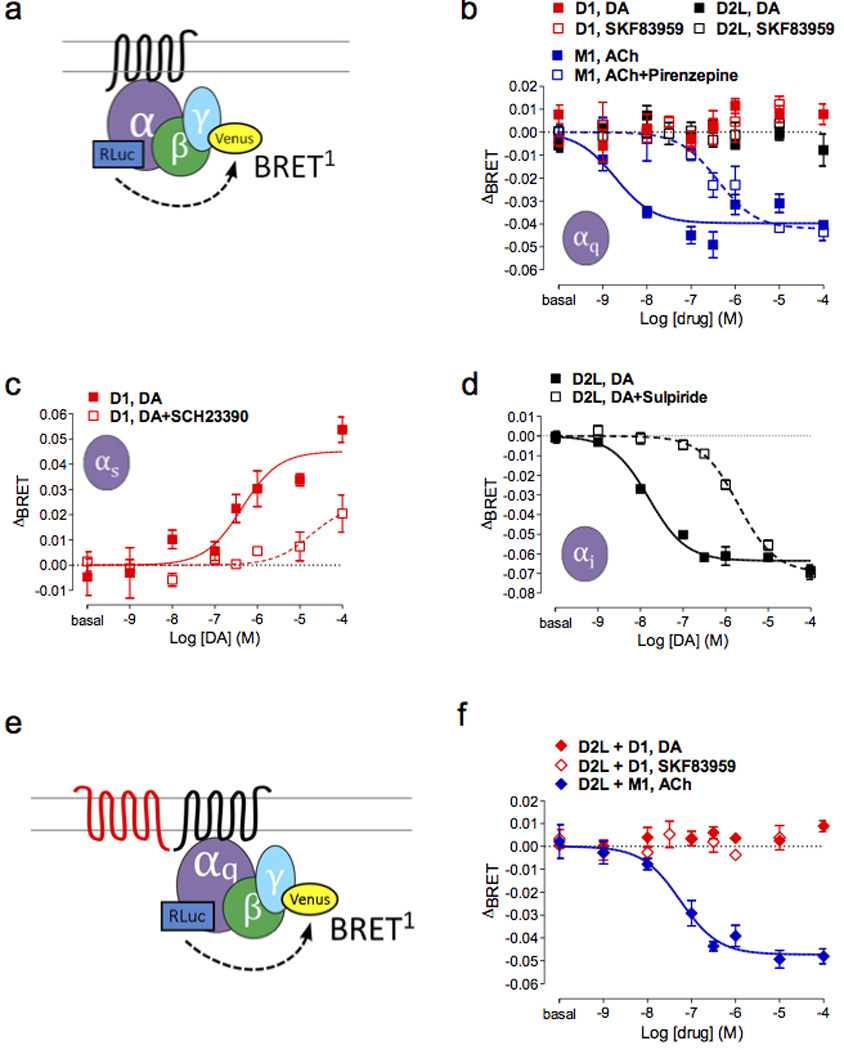
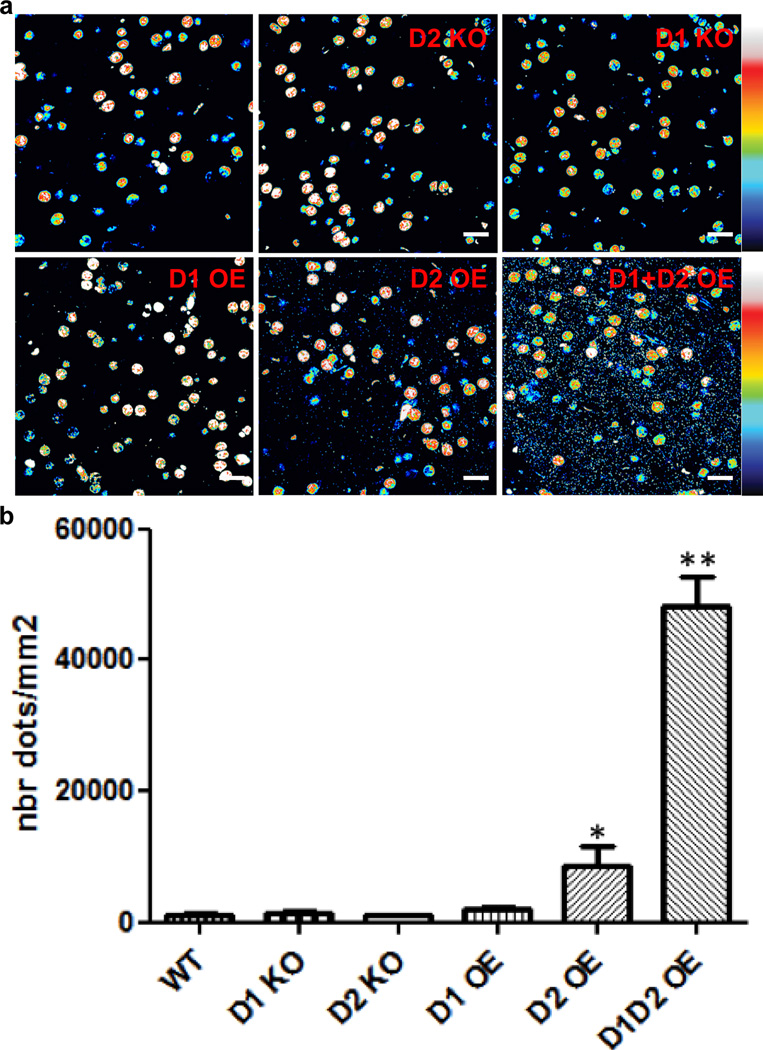
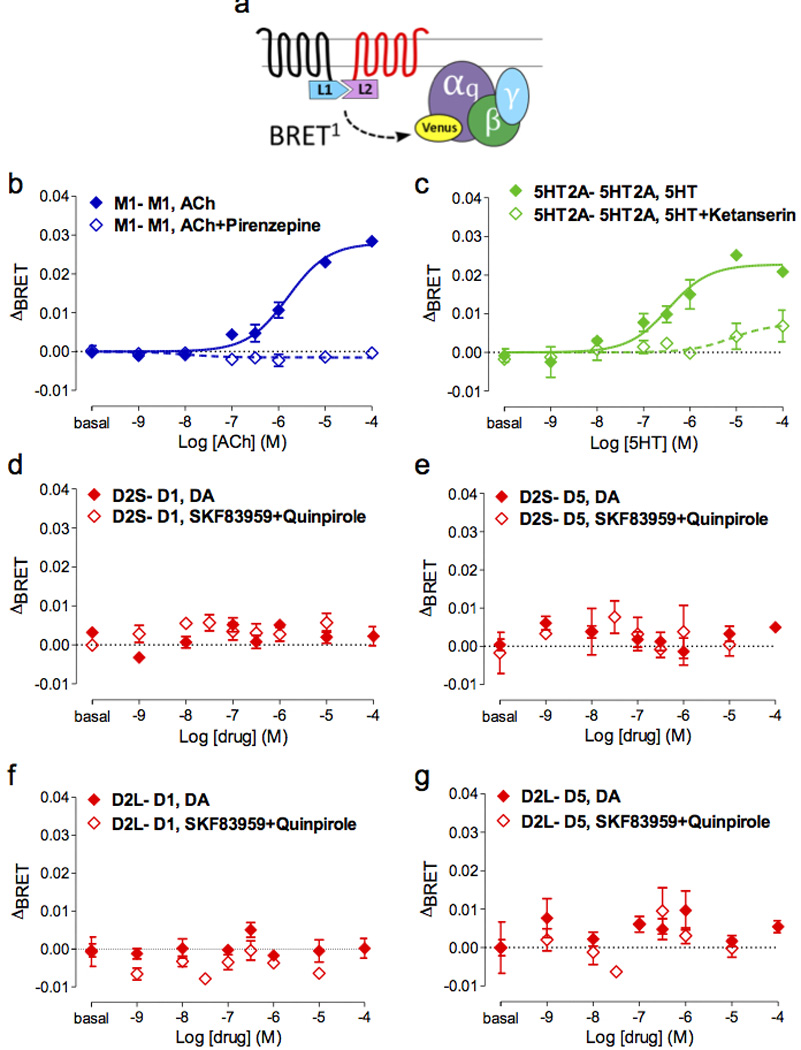
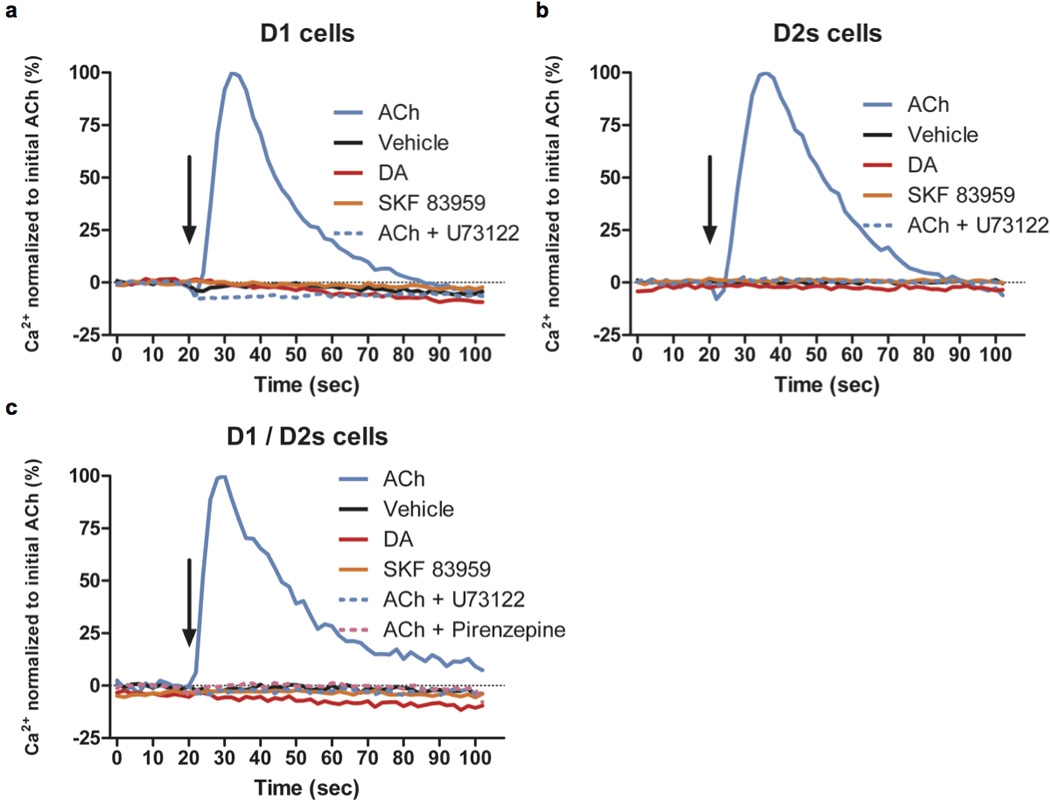
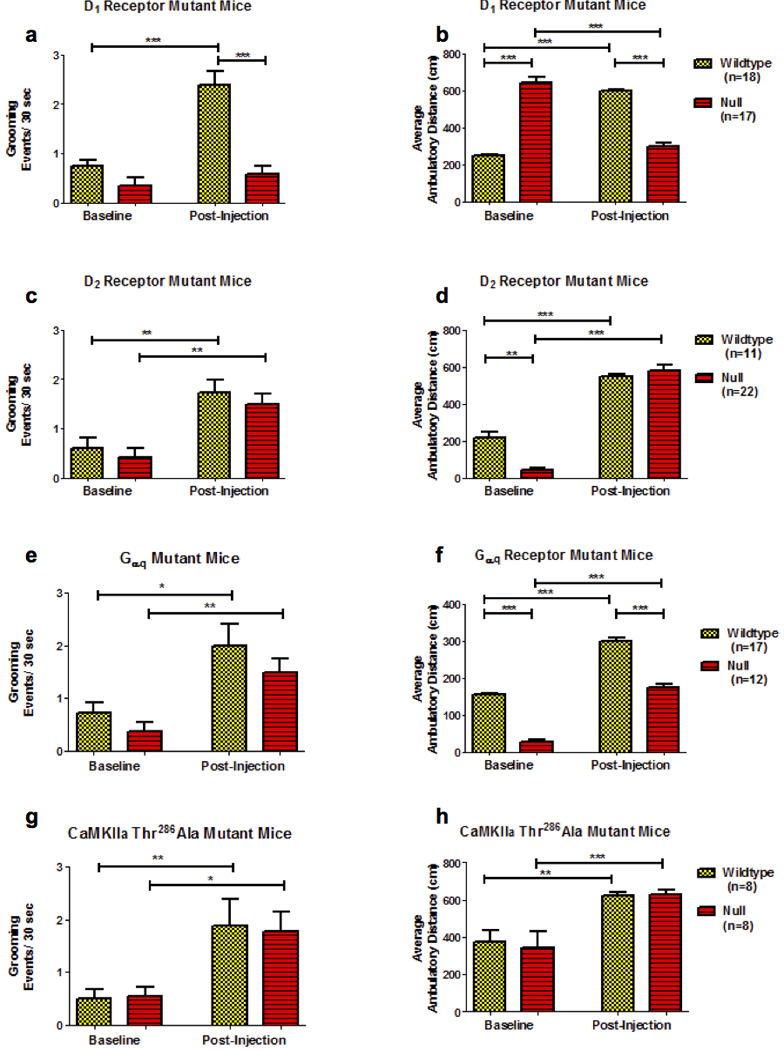
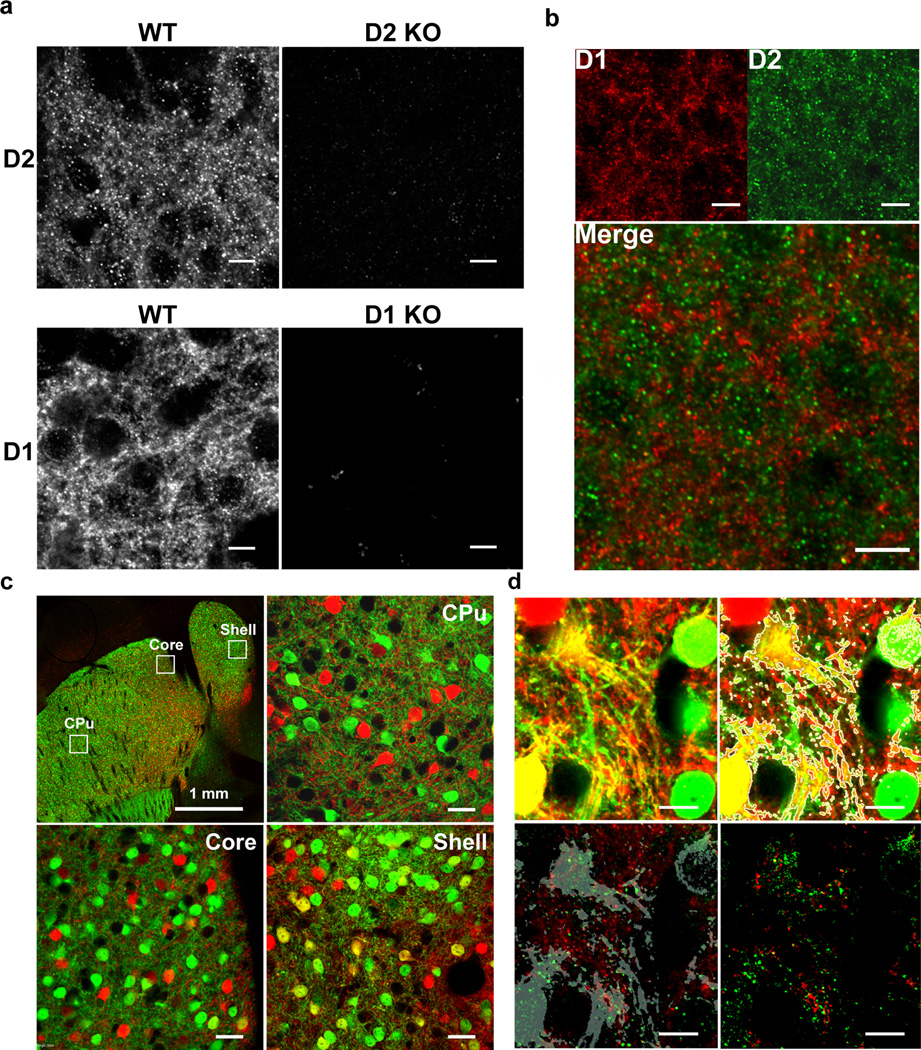
Hetero-oligomers of G-protein-coupled receptors have become the subject of intense investigation, because their purported potential to manifest signaling and pharmacological properties that differ from the component receptors makes them highly attractive for the development of more selective pharmacological treatments. In particular, dopamine D1 and D2 receptors have been proposed to form hetero-oligomers that couple to Gαq proteins, and SKF83959 has been proposed to act as a biased agonist that selectively engages these receptor complexes to activate Gαq and thus phospholipase C. D1/D2 heteromers have been proposed as relevant to the pathophysiology and treatment of depression and schizophrenia. We used in vitro bioluminescence resonance energy transfer, ex vivo analyses of receptor localization and proximity in brain slices, and behavioral assays in mice to characterize signaling from these putative dimers/oligomers. We were unable to detect Gαq or Gα11 protein coupling to homomers or heteromers of D1 or D2 receptors using a variety of biosensors. SKF83959-induced locomotor and grooming behaviors were eliminated in D1 receptor knockout (KO) mice, verifying a key role for D1-like receptor activation. In contrast, SKF83959-induced motor responses were intact in D2 receptor and Gαq KO mice, as well as in knock-in mice expressing a mutant Ala(286)-CaMKIIα that cannot autophosphorylate to become active. Moreover, we found that, in the shell of the nucleus accumbens, even in neurons in which D1 and D2 receptor promoters are both active, the receptor proteins are segregated and do not form complexes. These data are not compatible with SKF83959 signaling through Gαq or through a D1/D2 heteromer and challenge the existence of such a signaling complex in the adult animals that we used for our studies.
G蛋白偶联受体的异源寡聚体已成为深入研究的对象,因为它们据称有可能表现出与组成受体不同的信号传导和药理学特性,这使得它们在开发更具选择性的药物治疗方面极具吸引力。特别是,有人提出多巴胺D1和D2受体会形成与Gαq蛋白偶联的异源寡聚体,并且有人提出SKF83959作为一种偏向激动剂,可选择性地作用于这些受体复合物以激活Gαq,从而激活磷脂酶C。D1/D2异聚体被认为与抑郁症和精神分裂症的病理生理学及治疗有关。我们使用体外生物发光共振能量转移、脑片受体定位和接近度的离体分析以及小鼠行为分析来表征这些假定的二聚体/寡聚体的信号传导。使用多种生物传感器,我们无法检测到Gαq或Gα11蛋白与D1或D2受体的同源或异源寡聚体偶联。SKF83959诱导的运动和梳理行为在D1受体敲除(KO)小鼠中消失,证实了D1样受体激活的关键作用。相比之下,SKF83959诱导的运动反应在D2受体和Gαq KO小鼠以及表达不能自磷酸化而激活的突变体Ala(286)-CaMKIIα的敲入小鼠中保持完整。此外,我们发现,在伏隔核壳中,即使在D1和D2受体启动子均活跃的神经元中,受体蛋白也是分离的,不会形成复合物。这些数据与SKF83959通过Gαq或通过D1/D2异聚体进行信号传导不相符,并对我们用于研究的成年动物中这种信号复合物的存在提出了质疑。