Dyer Andrew R, Brown Cynthia S, Espeland Erin K, McKay John K, Meimberg Harald, Rice Kevin J
Department of Biology & Geology, University of South Carolina Aiken Aiken, SC, USA.
Department of Bioagricultural Sciences and Pest Management, Colorado State University Fort Collins, CO, USA.
Evol Appl. 2010 Mar;3(2):179-92. doi: 10.1111/j.1752-4571.2010.00118.x.
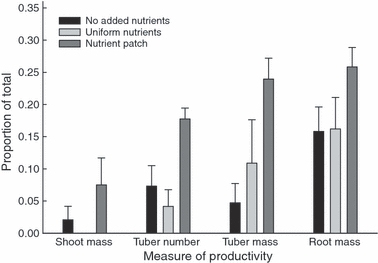
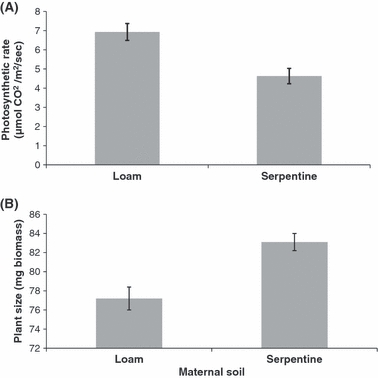
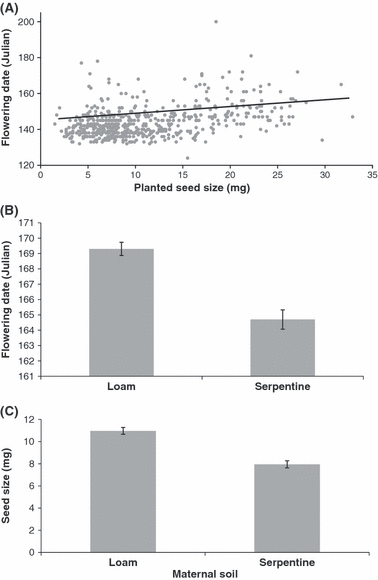
High-impact biological invasions often involve establishment and spread in disturbed, high-resource patches followed by establishment and spread in biotically or abiotically stressful areas. Evolutionary change may be required for the second phase of invasion (establishment and spread in stressful areas) to occur. When species have low genetic diversity and short selection history, within-generation phenotypic plasticity is often cited as the mechanism through which spread across multiple habitat types can occur. We show that trans-generational plasticity (TGP) can result in pre-adapted progeny that exhibit traits associated with increased fitness both in high-resource patches and in stressful conditions. In the invasive sedge, Cyperus esculentus, maternal plants growing in nutrient-poor patches can place disproportional number of propagules into nutrient-rich patches. Using the invasive annual grass, Aegilops triuncialis, we show that maternal response to soil conditions can confer greater stress tolerance in seedlings in the form of greater photosynthetic efficiency. We also show TGP for a phenological shift in a low resource environment that results in greater stress tolerance in progeny. These lines of evidence suggest that the maternal environment can have profound effects on offspring success and that TGP may play a significant role in some plant invasions.
具有重大影响的生物入侵通常包括在受到干扰的高资源斑块中定殖和扩散,随后在生物或非生物胁迫区域定殖和扩散。入侵的第二阶段(在胁迫区域定殖和扩散)可能需要进化变化。当物种的遗传多样性较低且选择历史较短时,代内表型可塑性常被认为是物种能够在多种栖息地类型中扩散的机制。我们发现,跨代可塑性(TGP)可以产生预先适应环境的后代,这些后代在高资源斑块和胁迫条件下都表现出与适应性增加相关的性状。在入侵性莎草香附子中,生长在营养贫瘠斑块中的母本植物会将不成比例数量的繁殖体放置到营养丰富的斑块中。以入侵一年生禾本科植物节节麦为例,我们发现母本对土壤条件的反应能够以更高的光合效率的形式,使幼苗具有更强的胁迫耐受性。我们还发现,在低资源环境中,TGP导致物候转变,从而使后代具有更强的胁迫耐受性。这些证据表明,母本环境可能对后代的成功产生深远影响,并且TGP可能在某些植物入侵中发挥重要作用。