Tsujimura Taro, Klein Felix A, Langenfeld Katja, Glaser Juliane, Huber Wolfgang, Spitz François
Developmental Biology Unit, European Molecular Biology Laboratory, Heidelberg, Germany.
Genome Biology Unit, European Molecular Biology Laboratory, Heidelberg, Germany.
PLoS Genet. 2015 Jan 8;11(1):e1004897. doi: 10.1371/journal.pgen.1004897. eCollection 2015 Jan.
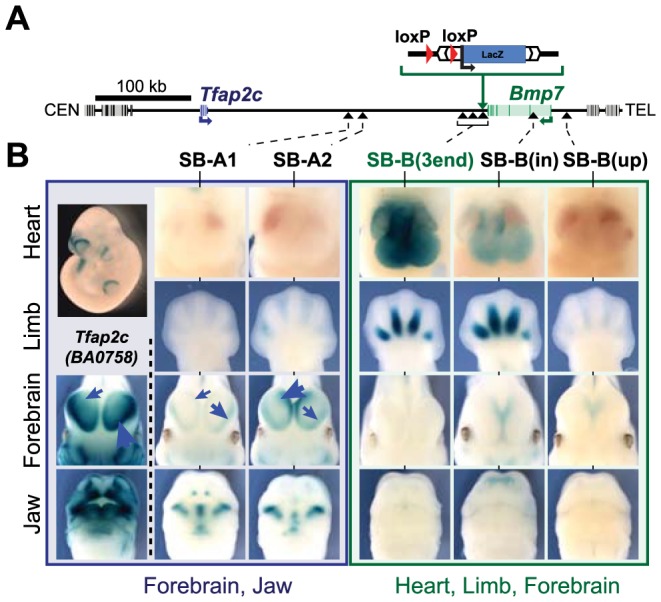
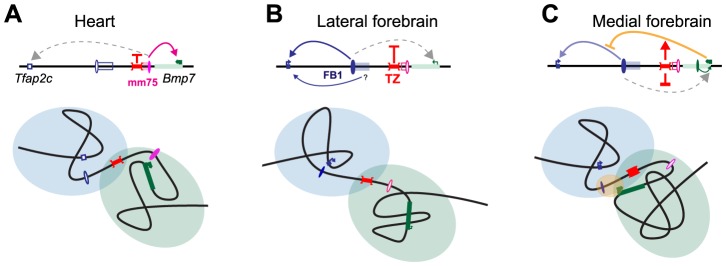
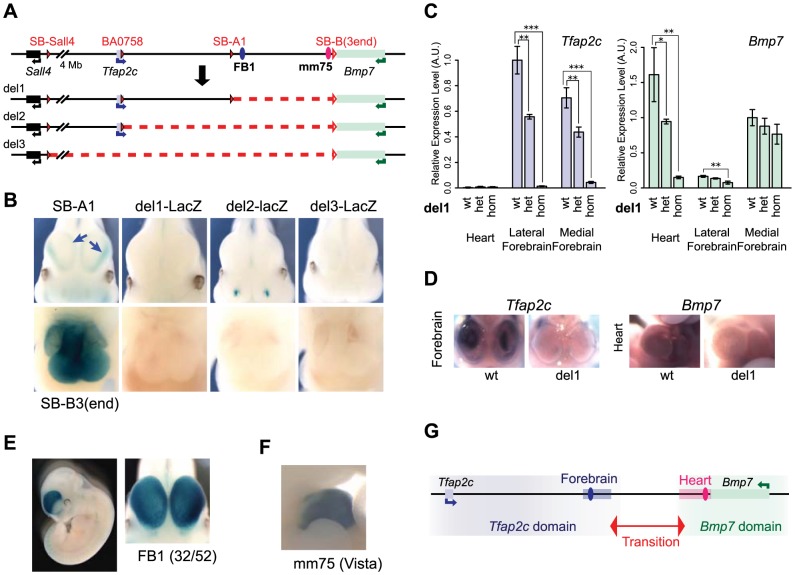
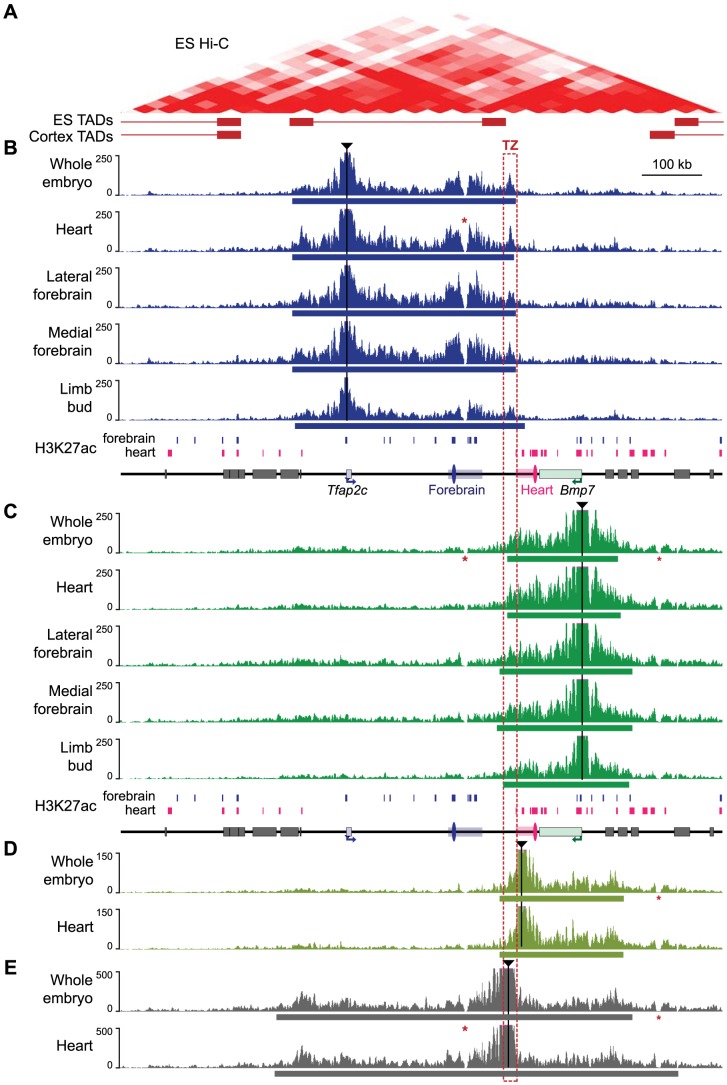
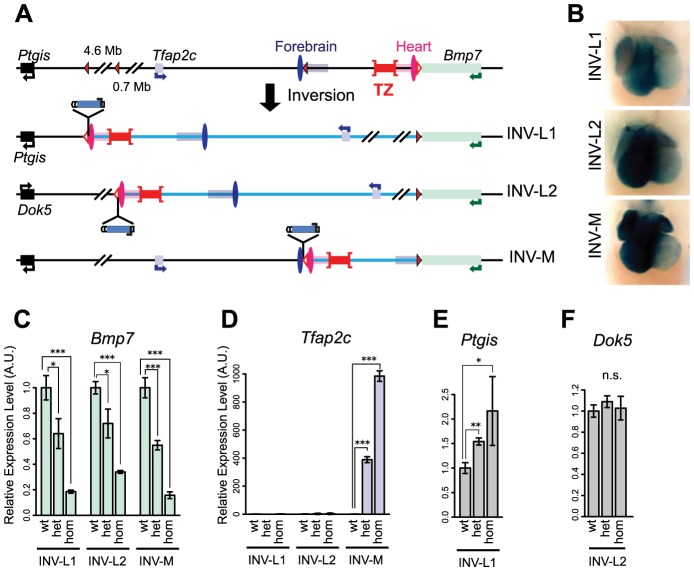
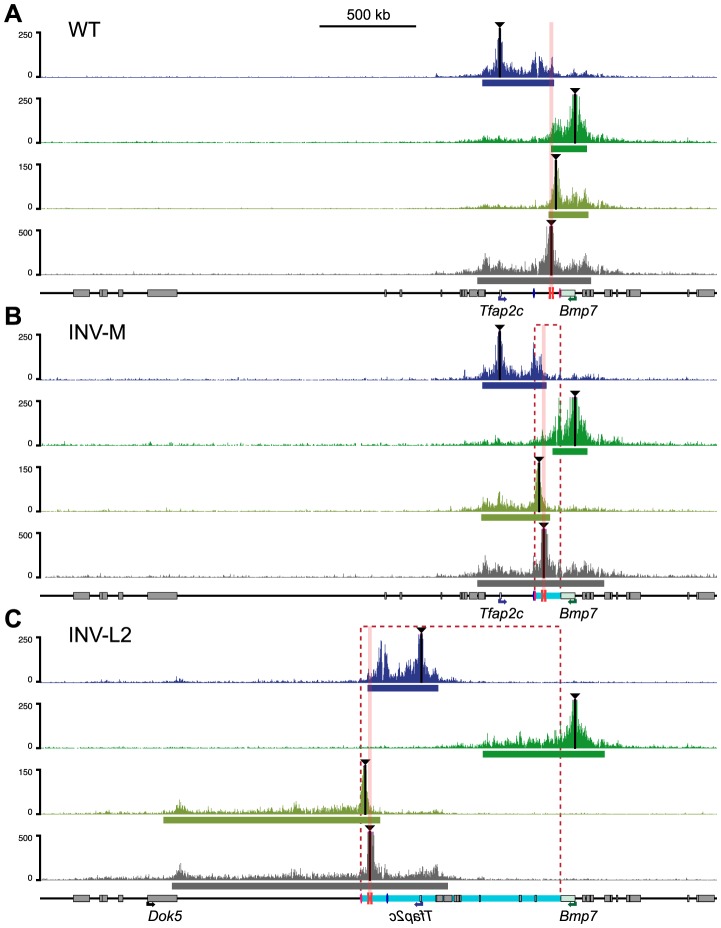
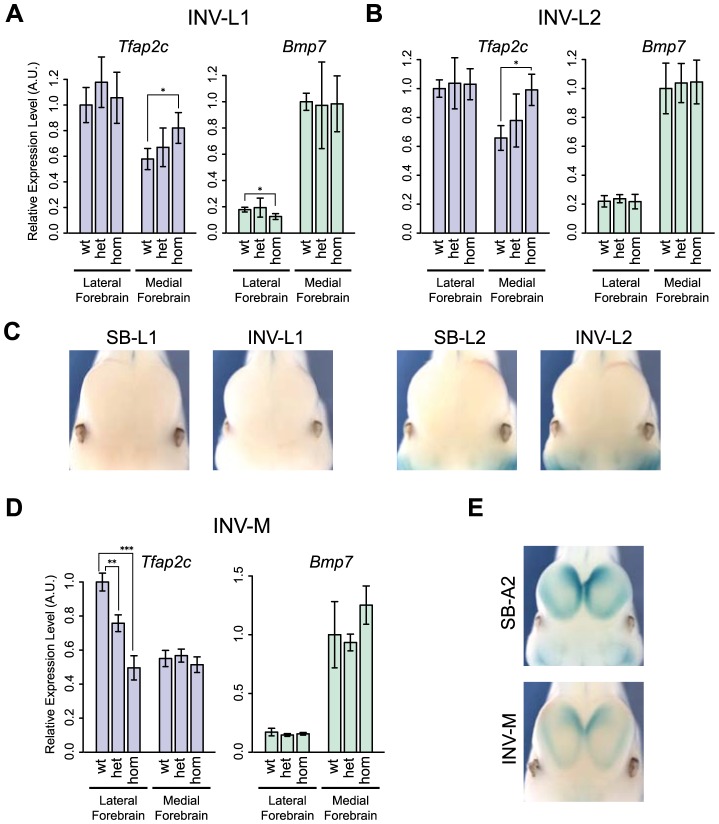
Despite the well-documented role of remote enhancers in controlling developmental gene expression, the mechanisms that allocate enhancers to genes are poorly characterized. Here, we investigate the cis-regulatory organization of the locus containing the Tfap2c and Bmp7 genes in vivo, using a series of engineered chromosomal rearrangements. While these genes lie adjacent to one another, we demonstrate that they are independently regulated by distinct sets of enhancers, which in turn define non-overlapping regulatory domains. Chromosome conformation capture experiments reveal a corresponding partition of the locus in two distinct structural entities, demarcated by a discrete transition zone. The impact of engineered chromosomal rearrangements on the topology of the locus and the resultant gene expression changes indicate that this transition zone functionally organizes the structural partition of the locus, thereby defining enhancer-target gene allocation. This partition is, however, not absolute: we show that it allows competing interactions across it that may be non-productive for the competing gene, but modulate expression of the competed one. Altogether, these data highlight the prime role of the topological organization of the genome in long-distance regulation of gene expression.
尽管远距离增强子在控制发育基因表达方面的作用已有充分记录,但将增强子分配给基因的机制仍知之甚少。在这里,我们利用一系列工程染色体重排,在体内研究了包含Tfap2c和Bmp7基因的基因座的顺式调控组织。虽然这些基因彼此相邻,但我们证明它们由不同的增强子集合独立调控,这些增强子又定义了不重叠的调控域。染色体构象捕获实验揭示了该基因座在两个不同结构实体中的相应划分,由一个离散的过渡区界定。工程染色体重排对基因座拓扑结构的影响以及由此产生的基因表达变化表明,这个过渡区在功能上组织了基因座的结构划分,从而定义了增强子-靶基因的分配。然而,这种划分并非绝对:我们表明它允许跨区的竞争性相互作用,这对竞争基因可能没有成效,但会调节被竞争基因的表达。总之,这些数据突出了基因组拓扑组织在基因表达远距离调控中的主要作用。