Cuchillo-Ibañez Inmaculada, Lopez-Font Inmaculada, Boix-Amorós Alba, Brinkmalm Gunnar, Blennow Kaj, Molinuevo Jose-Luis, Sáez-Valero Javier
Instituto de Neurociencias de Alicante, Universidad Miguel Hernández-CSIC, Av, Ramón y Cajal s/n, Sant Joan d'Alacant, Spain.
Mol Neurodegener. 2015 Jan 8;10:2. doi: 10.1186/1750-1326-10-2.
Soluble fragments of the amyloid precursor protein (APP) generated by α- and β-secretases, sAPPα and sAPPβ, have been postulated as promising new cerebrospinal fluid (CSF) biomarkers for the clinical diagnosis of Alzheimer's disease (AD). However, the capacity of these soluble proteins to assemble has not been explored and could be relevant. Our aim is to characterize possible sAPP oligomers that could contribute to the quantification of sAPPα and sAPPβ in CSF by ELISA, as well as to characterize the possible presence of soluble full-length APP (sAPPf).
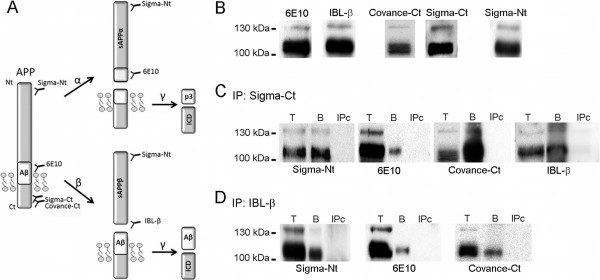
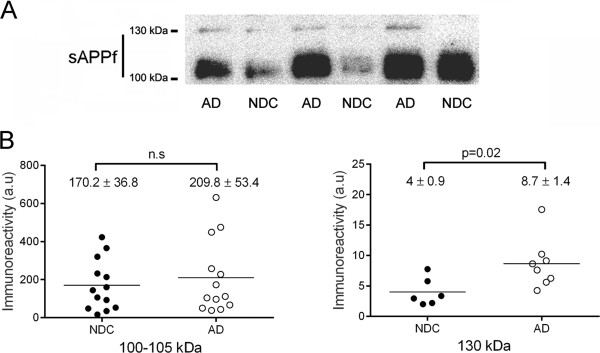
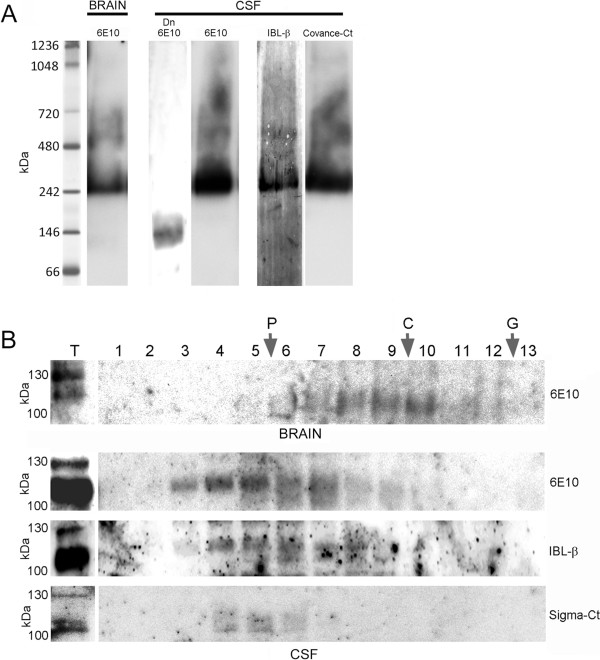
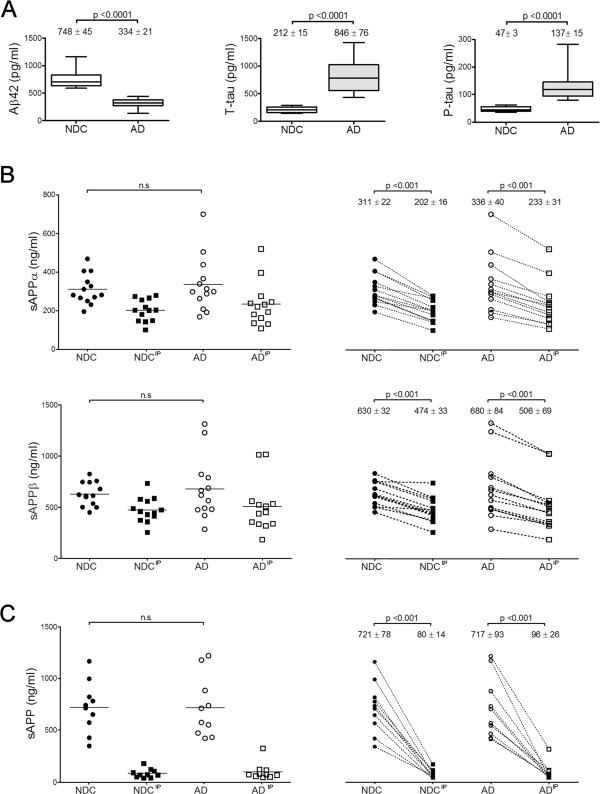
We employed co-immunoprecipitation, native polyacrylamide gel electrophoresis and ultracentrifugation in sucrose density gradients to characterize sAPP oligomers in CSF. We have characterized the presence of sAPPf in CSF from NDC and AD subjects and demonstrated that all forms, including sAPPα and sAPPβ, are capable of assembling into heteromers, which differ from brain APP membrane-dimers. We measured sAPPf, sAPPα and sAPPβ by ELISA in CSF samples from AD (n = 13) and non-disease subjects (NDC, n = 13) before and after immunoprecipitation with antibodies against the C-terminal APP or against sAPPβ. We demonstrated that these sAPP heteromers participate in the quantification of sAPPα and sAPPβ by ELISA. Immunoprecipitation with a C-terminal antibody to remove sAPPf reduced by ~30% the determinations of sAPPα and sAPPβ by ELISA, whereas immunoprecipitation with an APPβ antibody reduced by ~80% the determination of sAPPf and sAPPα.
The presence of sAPPf and sAPP heteromers should be taken into consideration when exploring the levels of sAPPα and sAPPβ as potential CSF biomarkers.
由α-和β-分泌酶产生的淀粉样前体蛋白(APP)的可溶性片段,即sAPPα和sAPPβ,被认为是用于阿尔茨海默病(AD)临床诊断的有前景的新型脑脊液(CSF)生物标志物。然而,这些可溶性蛋白的组装能力尚未得到探索,可能具有相关性。我们的目的是鉴定可能有助于通过酶联免疫吸附测定(ELISA)对CSF中的sAPPα和sAPPβ进行定量的sAPP寡聚体,并鉴定可溶性全长APP(sAPPf)的可能存在情况。
我们采用免疫共沉淀、非变性聚丙烯酰胺凝胶电泳和蔗糖密度梯度超速离心来鉴定CSF中的sAPP寡聚体。我们已经鉴定了非疾病对照(NDC)和AD患者CSF中sAPPf的存在,并证明所有形式,包括sAPPα和sAPPβ,都能够组装成异聚体,这与脑APP膜二聚体不同。我们在使用针对APP C末端或sAPPβ的抗体进行免疫沉淀之前和之后,通过ELISA测量了AD患者(n = 13)和非疾病对照(NDC,n = 13)的CSF样本中的sAPPf、sAPPα和sAPPβ。我们证明这些sAPP异聚体参与了通过ELISA对sAPPα和sAPPβ的定量。用C末端抗体进行免疫沉淀以去除sAPPf,使ELISA对sAPPα和sAPPβ的测定降低了约30%,而用APPβ抗体进行免疫沉淀使sAPPf和sAPPα的测定降低了约80%。
在探索sAPPα和sAPPβ作为潜在CSF生物标志物的水平时,应考虑sAPPf和sAPP异聚体的存在。