Bond William J
South African Environmental Observation Network - National Research Foundation and Department of Biological Sciences - University of Cape Town Rondebosch, South Africa.
Front Plant Sci. 2015 Jan 5;5:749. doi: 10.3389/fpls.2014.00749. eCollection 2014.
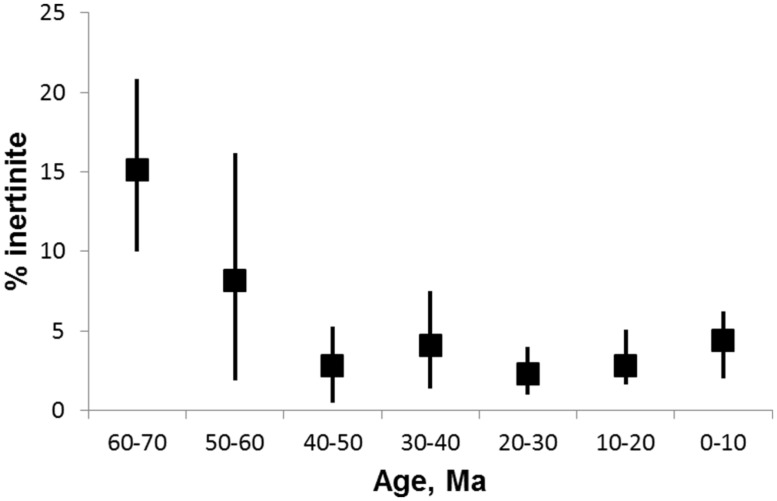
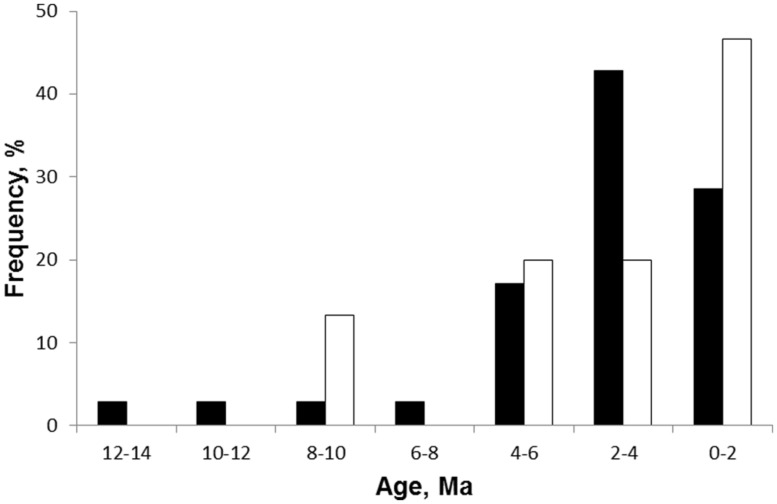
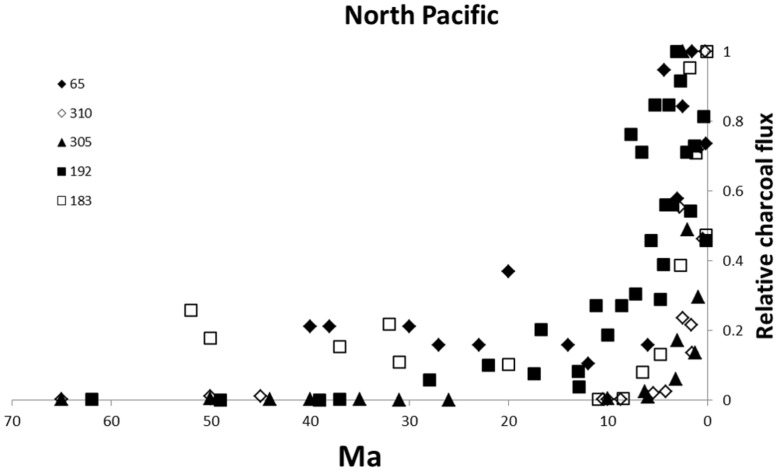
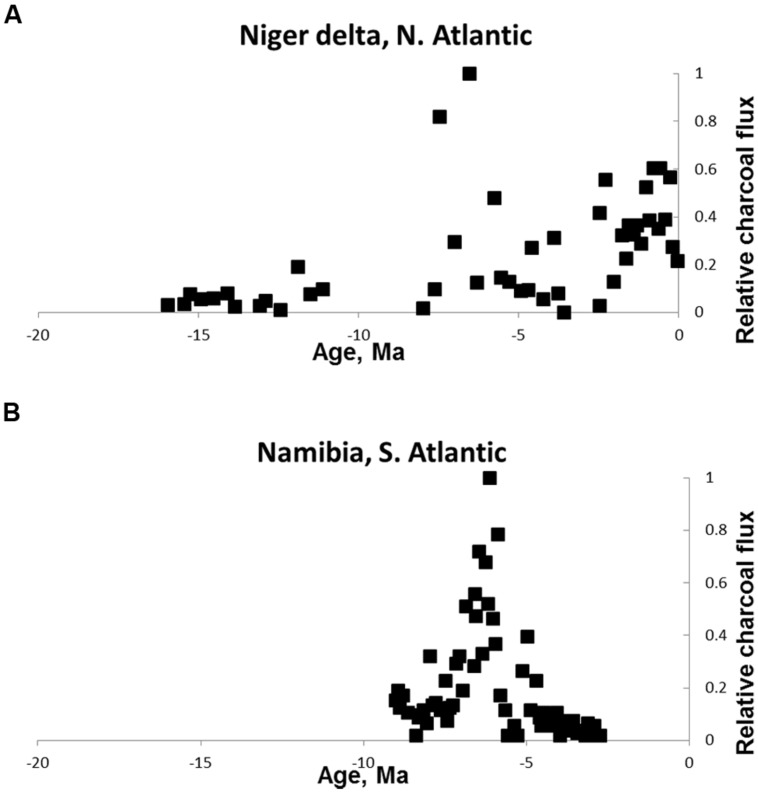
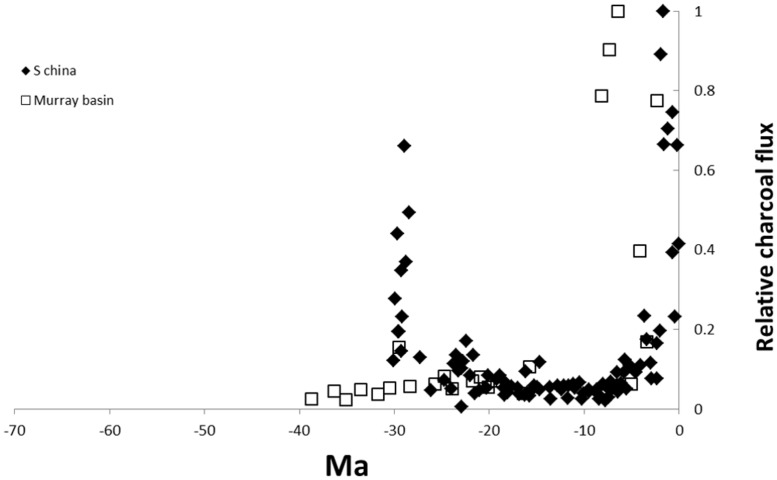
Modern flammable ecosystems include tropical and subtropical savannas, steppe grasslands, boreal forests, and temperate sclerophyll shrublands. Despite the apparent fiery nature of much contemporary vegetation, terrestrial fossil evidence would suggest we live in a time of low fire activity relative to the deep past. The inertinite content of coal, fossil charcoal, is strikingly low from the Eocene to the Pleistocene and no charcoalified mesofossils have been reported for the Cenozoic. Marine cores have been analyzed for charcoal in the North Pacific, the north and south Atlantic off Africa, and the south China sea. These tell a different story with the oldest records indicating low levels of fire activity from the Eocene but a surge of fire from the late Miocene (~7 Ma). Phylogenetic studies of woody plants adapted to frequent savanna fires show them beginning to appear from the Late Miocene with peak origins in the late Pliocene in both South American and African lineages. Phylogenetic studies indicate ancient origins (60 Ma+) for clades characteristic of flammable sclerophyll vegetation from Australia and the Cape region of South Africa. However, as for savannas, there was a surge of speciation from the Late Miocene associated with the retreat of closed fire-intolerant forests. The wide geographic spread of increased fire activity in the last few million years suggests a global cause. However, none of the potential global factors (oxygen, rainfall seasonality, CO2, novel flammable growth forms) provides an adequate explanation as yet. The global patterns and processes of fire and flammable vegetation in the Cenozoic, especially since the Late Miocene, deserve much more attention to better understand fire in the earth system.
现代易燃生态系统包括热带和亚热带稀树草原、草原、北方森林和温带硬叶灌丛。尽管许多当代植被表面上具有易燃性,但陆地化石证据表明,相对于遥远的过去,我们生活在一个火灾活动较少的时期。从始新世到更新世,煤中惰质体(即化石木炭)的含量极低,而且没有关于新生代木炭化中型化石的报道。人们对北太平洋、非洲沿岸的北大西洋和南大西洋以及南海的海洋岩芯进行了木炭分析。这些分析揭示了一个不同的情况,最古老的记录表明,始新世的火灾活动水平较低,但从中新世晚期(约700万年前)开始火灾激增。对适应稀树草原频繁火灾的木本植物进行的系统发育研究表明,它们从晚中新世开始出现,在南美洲和非洲谱系的上新世晚期起源达到峰值。系统发育研究表明,澳大利亚和南非开普地区易燃硬叶植被特有的分支具有古老的起源(6000万年前以上)。然而,与稀树草原一样,从中新世晚期开始出现了物种形成激增,这与不耐火的封闭森林的退缩有关。在过去几百万年里,火灾活动增加的广泛地理分布表明存在一个全球性原因。然而,目前没有一个潜在的全球因素(氧气、降雨季节性、二氧化碳、新型易燃生长形式)能提供充分的解释。新生代,尤其是自中新世晚期以来,火灾和易燃植被的全球模式和过程值得更多关注,以便更好地理解地球系统中的火灾。