Soupene Eric, Wang Derek, Kuypers Frans A
Children's Hospital Oakland Research Institute, Oakland, California USA.
Microbiologyopen. 2015 Apr;4(2):235-251. doi: 10.1002/mbo3.234. Epub 2015 Jan 21.
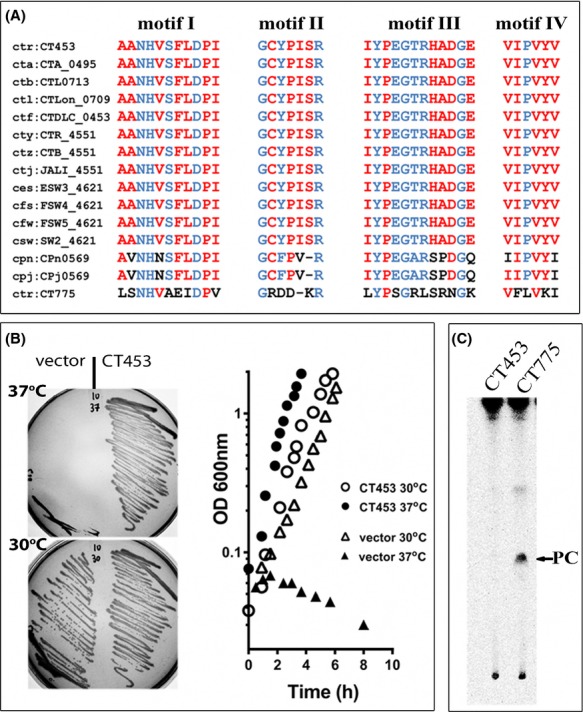
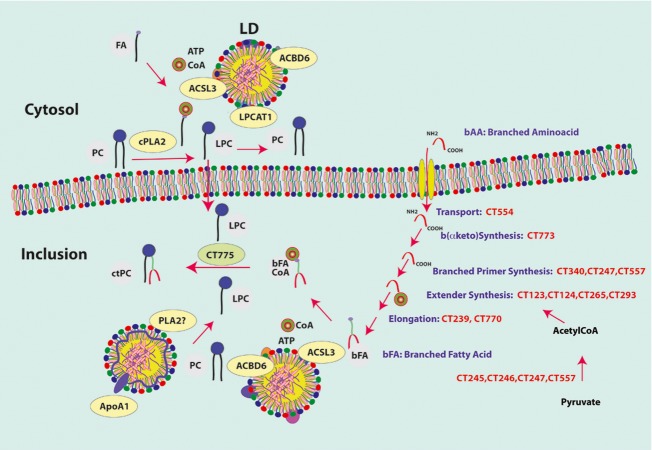
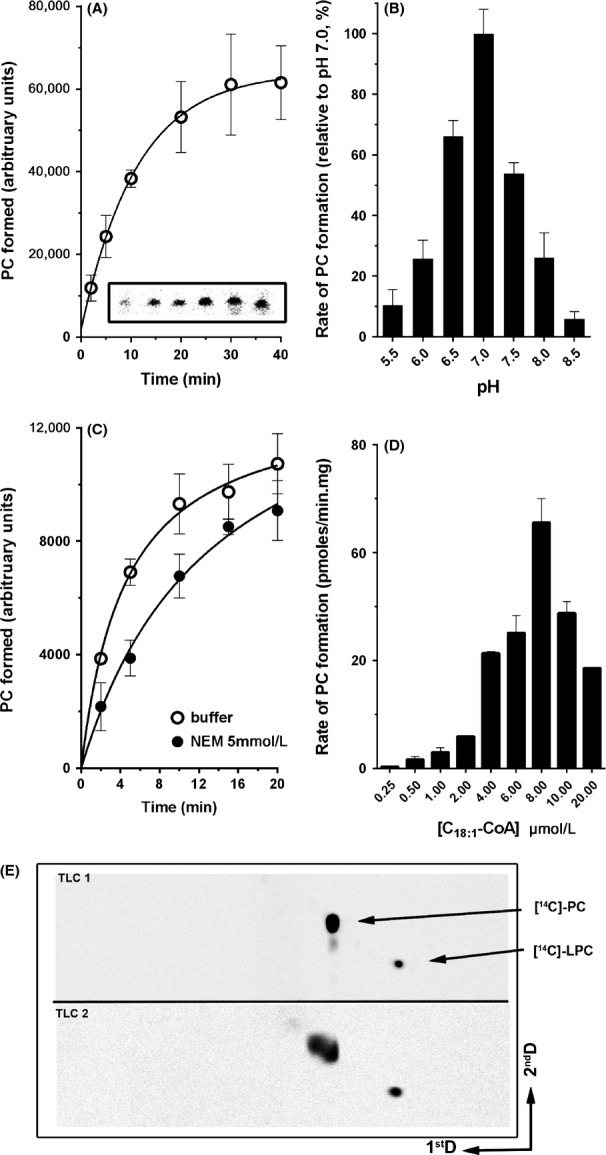
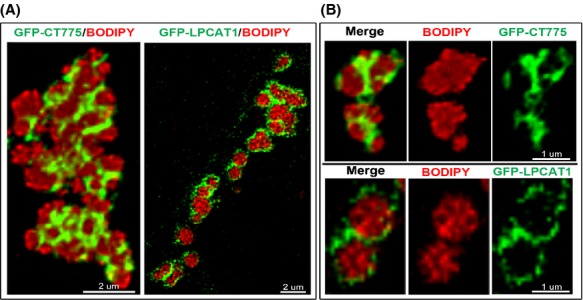
The bacterial human pathogen Chlamydia trachomatis invades cells as an infectious elementary body (EB). The EB is internalized into a vacuole that is hidden from the host defense mechanism, and is modified to sustain the development of the replicative reticulate body (RB). Inside this parasitophorous compartment, called the inclusion, the pathogen survives supported by an active exchange of nutrients and proteins with the host cell. We show that host lipids are scavenged and modified into bacterial-specific lipids by the action of a shared human-bacterial acylation mechanism. The bacterial acylating enzymes for the essential lipids 1-acyl-sn-glycerol 3-phosphate and 1-acyl-sn-phosphatidylcholine were identified as CT453 and CT775, respectively. Bacterial CT775 was found to be associated with lipid droplets (LDs). During the development of C. trachomatis, the human acyl-CoA carrier hACBD6 was recruited to cytosolic LDs and translocated into the inclusion. hACBD6 protein modulated the activity of CT775 in an acyl-CoA dependent fashion and sustained the activity of the bacterial acyltransferase by buffering the concentration of acyl-CoAs. We propose that disruption of the binding activity of the acyl-CoA carrier might represent a new drug-target to prevent growth of C. trachomatis.
人类细菌性病原体沙眼衣原体以感染性原体(EB)的形式侵入细胞。原体被内化到一个液泡中,该液泡避开了宿主防御机制,并经过修饰以维持复制型网状体(RB)的发育。在这个被称为包涵体的寄生小室中,病原体通过与宿主细胞进行营养物质和蛋白质的活跃交换而存活。我们发现,宿主脂质通过一种人类 - 细菌共享的酰化机制被清除并修饰为细菌特异性脂质。必需脂质1 - 酰基 - sn - 甘油3 - 磷酸和1 - 酰基 - sn - 磷脂酰胆碱的细菌酰化酶分别被鉴定为CT453和CT775。发现细菌CT775与脂滴(LDs)相关。在沙眼衣原体的发育过程中,人类酰基辅酶A载体hACBD6被招募到胞质脂滴并转运到包涵体中。hACBD6蛋白以酰基辅酶A依赖的方式调节CT775的活性,并通过缓冲酰基辅酶A的浓度来维持细菌酰基转移酶的活性。我们提出,破坏酰基辅酶A载体的结合活性可能代表一种预防沙眼衣原体生长的新药物靶点。