Du Wen-Jie, Guo Jing-Jing, Gao Ming-Tao, Hu Sheng-Quan, Dong Xiao-Yan, Han Yi-Fan, Liu Fu-Feng, Jiang Shaoyi, Sun Yan
Department of Biochemical Engineering and Key Laboratory of Systems Bioengineering of the Ministry of Education, School of Chemical Engineering and Technology, Tianjin University, Tianjin 300072, China.
Department of Applied Biology and Chemical Technology, The Hong Kong Polytechnic University, Hong Kong SAR, China.
Sci Rep. 2015 Jan 23;5:7992. doi: 10.1038/srep07992.
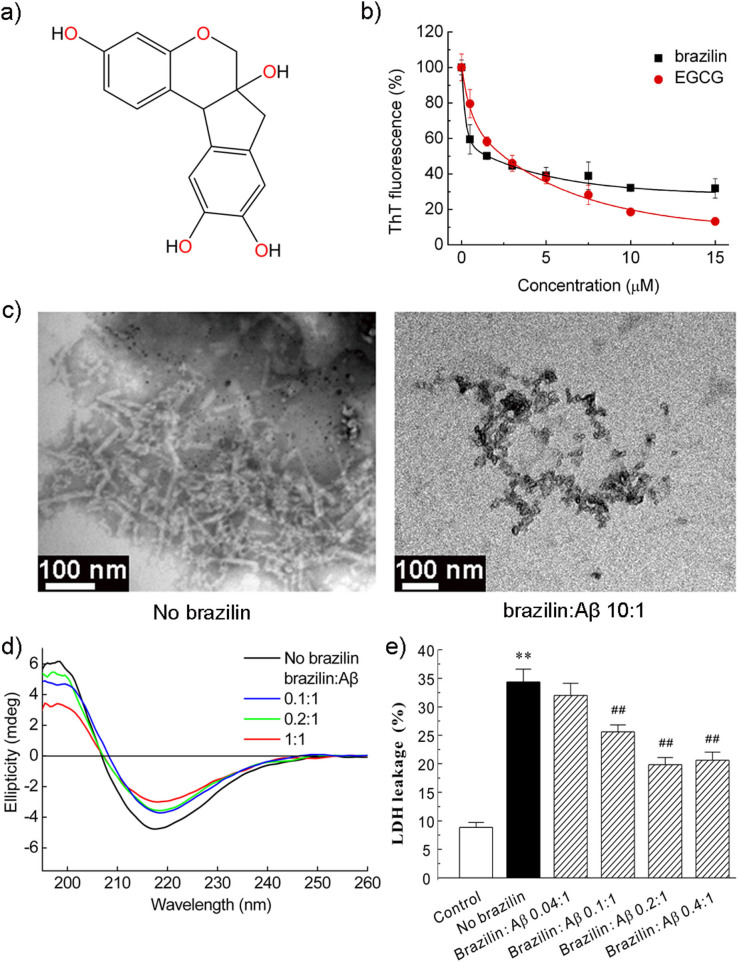
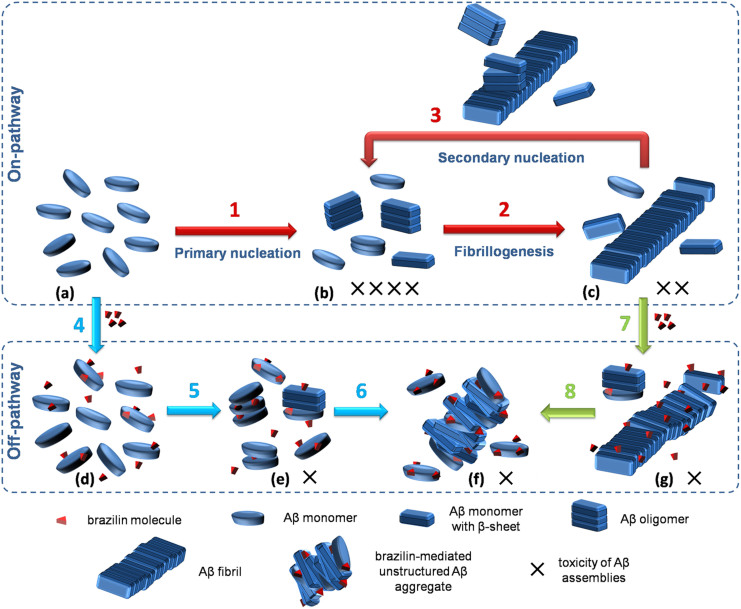
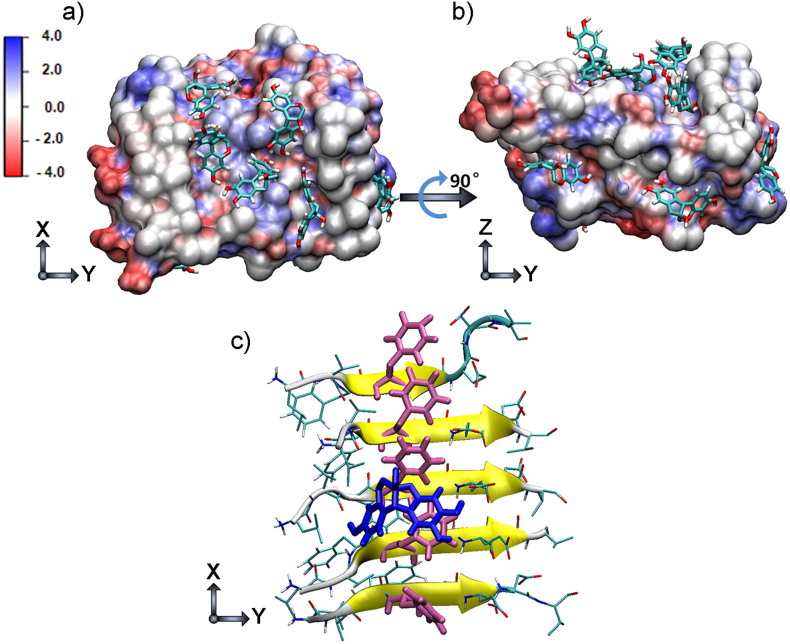
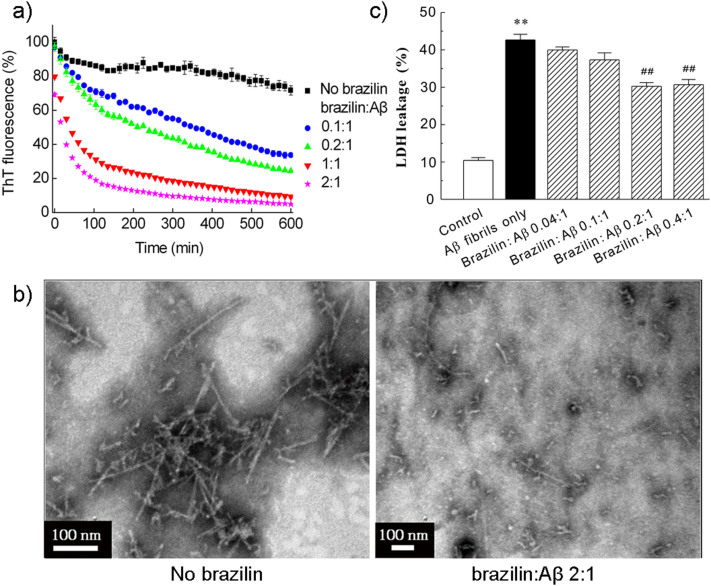
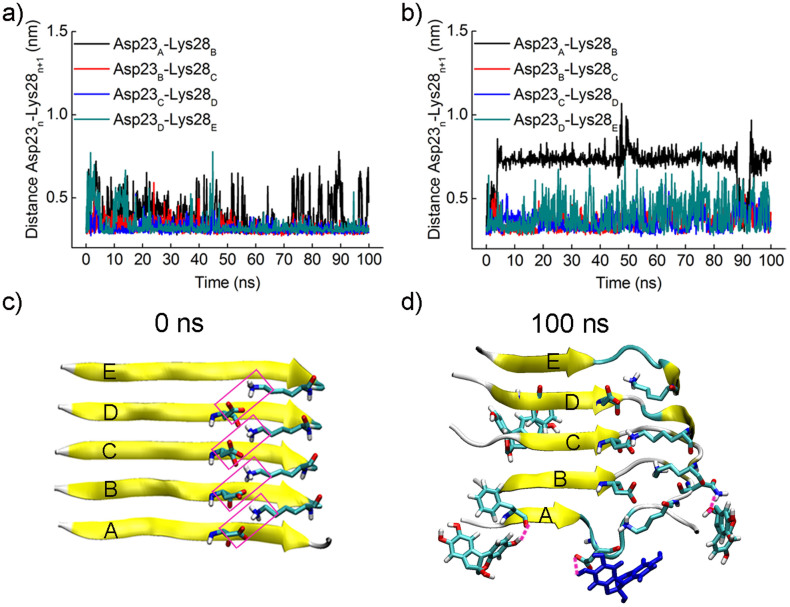
Soluble amyloid β-protein (Aβ) oligomers, the main neurotoxic species, are predominantly formed from monomers through a fibril-catalyzed secondary nucleation. Herein, we virtually screened an in-house library of natural compounds and discovered brazilin as a dual functional compound in both Aβ42 fibrillogenesis inhibition and mature fibril remodeling, leading to significant reduction in Aβ42 cytotoxicity. The potent inhibitory effect of brazilin was proven by an IC50 of 1.5 ± 0.3 μM, which was smaller than that of (-)-epigallocatechin gallate in Phase III clinical trials and about one order of magnitude smaller than those of curcumin and resveratrol. Most importantly, it was found that brazilin redirected Aβ42 monomers and its mature fibrils into unstructured Aβ aggregates with some β-sheet structures, which could prevent both the primary nucleation and the fibril-catalyzed secondary nucleation. Molecular simulations demonstrated that brazilin inhibited Aβ42 fibrillogenesis by directly binding to Aβ42 species via hydrophobic interactions and hydrogen bonding and remodeled mature fibrils by disrupting the intermolecular salt bridge Asp23-Lys28 via hydrogen bonding. Both experimental and computational studies revealed a different working mechanism of brazilin from that of known inhibitors. These findings indicate that brazilin is of great potential as a neuroprotective and therapeutic agent for Alzheimer's disease.
可溶性淀粉样β蛋白(Aβ)寡聚体是主要的神经毒性物质,主要由单体通过纤维催化的二次成核形成。在此,我们对内部天然化合物库进行了虚拟筛选,发现巴西苏木素是一种具有双重功能的化合物,既能抑制Aβ42纤维形成,又能重塑成熟纤维,从而显著降低Aβ42的细胞毒性。巴西苏木素的有效抑制作用通过1.5±0.3 μM的半数抑制浓度(IC50)得到证实,该浓度低于III期临床试验中的(-)-表没食子儿茶素没食子酸酯,比姜黄素和白藜芦醇的IC50小约一个数量级。最重要的是,发现巴西苏木素将Aβ42单体及其成熟纤维重定向为具有一些β-折叠结构的无结构Aβ聚集体,这可以阻止初级成核和纤维催化的二次成核。分子模拟表明,巴西苏木素通过疏水相互作用和氢键直接结合Aβ42物种来抑制Aβ42纤维形成,并通过氢键破坏分子间盐桥Asp23-Lys28来重塑成熟纤维。实验和计算研究均揭示了巴西苏木素与已知抑制剂不同的作用机制。这些发现表明,巴西苏木素作为阿尔茨海默病的神经保护和治疗剂具有巨大潜力。