Abboud Sami, Maidenbaum Shachar, Dehaene Stanislas, Amedi Amir
Department of Medical Neurobiology, The Institute for Medical Research Israel-Canada, Faculty of Medicine, The Hebrew University of Jerusalem, Jerusalem 91220, Israel.
1] Collège de France, 11 Place Marcelin Berthelot, 75005 Paris, France [2] Institut National de la Santé et de la Recherche Médicale, Cognitive Neuroimaging Unit, 91191 Gif sur Yvette, France [3] Commissariat à l'Energie Atomique, Division of Life Sciences, Institute of Bioimaging, Neurospin, 91191 Gif sur Yvette, France [4] Université Paris 11, 91401 Orsay, France.
Nat Commun. 2015 Jan 23;6:6026. doi: 10.1038/ncomms7026.
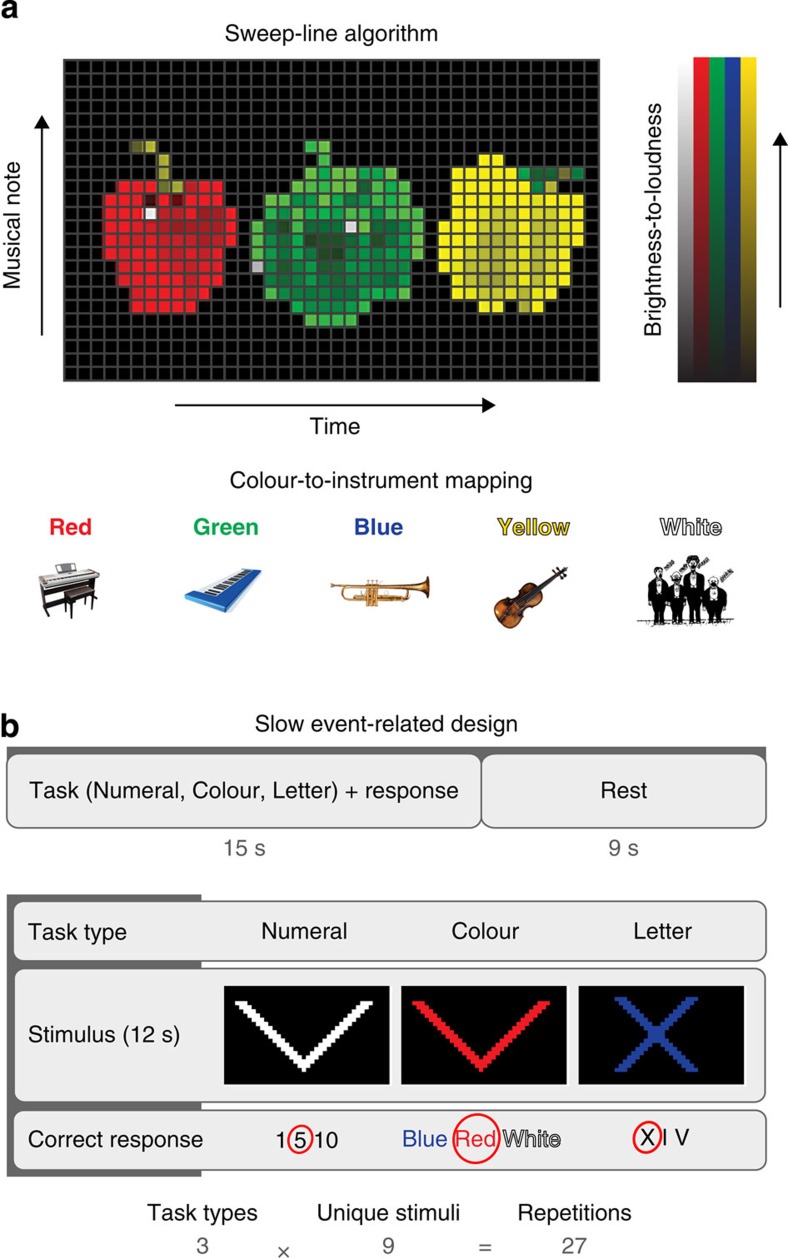
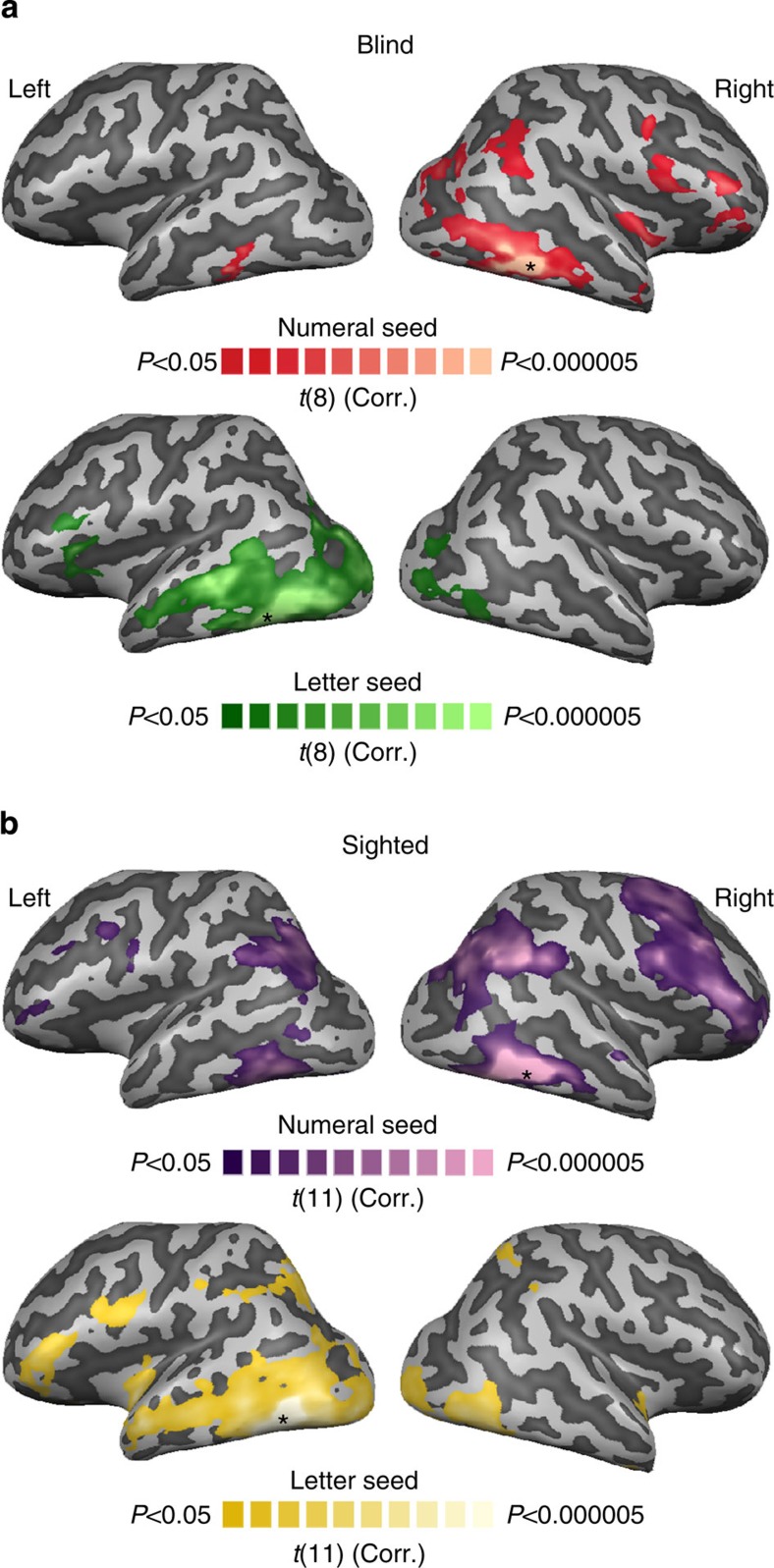
Distinct preference for visual number symbols was recently discovered in the human right inferior temporal gyrus (rITG). It remains unclear how this preference emerges, what is the contribution of shape biases to its formation and whether visual processing underlies it. Here we use congenital blindness as a model for brain development without visual experience. During fMRI, we present blind subjects with shapes encoded using a novel visual-to-music sensory-substitution device (The EyeMusic). Greater activation is observed in the rITG when subjects process symbols as numbers compared with control tasks on the same symbols. Using resting-state fMRI in the blind and sighted, we further show that the areas with preference for numerals and letters exhibit distinct patterns of functional connectivity with quantity and language-processing areas, respectively. Our findings suggest that specificity in the ventral 'visual' stream can emerge independently of sensory modality and visual experience, under the influence of distinct connectivity patterns.
最近在人类右侧颞下回(rITG)中发现了对视觉数字符号的明显偏好。目前尚不清楚这种偏好是如何出现的,形状偏差对其形成有何贡献,以及视觉处理是否是其基础。在这里,我们使用先天性失明作为没有视觉经验的大脑发育模型。在功能磁共振成像(fMRI)期间,我们使用一种新型的视觉到音乐的感官替代设备(EyeMusic)向盲人受试者呈现编码的形状。与对相同符号的对照任务相比,当受试者将符号作为数字处理时,在rITG中观察到更大的激活。通过对盲人和视力正常者进行静息态fMRI,我们进一步表明,对数字和字母有偏好的区域分别与数量和语言处理区域表现出不同的功能连接模式。我们的研究结果表明,在不同连接模式的影响下,腹侧“视觉”流中的特异性可以独立于感觉模态和视觉经验而出现。