Ben-Menachem E, Revesz D, Simon B J, Silberstein S
Institution of Clinical Neuroscience and Physiology, Sahlgrenska Academy, Göteborgs University, Göteborg, Sweden.
electroCore LLC, Basking Ridge, NJ, USA.
Eur J Neurol. 2015 Sep;22(9):1260-8. doi: 10.1111/ene.12629. Epub 2015 Jan 23.
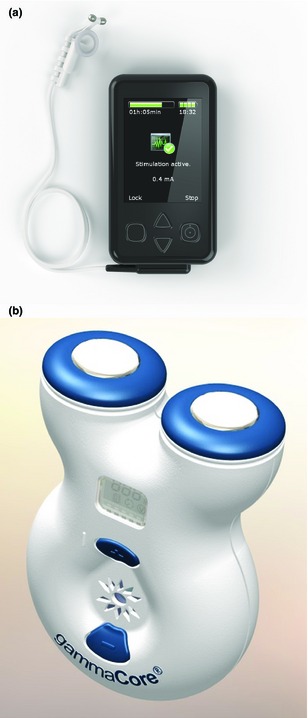
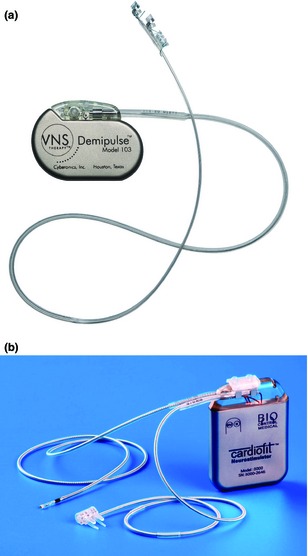
Vagus nerve stimulation (VNS) is effective in refractory epilepsy and depression and is being investigated in heart failure, headache, gastric motility disorders and asthma. The first VNS device required surgical implantation of electrodes and a stimulator. Adverse events (AEs) are generally associated with implantation or continuous on-off stimulation. Infection is the most serious implantation-associated AE. Bradycardia and asystole have also been described during implantation, as has vocal cord paresis, which can last up to 6 months and depends on surgical skill and experience. The most frequent stimulation-associated AEs include voice alteration, paresthesia, cough, headache, dyspnea, pharyngitis and pain, which may require a decrease in stimulation strength or intermittent or permanent device deactivation. Newer non-invasive VNS delivery systems do not require surgery and permit patient-administered stimulation on demand. These non-invasive VNS systems improve the safety and tolerability of VNS, making it more accessible and facilitating further investigations across a wider range of uses.
迷走神经刺激(VNS)对难治性癫痫和抑郁症有效,目前正在心力衰竭、头痛、胃动力障碍和哮喘等疾病中进行研究。首个VNS设备需要通过手术植入电极和刺激器。不良事件(AE)通常与植入或持续的开-关刺激有关。感染是与植入相关的最严重不良事件。植入过程中也有心动过缓和心搏停止的报道,还有声带麻痹的情况,这种情况可持续长达6个月,且取决于手术技巧和经验。最常见的与刺激相关的不良事件包括声音改变、感觉异常、咳嗽、头痛、呼吸困难、咽炎和疼痛,这可能需要降低刺激强度或间歇性或永久性停用设备。更新的非侵入性VNS输送系统不需要手术,允许患者按需自行进行刺激。这些非侵入性VNS系统提高了VNS的安全性和耐受性,使其更易于使用,并有助于在更广泛的用途范围内进行进一步研究。