Küçük Can, Hu Xiaozhou, Jiang Bei, Klinkebiel David, Geng Huimin, Gong Qiang, Bouska Alyssa, Iqbal Javeed, Gaulard Philippe, McKeithan Timothy W, Chan Wing C
Department of Pathology, City of Hope National Medical Center, Duarte, California.
Department of Pathology, City of Hope National Medical Center, Duarte, California. Department of Clinical Laboratory, Peking University Third Hospital, Beijing, China.
Clin Cancer Res. 2015 Apr 1;21(7):1699-711. doi: 10.1158/1078-0432.CCR-14-1216. Epub 2015 Jan 22.
To identify tumor suppressor genes epigenetically silenced by promoter hypermethylation in extranodal natural killer cell lymphoma (NKCL).
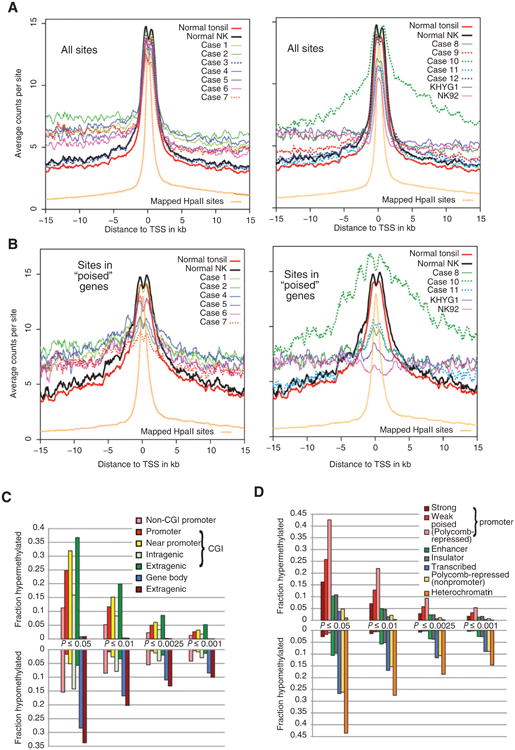
Promoter methylation was analyzed with global and locus-specific methylation assays in NKCL cases and NK cell lines. Gene expression profiles were used to identify genes for which aberrant promoter methylation was associated with transcriptional silencing. Selected DNA methylations were validated by RRBS, pyrosequencing, or q-MSP. Decitabine treatment was performed to evaluate reactivation of methylated genes. The tumor suppressor effect of silenced genes was evaluated functionally by reintroducing them into NK cell lines.
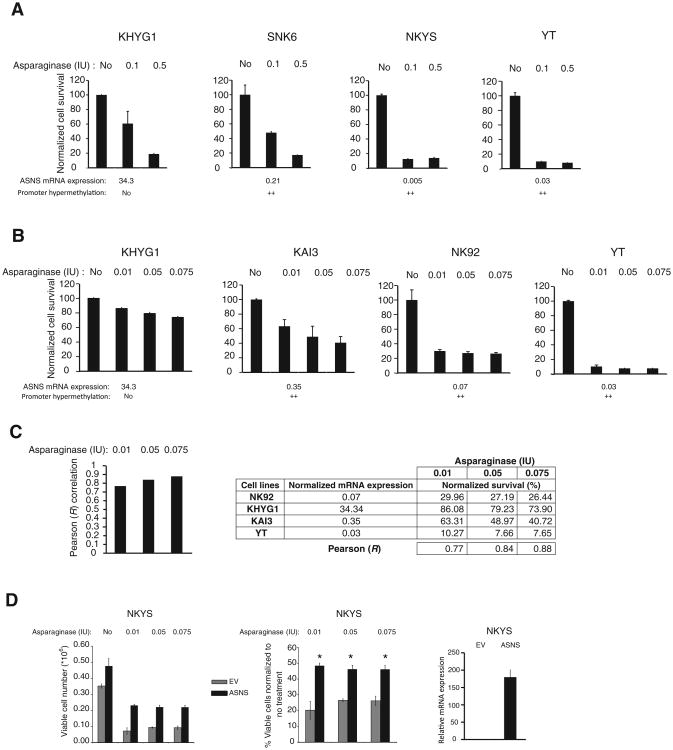
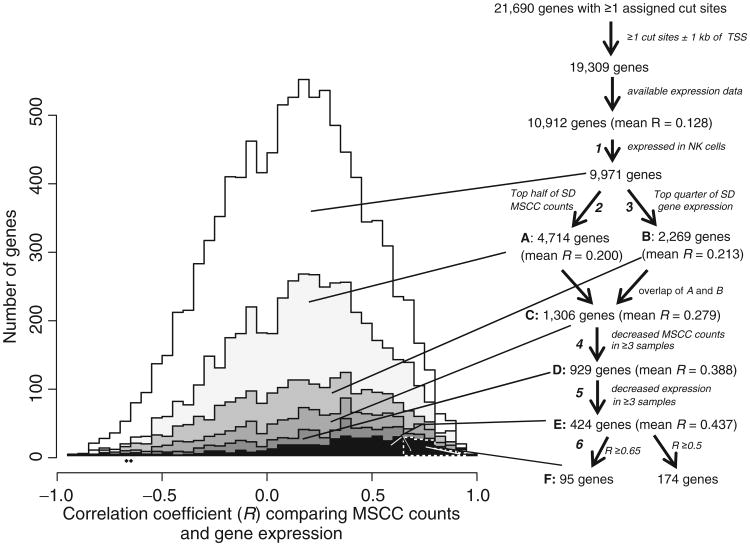
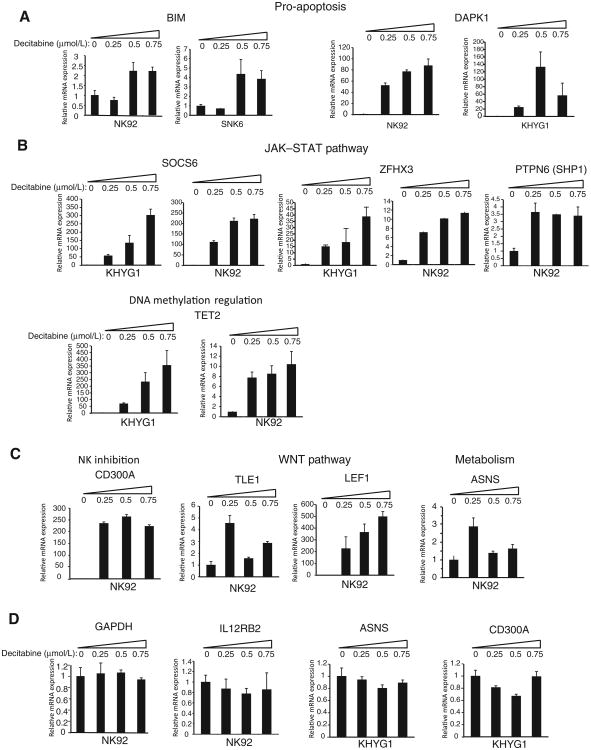
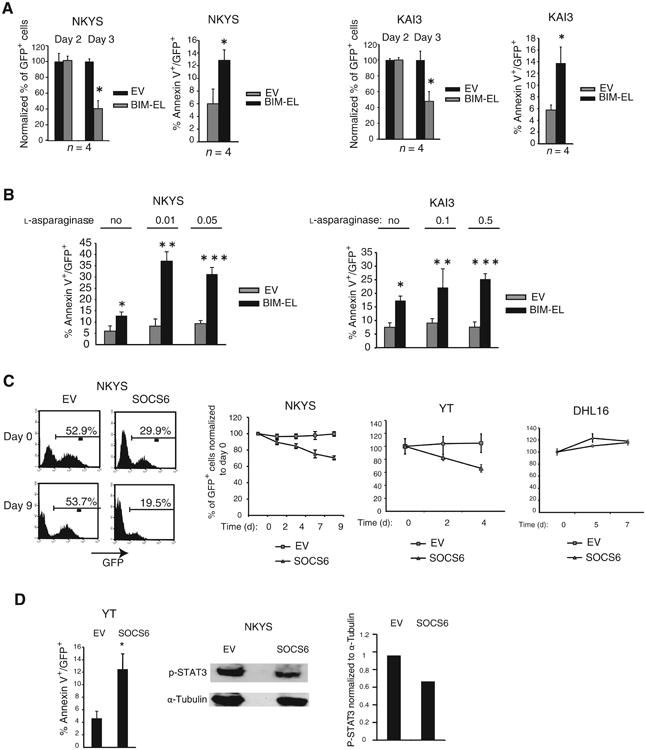
We observed significant promoter hypermethylation in most NKCL samples compared with normal NK cells. Correlation of global promoter methylation with gene expression profiles identified 95 genes with strong evidence for being silenced because of promoter methylation, including BCL2L11 (BIM), DAPK1, PTPN6 (SHP1), TET2, SOCS6, and ASNS. Known tumor suppressor genes were significantly overrepresented in this set of genes. Decitabine treatment of NK cell lines was associated with reexpression of all 10 selected methylated and silenced genes. Ectopic expression of frequently silenced BIM in two BIM-nonexpressing NK cell lines led to increased apoptosis and eventual elimination of BIM-transduced cells. It also sensitized these cell lines to chemotherapy-induced apoptosis. Similarly, reintroduction of SOCS6 significantly inhibited growth in SOCS6-nonexpressing NK cell lines. NK cell lines lacking ASNS expression showed increased sensitivity to treatment with l-asparaginase. Reintroduction of ASNS reduced drug sensitivity.
Promoter region hypermethylation is frequent in NKCL, and aberrantly methylated genes are pathologically and clinically significant.
鉴定在结外自然杀伤细胞淋巴瘤(NKCL)中因启动子高甲基化而发生表观遗传沉默的肿瘤抑制基因。
采用全基因组和位点特异性甲基化分析方法,对NKCL病例和NK细胞系的启动子甲基化情况进行分析。利用基因表达谱来鉴定启动子异常甲基化与转录沉默相关的基因。通过RRBS、焦磷酸测序或定量甲基化特异性PCR(q-MSP)对选定的DNA甲基化进行验证。进行地西他滨处理以评估甲基化基因的重新激活情况。通过将沉默基因重新导入NK细胞系,从功能上评估其肿瘤抑制作用。
与正常NK细胞相比,我们在大多数NKCL样本中观察到显著的启动子高甲基化。全基因组启动子甲基化与基因表达谱的相关性分析确定了95个因启动子甲基化而有充分证据表明发生沉默的基因,包括BCL2L11(BIM)、DAPK1、PTPN6(SHP1)、TET2、SOCS6和ASNS。已知的肿瘤抑制基因在这组基因中显著富集。地西他滨处理NK细胞系与所有10个选定的甲基化且沉默的基因重新表达相关。在两个不表达BIM的NK细胞系中异位表达频繁沉默的BIM导致细胞凋亡增加,并最终消除转导了BIM的细胞。它还使这些细胞系对化疗诱导的凋亡敏感。同样,重新导入SOCS6可显著抑制不表达SOCS6的NK细胞系的生长。缺乏ASNS表达的NK细胞系对L-天冬酰胺酶治疗的敏感性增加。重新导入ASNS降低了药物敏感性。
启动子区域高甲基化在NKCL中很常见,异常甲基化的基因在病理和临床上具有重要意义。