Li Chenlong, Chen Chen, Gao Lei, Yang Songguang, Nguyen Vi, Shi Xuejiang, Siminovitch Katherine, Kohalmi Susanne E, Huang Shangzhi, Wu Keqiang, Chen Xuemei, Cui Yuhai
Agriculture and Agri-Food Canada, Southern Crop Protection and Food Research Centre, London, Ontario, Canada; Department of Biology, Western University, London, Ontario, Canada.
Department of Botany and Plant Sciences, Institute of Integrative Genome Biology, University of California Riverside, Riverside, California, United States of America.
PLoS Genet. 2015 Jan 23;11(1):e1004944. doi: 10.1371/journal.pgen.1004944. eCollection 2015 Jan.
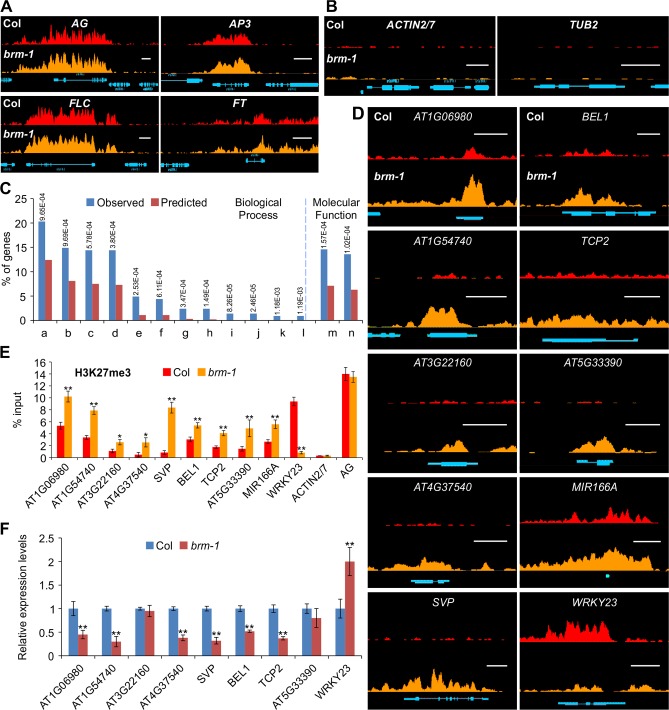
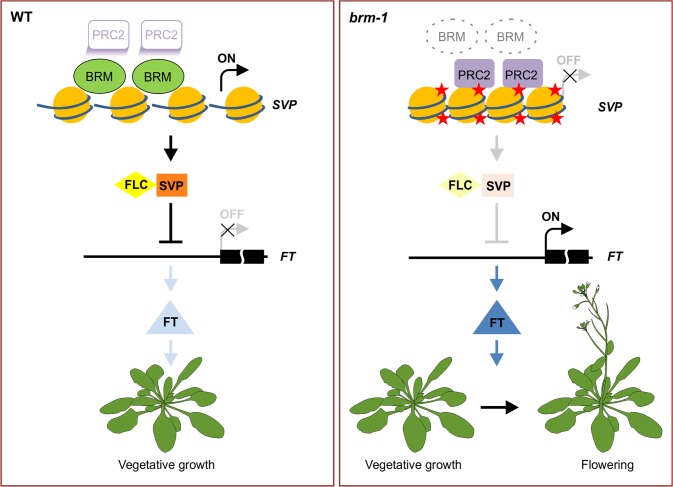
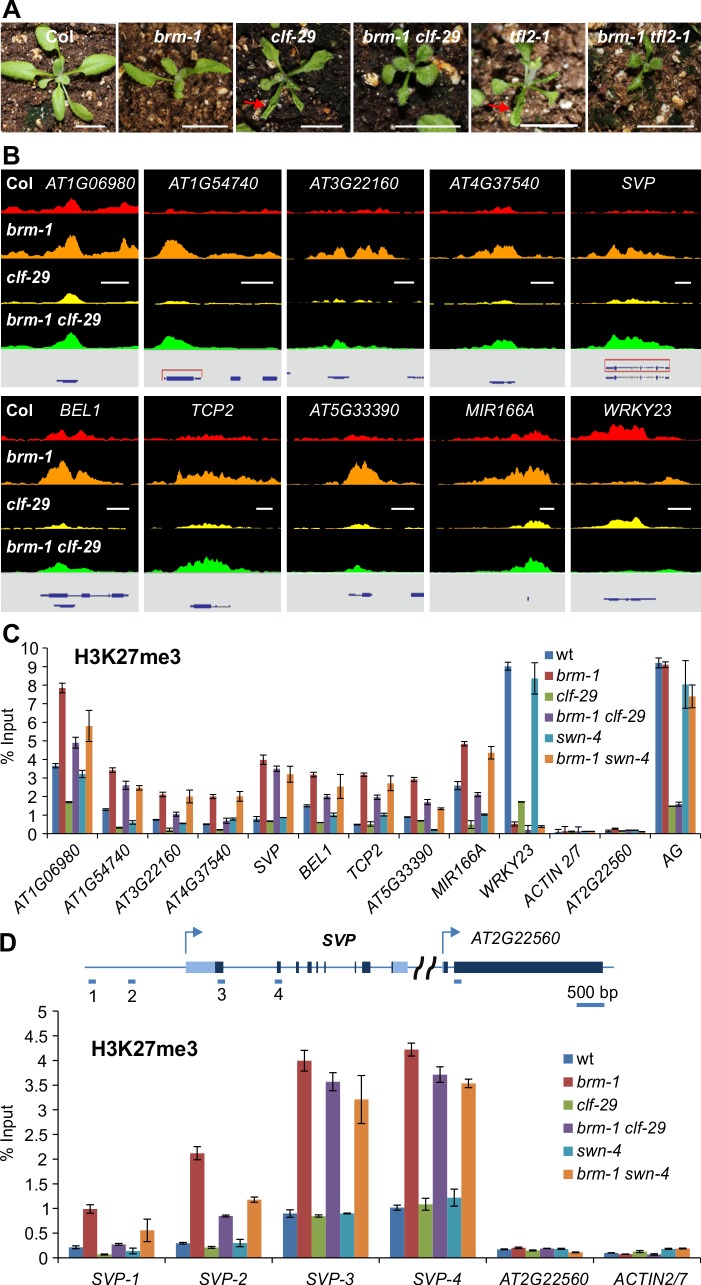
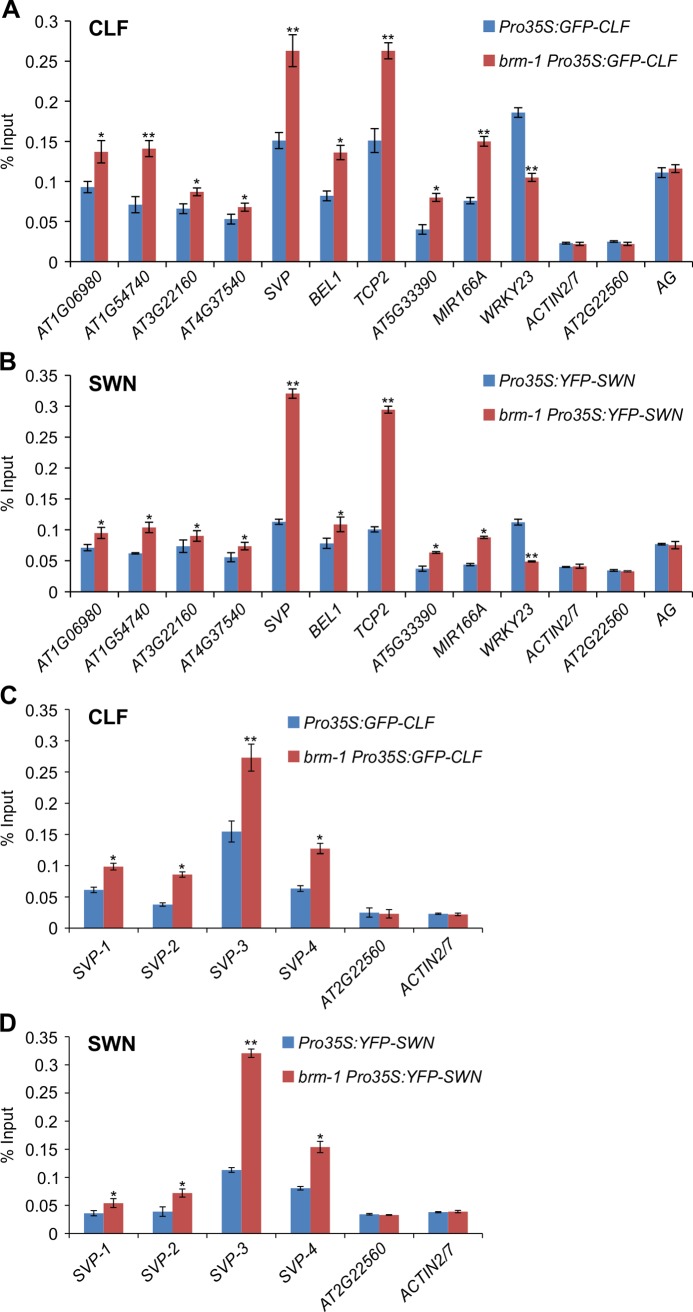
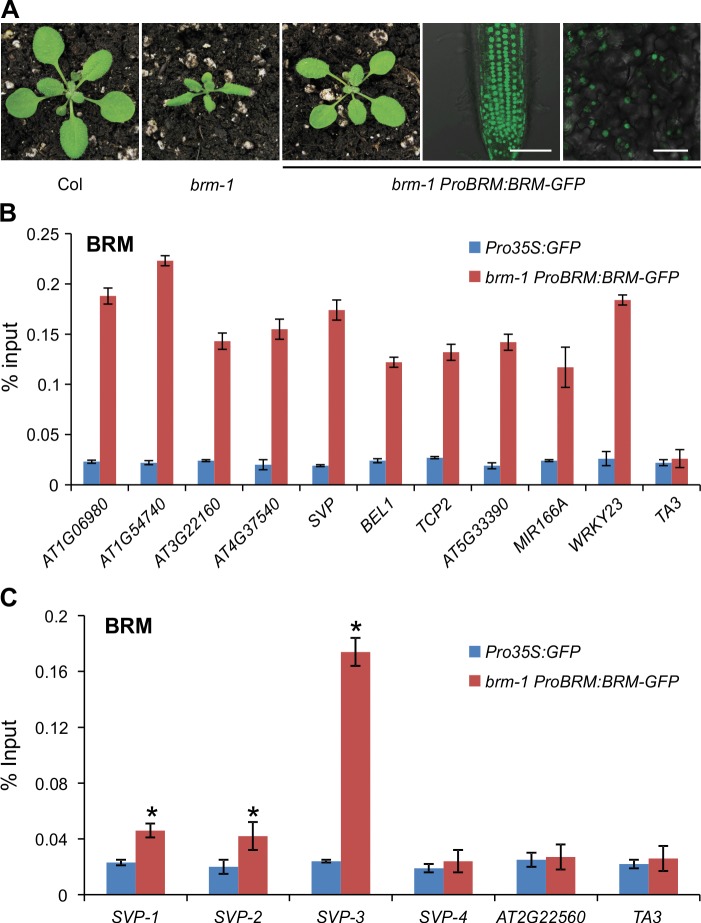
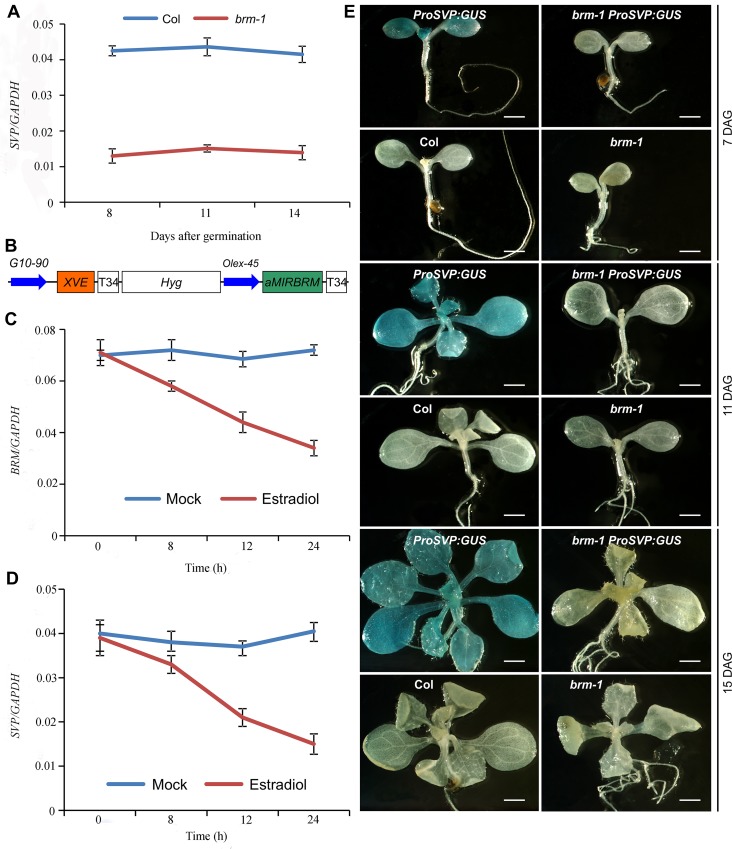
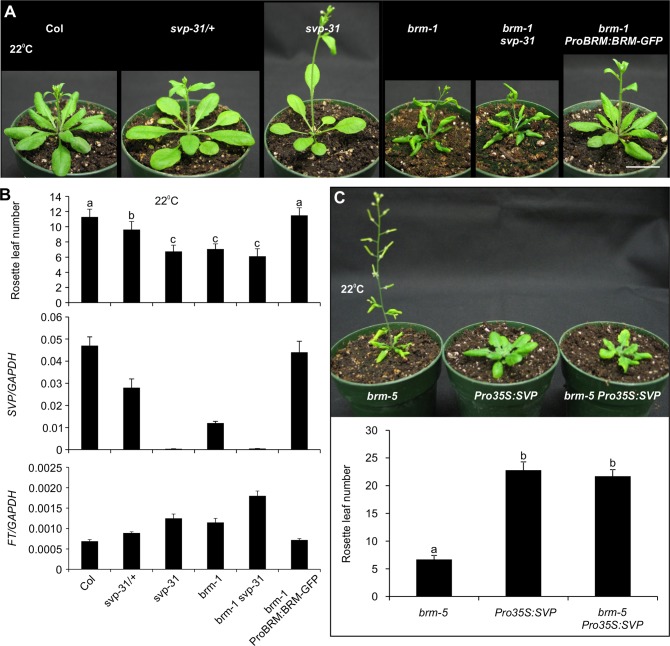
The chromatin remodeler BRAHMA (BRM) is a Trithorax Group (TrxG) protein that antagonizes the functions of Polycomb Group (PcG) proteins in fly and mammals. Recent studies also implicate such a role for Arabidopsis (Arabidopsis thaliana) BRM but the molecular mechanisms underlying the antagonism are unclear. To understand the interplay between BRM and PcG during plant development, we performed a genome-wide analysis of trimethylated histone H3 lysine 27 (H3K27me3) in brm mutant seedlings by chromatin immunoprecipitation followed by next generation sequencing (ChIP-seq). Increased H3K27me3 deposition at several hundred genes was observed in brm mutants and this increase was partially supressed by removal of the H3K27 methyltransferase CURLY LEAF (CLF) or SWINGER (SWN). ChIP experiments demonstrated that BRM directly binds to a subset of the genes and prevents the inappropriate association and/or activity of PcG proteins at these loci. Together, these results indicate a crucial role of BRM in restricting the inappropriate activity of PcG during plant development. The key flowering repressor gene SHORT VEGETATIVE PHASE (SVP) is such a BRM target. In brm mutants, elevated PcG occupancy at SVP accompanies a dramatic increase in H3K27me3 levels at this locus and a concomitant reduction of SVP expression. Further, our gain- and loss-of-function genetic evidence establishes that BRM controls flowering time by directly activating SVP expression. This work reveals a genome-wide functional interplay between BRM and PcG and provides new insights into the impacts of these proteins in plant growth and development.
染色质重塑因子BRAHMA(BRM)是一种三胸复合体(TrxG)蛋白,在果蝇和哺乳动物中可拮抗多梳蛋白复合体(PcG)蛋白的功能。最近的研究也表明拟南芥(Arabidopsis thaliana)中的BRM具有类似作用,但其拮抗作用背后的分子机制尚不清楚。为了了解植物发育过程中BRM与PcG之间的相互作用,我们通过染色质免疫沉淀结合新一代测序(ChIP-seq),对brm突变体幼苗中三甲基化组蛋白H3赖氨酸27(H3K27me3)进行了全基因组分析。在brm突变体中,数百个基因的H3K27me3沉积增加,去除H3K27甲基转移酶卷曲叶(CLF)或摇摆者(SWN)后,这种增加被部分抑制。ChIP实验表明,BRM直接与一部分基因结合,并阻止PcG蛋白在这些位点的不适当结合和/或活性。这些结果共同表明,BRM在植物发育过程中限制PcG的不适当活性方面起着关键作用。关键的开花抑制基因短营养期(SVP)就是这样一个BRM的靶标。在brm突变体中,SVP处PcG占据增加,同时该位点的H3K27me3水平显著升高,SVP表达随之降低。此外,我们的功能获得和功能缺失遗传证据表明,BRM通过直接激活SVP表达来控制开花时间。这项工作揭示了BRM与PcG之间全基因组范围的功能相互作用,并为这些蛋白对植物生长发育的影响提供了新的见解。