Yu Rongjun, Chen Li
Department of Psychology, School of Psychology and Center for Studies of Psychological Application, South China Normal University Guangzhou, China ; Scientific Laboratory of Economic Behaviors, School of Economics and Management, South China Normal University Guangzhou, China.
Front Psychol. 2015 Jan 8;5:1574. doi: 10.3389/fpsyg.2014.01574. eCollection 2014.
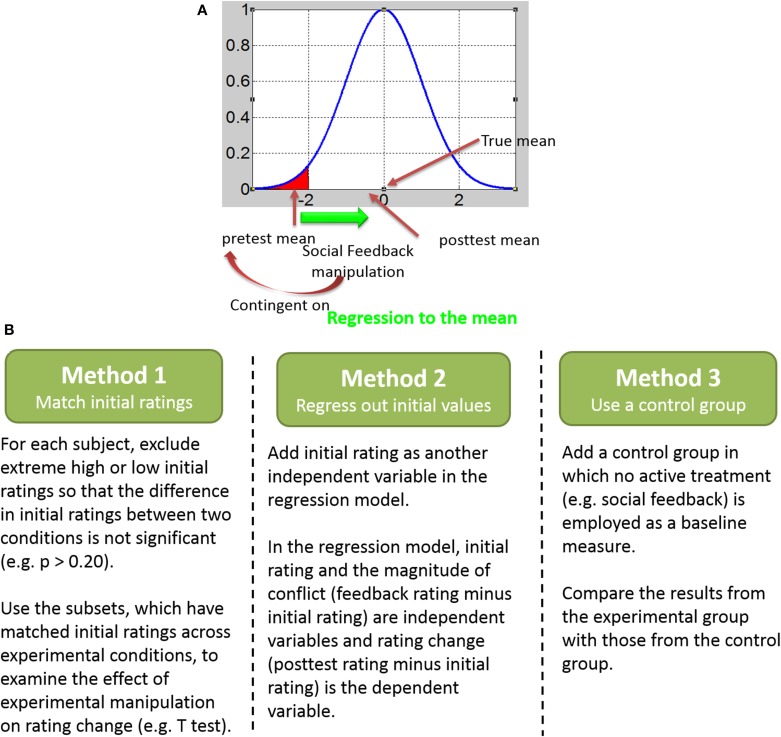
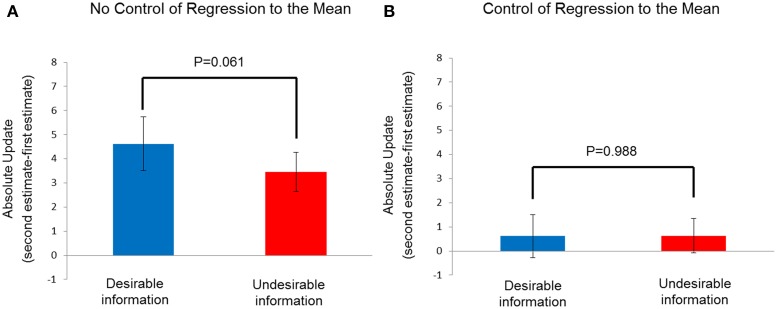
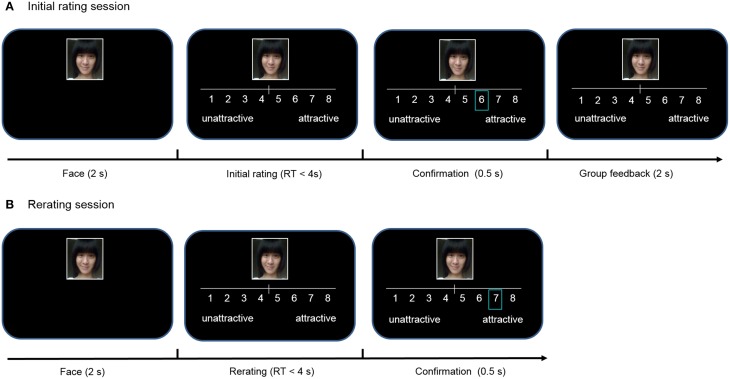
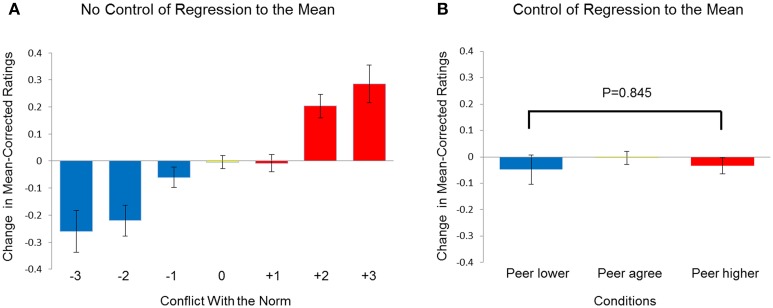
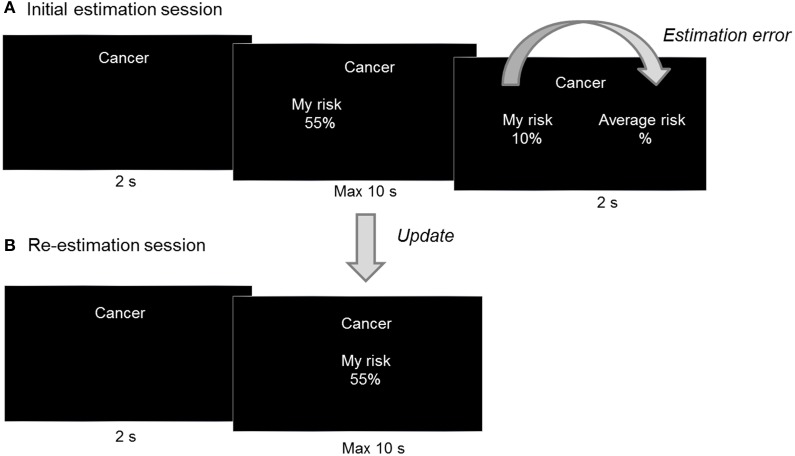
It is common in repeated measurements for extreme values at the first measurement to approach the mean at the subsequent measurement, a phenomenon called regression to the mean (RTM). If RTM is not fully controlled, it will lead to erroneous conclusions. The wide use of repeated measurements in social psychology creates a risk that an RTM effect will influence results. However, insufficient attention is paid to RTM in most social psychological research. Notable cases include studies on the phenomena of social conformity and unrealistic optimism (Klucharev et al., 2009, 2011; Sharot et al., 2011, 2012b; Campbell-Meiklejohn et al., 2012; Kim et al., 2012; Garrett and Sharot, 2014). In Study 1, 13 university students rated and re-rated the facial attractiveness of a series of female faces as a test of the social conformity effect (Klucharev et al., 2009). In Study 2, 15 university students estimated and re-estimated their risk of experiencing a series of adverse life events as a test of the unrealistic optimism effect (Sharot et al., 2011). Although these studies used methodologies similar to those used in earlier research, the social conformity and unrealistic optimism effects were no longer evident after controlling for RTM. Based on these findings we suggest several ways to control for the RTM effect in social psychology studies, such as adding the initial rating as a covariate in regression analysis, selecting a subset of stimuli for which the participant' initial ratings were matched across experimental conditions, and using a control group.
在重复测量中,首次测量时的极端值在后续测量中接近均值是很常见的现象,这种现象被称为均值回归(RTM)。如果均值回归没有得到充分控制,将会导致错误的结论。重复测量在社会心理学中的广泛应用带来了一种风险,即均值回归效应会影响研究结果。然而,在大多数社会心理学研究中,对均值回归的关注不足。值得注意的案例包括对社会从众现象和不切实际的乐观主义的研究(Klucharev等人,2009年、2011年;Sharot等人,2011年、2012b;Campbell-Meiklejohn等人,2012年;Kim等人,2012年;Garrett和Sharot,2014年)。在研究1中,13名大学生对一系列女性面孔的面部吸引力进行评分并重新评分,以此作为对社会从众效应的测试(Klucharev等人,2009年)。在研究2中,15名大学生对经历一系列不良生活事件的风险进行估计并重新估计,以此作为对不切实际的乐观主义效应的测试(Sharot等人,2011年)。尽管这些研究使用的方法与早期研究相似,但在控制均值回归后,社会从众效应和不切实际的乐观主义效应不再明显。基于这些发现,我们提出了几种在社会心理学研究中控制均值回归效应的方法,例如在回归分析中加入初始评分作为协变量,选择一组刺激物,使参与者在不同实验条件下的初始评分相匹配,以及使用对照组。