van de Veerdonk Frank L, Gresnigt Mark S, Oosting Marije, van der Meer Jos W M, Joosten Leo A B, Netea Mihai G, Dinarello Charles A
Department of Medicine, University of Colorado Denver Denver, CO, USA ; Department of Medicine, Radboud University Nijmegen Medical Center Nijmegen, Netherlands ; Radboud Center for Infection Nijmegen, Netherlands.
Department of Medicine, Radboud University Nijmegen Medical Center Nijmegen, Netherlands.
Front Microbiol. 2015 Jan 7;5:762. doi: 10.3389/fmicb.2014.00762. eCollection 2014.
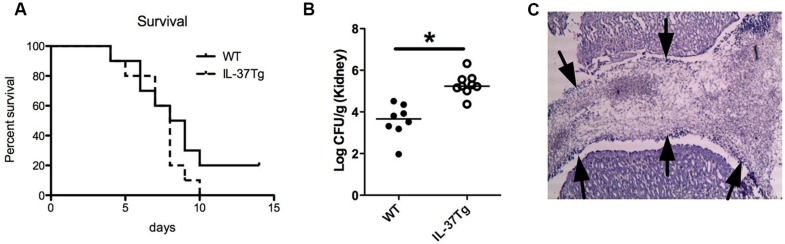
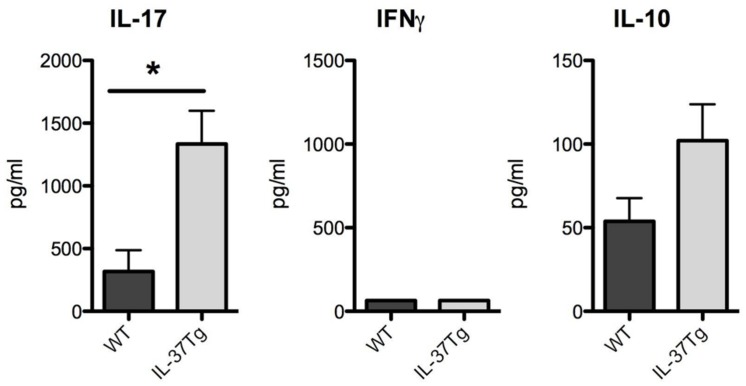
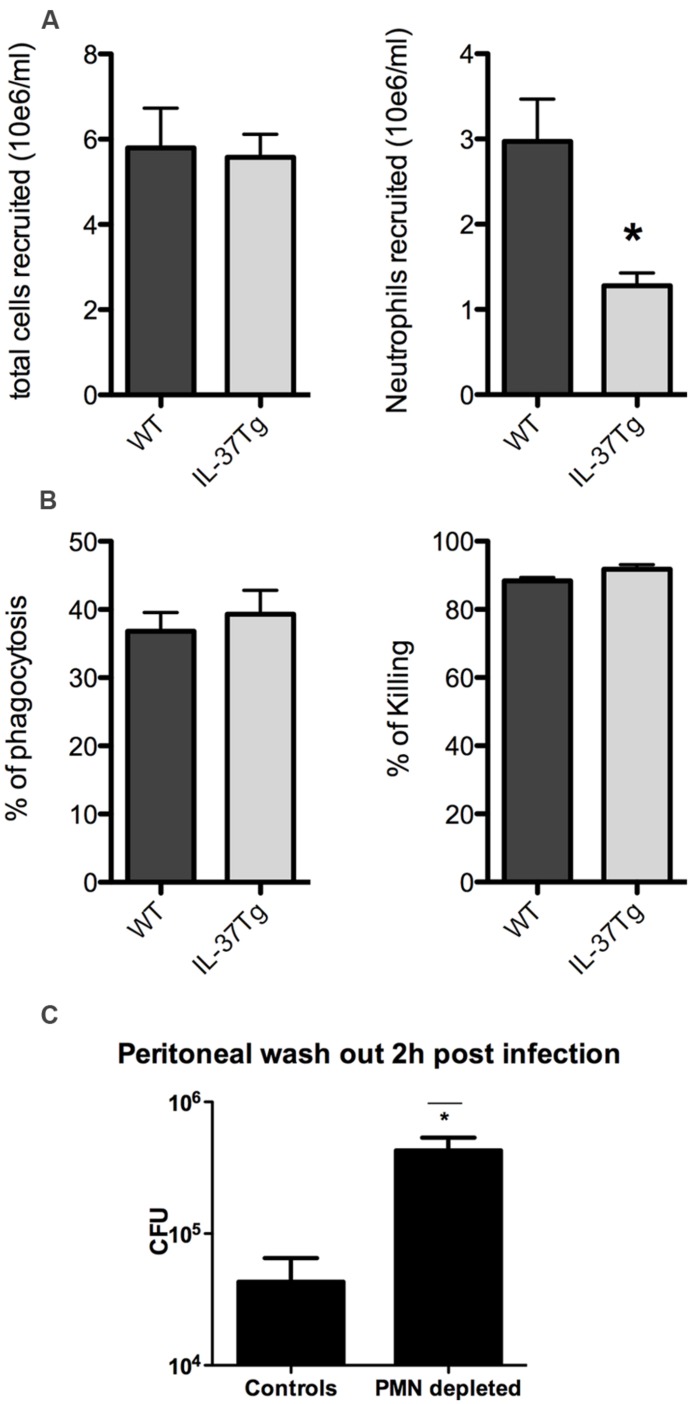
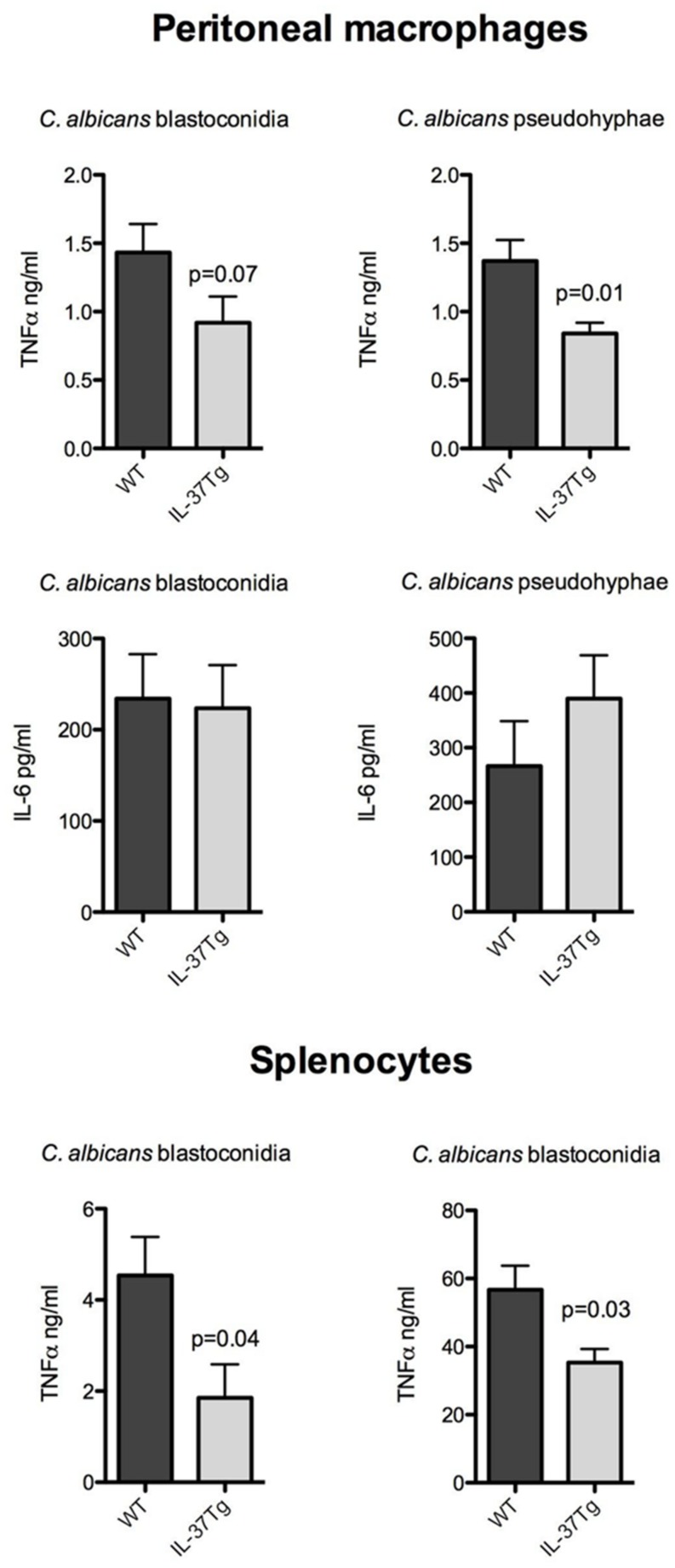
The effect of the anti-inflammatory cytokine interleukin-37 (IL-37) on host defense against Candida infections remains unknown. We assessed the role of IL-37 in a murine model of disseminated candidiasis using mice transgenic for human IL-37 (hIL-37Tg). Upon exposure to Candida albicans pseudohyphae, macrophages from hIL-37Tg mice release 39% less TNFα compared to cells from wild-type (WT) mice (p = 0.01). In vivo, hIL-37Tg mice displayed a decreased capacity to recruit neutrophils to the site of infection. These defects were associated with increased mortality and organ fungal growth in hIL-37Tg compared to WT mice. We conclude that IL-37 interferes with the innate protective anti-Candida host response by reducing the production of proinflammatory cytokines and suppressing neutrophil recruitment in response to Candida, resulting in an increased susceptibility to disseminated candidiasis.
抗炎细胞因子白细胞介素-37(IL-37)对宿主抵御念珠菌感染的作用尚不清楚。我们使用转人IL-37基因(hIL-37Tg)的小鼠,在播散性念珠菌病小鼠模型中评估了IL-37的作用。暴露于白色念珠菌假菌丝后,与野生型(WT)小鼠的细胞相比,hIL-37Tg小鼠的巨噬细胞释放的TNFα减少39%(p = 0.01)。在体内,hIL-37Tg小鼠将中性粒细胞募集到感染部位的能力降低。与WT小鼠相比,这些缺陷与hIL-37Tg小鼠死亡率增加和器官真菌生长有关。我们得出结论,IL-37通过减少促炎细胞因子的产生和抑制对念珠菌的中性粒细胞募集,干扰了宿主对念珠菌的固有保护性反应,导致对播散性念珠菌病的易感性增加。