Mikulášková Eva, Hájek Michal, Veleba Adam, Johnson Matthew G, Hájek Tomáš, Shaw Jonathan A
Department of Botany and Zoology, Faculty of Science, Masaryk University Kotlářská 2, Brno, CZ 61137, Czech Republic.
Department of Botany and Zoology, Faculty of Science, Masaryk University Kotlářská 2, Brno, CZ 61137, Czech Republic ; Department of Vegetation Ecology, Institute of Botany, Academy of Sciences of the Czech Republic Lidická 25/27, Brno, CZ 65720, Czech Republic.
Ecol Evol. 2015 Jan;5(1):229-42. doi: 10.1002/ece3.1351. Epub 2014 Dec 19.
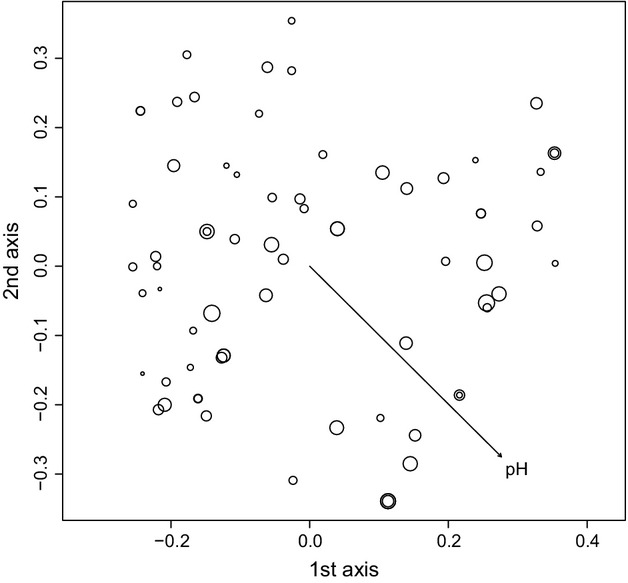
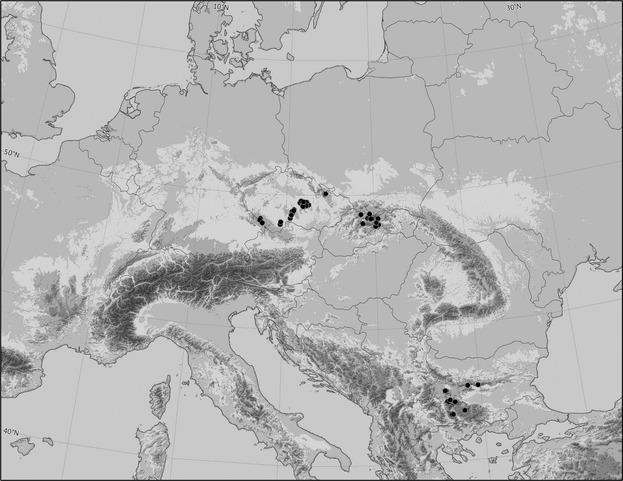
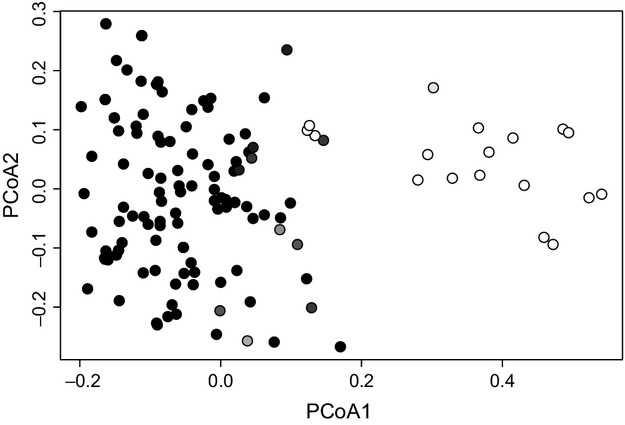
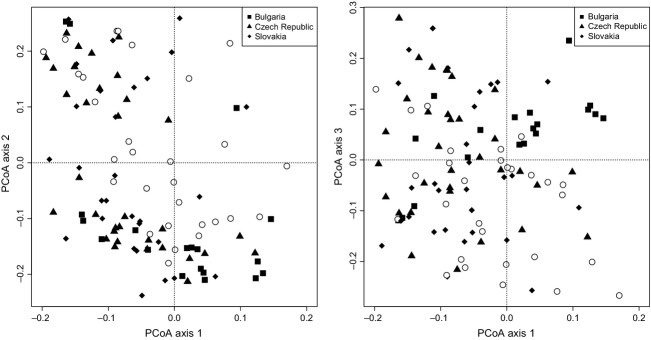
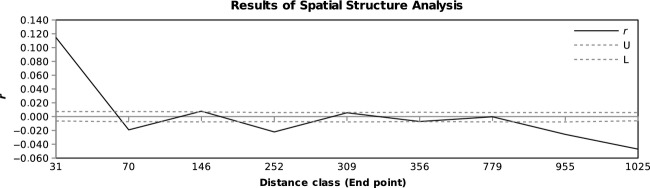
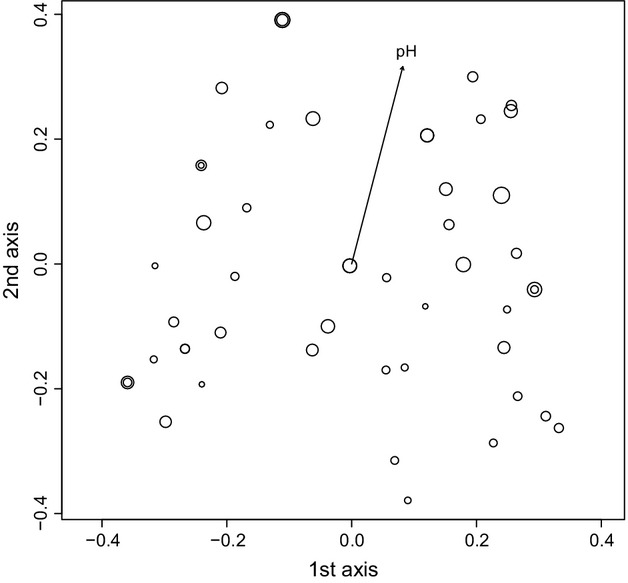
Bryophytes dominate some ecosystems despite their extraordinary sensitivity to habitat quality. Nevertheless, some species behave differently across various regions. The existence of local adaptations is questioned by a high dispersal ability, which is thought to redistribute genetic variability among populations. Although Sphagnum warnstorfii is an important ecosystem engineer in fen peatlands, the causes of its rather wide niche along the pH/calcium gradient are poorly understood. Here, we studied the genetic variability of its global populations, with a detailed focus on the wide pH/calcium gradient in Central Europe. Principal coordinates analysis of 12 polymorphic microsatellite loci revealed a significant gradient coinciding with water pH, but independent of geography; even samples from the same fens were clearly separated along this gradient. However, most of the genetic variations remained unexplained, possibly because of the introgression from phylogenetically allied species. This explanation is supported by the small heterogeneous cluster of samples that appeared when populations morphologically transitional to S. subnites, S. rubellum, or S. russowii were included into the analysis. Alternatively, this unexplained variation might be attributed to a legacy of glacial refugia with recently dissolved ecological and biogeographic consequences. Isolation by distance appeared at the smallest scale only (up to 43 km). Negative spatial correlations occurred more frequently, mainly at long distances (up to 950 km), implying a genetic similarity among samples which are very distant geographically. Our results confirm the high dispersal ability of peatmosses, but simultaneously suggested that their ability to cope with a high pH/calcium level is at least partially determined genetically, perhaps via specific physiological mechanisms or a hummock-forming ability.
苔藓植物尽管对栖息地质量异常敏感,但在一些生态系统中仍占主导地位。然而,一些物种在不同地区的表现有所不同。高扩散能力对局部适应性的存在提出了质疑,因为扩散能力被认为会在种群间重新分配遗传变异。尽管 Warnstorfii 泥炭藓是沼泽泥炭地的重要生态系统工程师,但其在 pH/钙梯度上相当宽的生态位成因却鲜为人知。在此,我们研究了其全球种群的遗传变异,特别关注中欧广泛的 pH/钙梯度。对 12 个多态性微卫星位点的主坐标分析显示,存在一个与水体 pH 一致但与地理无关的显著梯度;即使是来自同一沼泽的样本,也沿此梯度明显分开。然而,大部分遗传变异仍无法解释,这可能是由于与系统发育相关物种的基因渗入。当将形态上过渡到亚柔泥炭藓、红泥炭藓或鲁氏泥炭藓的种群纳入分析时出现的小的异质样本簇支持了这一解释。或者,这种无法解释的变异可能归因于冰川避难所的遗留影响,以及近期解除的生态和生物地理后果。仅在最小尺度(达 43 公里)上出现了距离隔离。负空间相关性更频繁地出现,主要在远距离(达 950 公里),这意味着地理上非常遥远的样本之间存在遗传相似性。我们的结果证实了泥炭藓的高扩散能力,但同时表明它们应对高 pH/钙水平的能力至少部分由基因决定,也许是通过特定的生理机制或形成草丘的能力。