Shah Sonia, Pirrone Vanessa, Alexaki Aikaterini, Nonnemacher Michael R, Wigdahl Brian
Department of Microbiology and Immunology, Drexel University College of Medicine School of Medicine, 245 N. 15th Street, MS1013A, Rm 18301, Philadelphia, PA 19102, USA ; Center for Molecular Virology and Translational Neuroscience, Institute for Molecular Medicine and Infectious Disease, Drexel University College of Medicine School of Medicine, Philadelphia, PA 19102, USA.
Biomed Res Int. 2015;2015:320642. doi: 10.1155/2015/320642. Epub 2015 Jan 5.
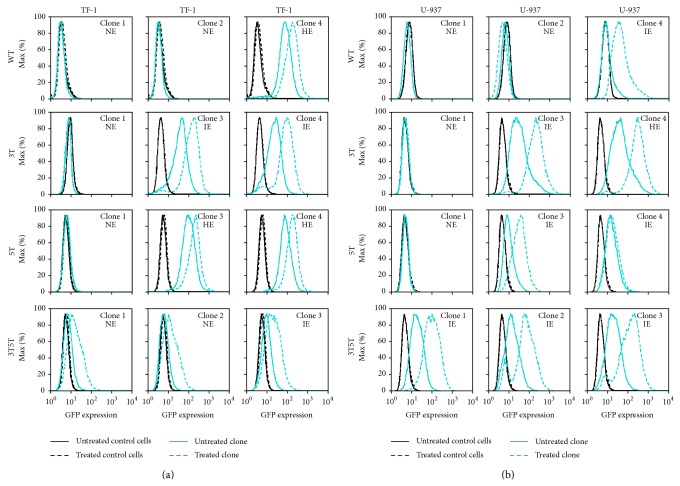
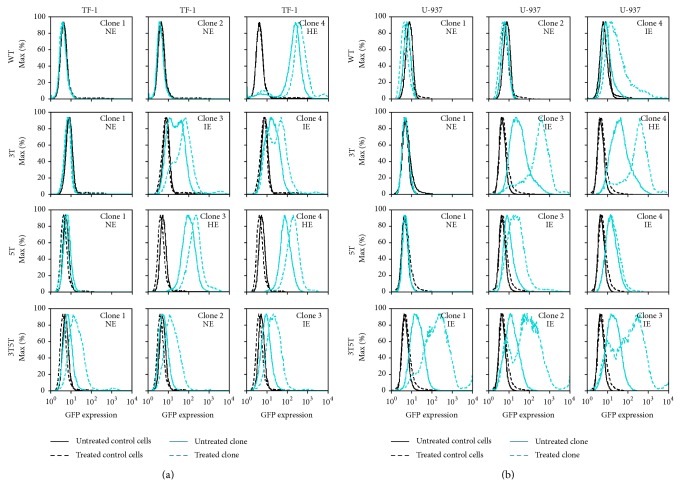
Following human immunodeficiency virus type 1 (HIV-1) integration into host cell DNA, the viral promoter can become transcriptionally silent in the absence of appropriate signals and factors. HIV-1 gene expression is dependent on regulatory elements contained within the long terminal repeat (LTR) that drive the synthesis of viral RNAs and proteins through interaction with multiple host and viral factors. Previous studies identified single nucleotide polymorphisms (SNPs) within CCAAT/enhancer binding protein (C/EBP) site I and Sp site III (3T, C-to-T change at position 3, and 5T, C-to-T change at position 5 of the binding site, respectively, when compared to the consensus B sequence) that are low affinity binding sites and correlate with more advanced stages of HIV-1 disease. Stably transfected cell lines containing the wild type, 3T, 5T, and 3T5T LTRs were developed utilizing bone marrow progenitor, T, and monocytic cell lines to explore the LTR phenotypes associated with these genotypic changes from an integrated chromatin-based microenvironment. Results suggest that in nonexpressing cell clones LTR-driven gene expression occurs in a SNP-specific manner in response to LTR activation or treatment with trichostatin A treatment, indicating a possible cell type and SNP-specific mechanism behind the epigenetic control of LTR activation.
在人类免疫缺陷病毒1型(HIV-1)整合入宿主细胞DNA后,在缺乏适当信号和因子的情况下,病毒启动子可能会转录沉默。HIV-1基因表达依赖于长末端重复序列(LTR)中所含的调控元件,这些元件通过与多种宿主和病毒因子相互作用来驱动病毒RNA和蛋白质的合成。先前的研究在CCAAT/增强子结合蛋白(C/EBP)位点I和Sp位点III内鉴定出单核苷酸多态性(SNP)(与共有B序列相比,分别为3T,结合位点第3位的C到T变化,以及5T,结合位点第5位的C到T变化),这些是低亲和力结合位点,并且与HIV-1疾病的更晚期阶段相关。利用骨髓祖细胞、T细胞和单核细胞系开发了含有野生型、3T、5T和3T5T LTR的稳定转染细胞系,以从基于整合染色质的微环境中探索与这些基因型变化相关的LTR表型。结果表明,在无表达的细胞克隆中,LTR驱动的基因表达以SNP特异性方式响应LTR激活或曲古抑菌素A处理而发生,这表明LTR激活的表观遗传控制背后可能存在细胞类型和SNP特异性机制。