Burma Oktay, Onat Elif, Uysal Ayhan, Ilhan Necip, Erol Deniz, Ozcan Mete, Sahna Engin
Department of Cardiovascular Surgery, Faculty of Medicine, University of Firat, Elazig, Turkey.
Department of Pharmacology, Faculty of Medicine, University of Firat, Elazig, Turkey.
Cardiovasc J Afr. 2014 Sep-Oct;25(5):212-6. doi: 10.5830/CVJA-2014-038.
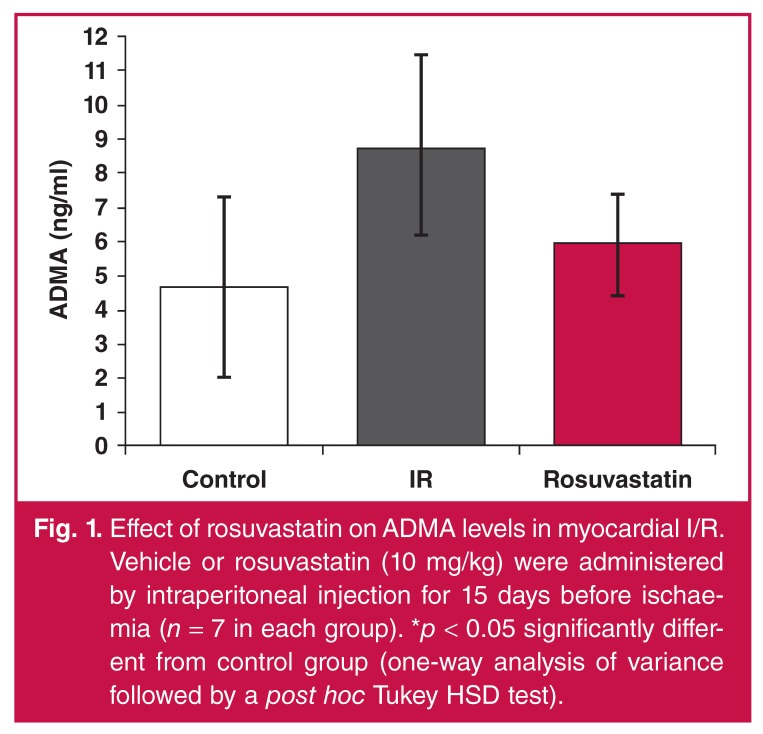
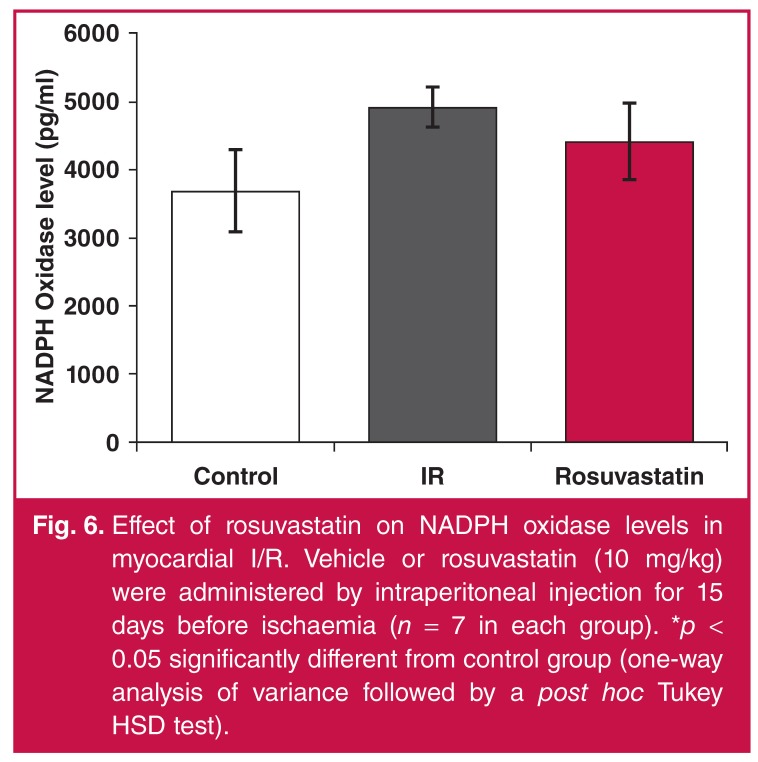
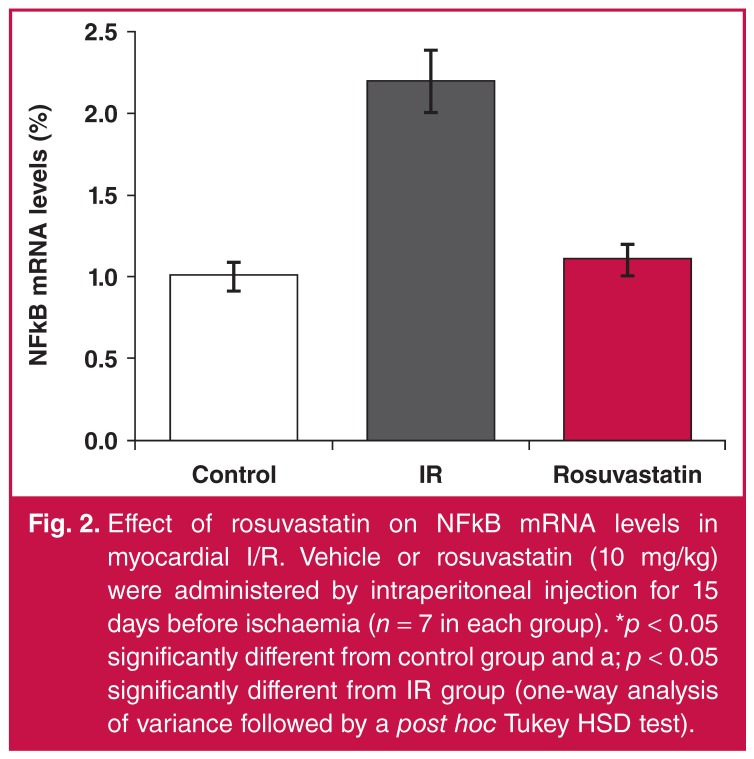
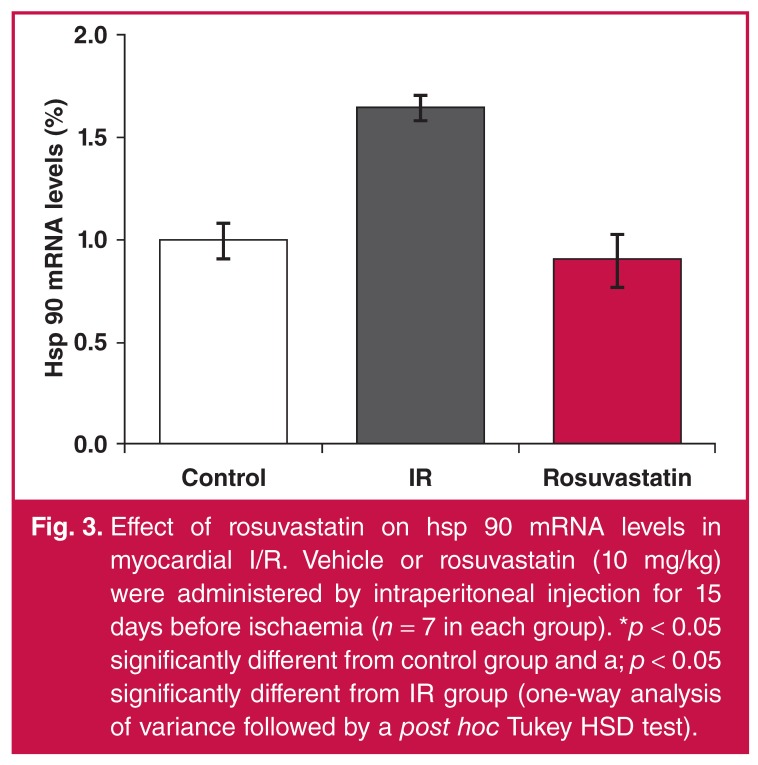
Endothelial dysfunction, oxidative stress and inflammation are among the most important mechanisms of ischaemia-reperfusion (I/R) injury. Besides their cholesterol-lowering effects, statins are known to provide protection against myocardial dysfunction and vascular endothelial injury via nitric oxide-dependent mechanisms. The aim of this study was to investigate the effects of rosuvastatin on certain intermediates involved in the generation of nitric oxide (asymmetrical dimethyl arginin, ADMA, caveolin-1 and hsp 90), oxidative stress (rhokinase, NADPH oxidase) and inflammation (NFkB), using an in vivo model of myocardial infarction in the rat.
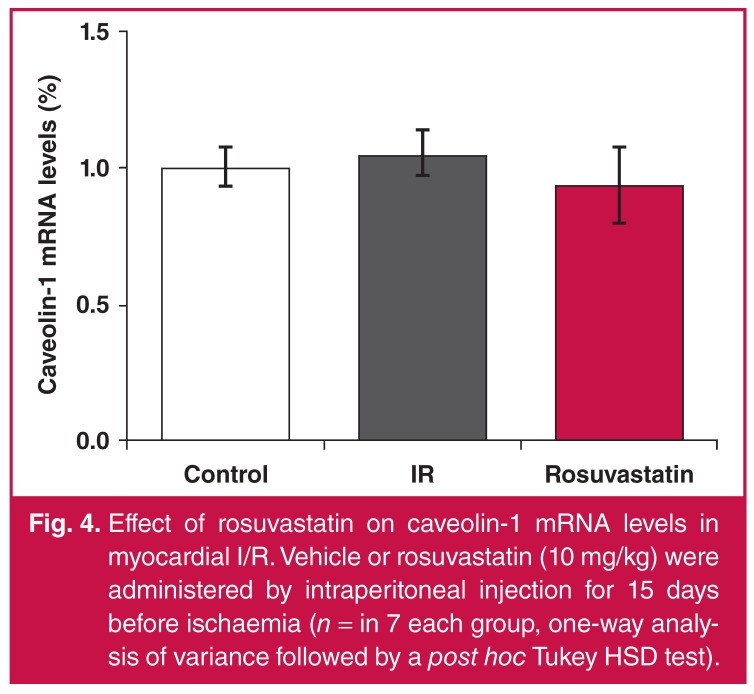
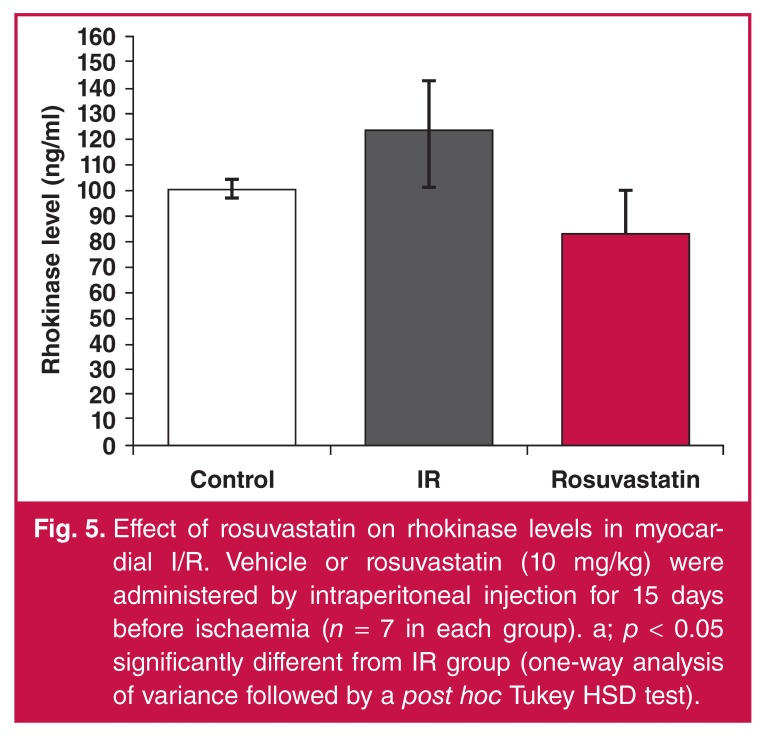
Adult male Sprague Dawley rats were divided into three groups (control, I/R and I/R after 15 days of rosuvastatin administration). Reperfusion was applied for 120 min following left anterior descending coronary artery ischaemia for 30 min. Caveolin-1, hsp 90 and NFkB levels were evaluated with the quantitative reverse transcriptase polymerase chain reaction (qRT-PCR) and ADMA, rhokinase and NADPH oxidase levels were evaluated with ELISA.
While NFkB and hsp 90 levels were higher in the I/R group, their levels were significantly lower in the rosuvastatin group. While ADMA and NADPH oxidase levels significantly increased with I/R, they were lower in the rosuvastatin-treated group, but not statistically significant. Rhokinase levels were significantly lower in the rosuvastatin group. Caveolin-1 levels were not different between the groups.
Our results suggest that ADMA, rhokinase, NADPH oxidase, hsp 90 and NFkB could facilitate I/R injury, and rosuvastatin significantly reduced levels of these parameters. These results indicate that rosuvastatin may have a protective role in I/R injury via mechanisms targeting inflammation, endothelial dysfunction and oxidative stress.
内皮功能障碍、氧化应激和炎症是缺血再灌注(I/R)损伤最重要的机制之一。除了其降胆固醇作用外,他汀类药物还通过一氧化氮依赖性机制对心肌功能障碍和血管内皮损伤具有保护作用。本研究的目的是使用大鼠心肌梗死体内模型,研究瑞舒伐他汀对一氧化氮生成过程中某些中间产物(不对称二甲基精氨酸、ADMA、小窝蛋白-1和热休克蛋白90)、氧化应激(Rho激酶、NADPH氧化酶)和炎症(核因子κB)的影响。
成年雄性Sprague Dawley大鼠分为三组(对照组、I/R组和瑞舒伐他汀给药15天后的I/R组)。在左冠状动脉前降支缺血30分钟后进行120分钟的再灌注。用定量逆转录聚合酶链反应(qRT-PCR)评估小窝蛋白-1、热休克蛋白90和核因子κB水平,用酶联免疫吸附测定(ELISA)评估ADMA、Rho激酶和NADPH氧化酶水平。
I/R组中核因子κB和热休克蛋白90水平较高,而瑞舒伐他汀组中它们的水平显著较低。I/R时ADMA和NADPH氧化酶水平显著升高,瑞舒伐他汀治疗组中它们较低,但无统计学意义。瑞舒伐他汀组Rho激酶水平显著较低。各组间小窝蛋白-1水平无差异。
我们的结果表明,ADMA、Rho激酶、NADPH氧化酶、热休克蛋白90和核因子κB可能促进I/R损伤,瑞舒伐他汀显著降低了这些参数的水平。这些结果表明,瑞舒伐他汀可能通过针对炎症、内皮功能障碍和氧化应激的机制在I/R损伤中发挥保护作用。