Qiao Xu, Bei Shuikuan, Li Chunjie, Dong Yan, Li Haigang, Christie Peter, Zhang Fusuo, Zhang Junling
1] Centre for Resources, Environment and Food Security, College of Resources and Environmental Sciences, China Agricultural University; Key Laboratory of Plant-Soil Interactions, Ministry of Education, Beijing 100193, China [2] Institute of Grain Groups, Xinjiang Academy of Agricultural Sciences; Key Laboratory of Crop Ecophysiology and Farming Systems in Desert Oasis Region, Ministry of Agriculture, Urumqi, Xinjiang 830091, China.
Centre for Resources, Environment and Food Security, College of Resources and Environmental Sciences, China Agricultural University; Key Laboratory of Plant-Soil Interactions, Ministry of Education, Beijing 100193, China.
Sci Rep. 2015 Jan 29;5:8122. doi: 10.1038/srep08122.
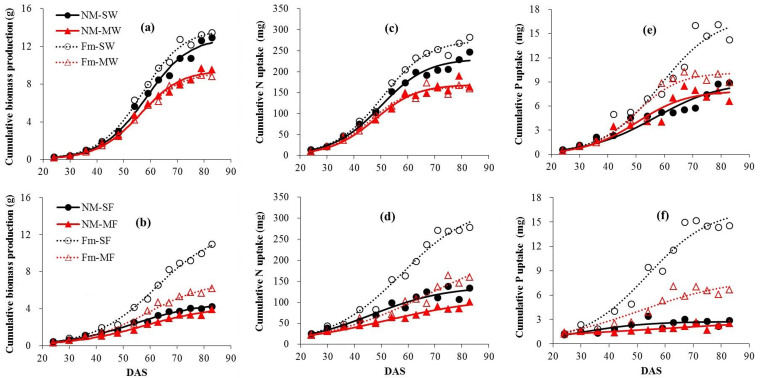
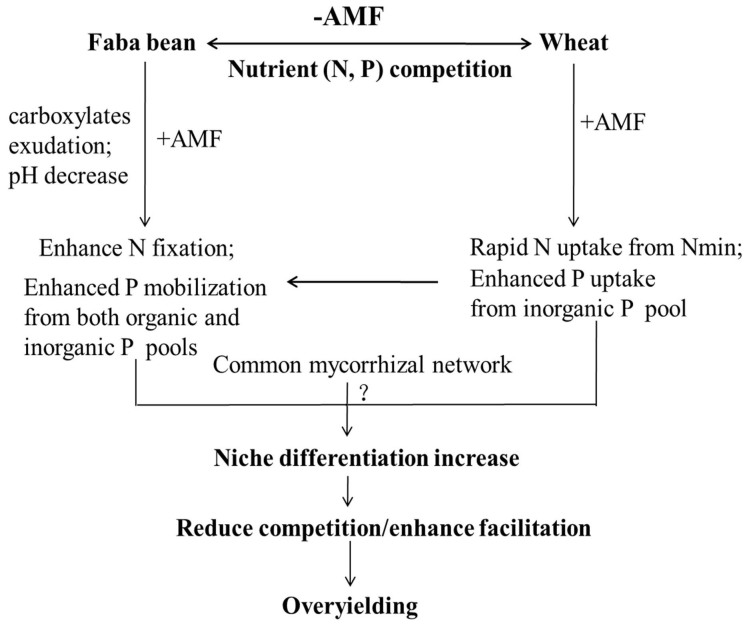
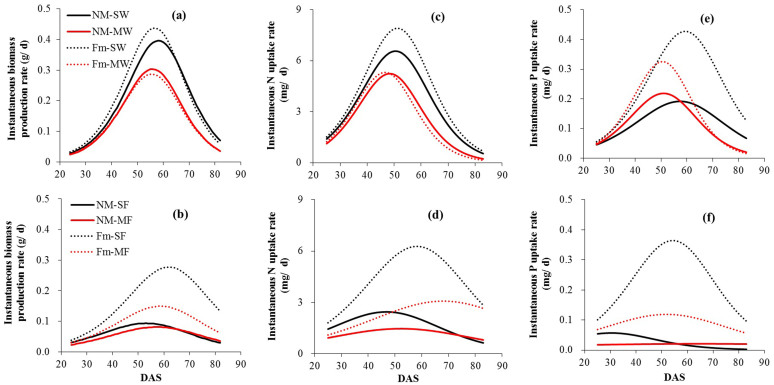
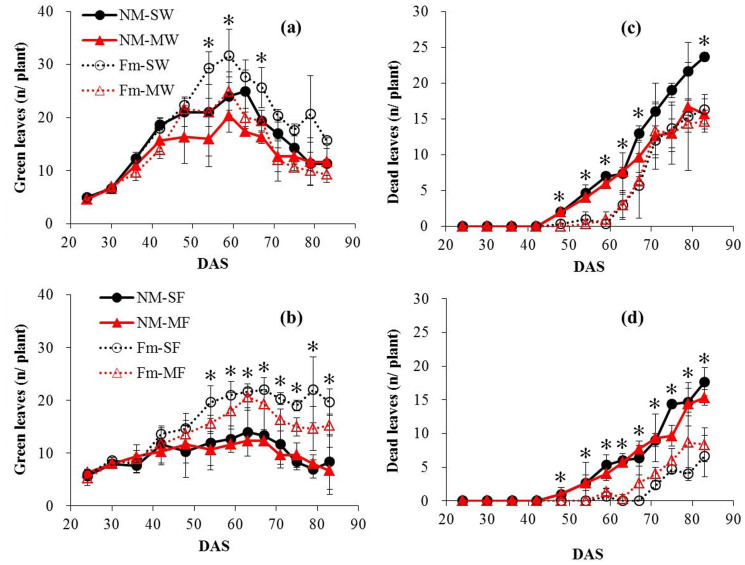
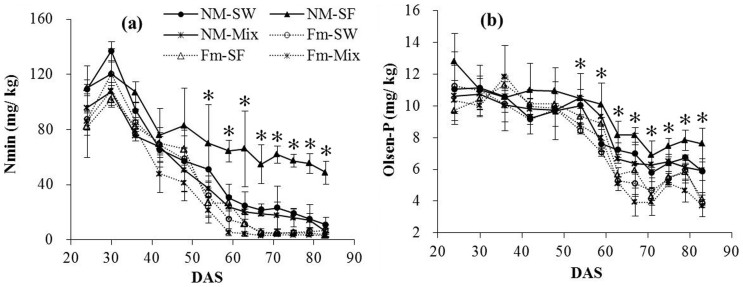
The mechanistic understanding of the dynamic processes linking nutrient acquisition and biomass production of competing individuals can be instructive in optimizing intercropping systems. Here, we examine the effect of inoculation with Funneliformis mosseae on competitive dynamics between wheat and faba bean. Wheat is less responsive to mycorrhizal inoculation. Both inoculated and uninoculated wheat attained the maximum instantaneous N and P capture approximately five days before it attained the maximum instantaneous biomass production, indicating that wheat detected the competitor and responded physiologically to resource limitation prior to the biomass response. By contrast, the instantaneous N and P capture by uninoculated faba bean remained low throughout the growth period, and plant growth was not significantly affected by competing wheat. However, inoculation substantially enhanced biomass production and N and P acquisition of faba bean. The exudation of citrate and malate acids and acid phosphatase activity were greater in mycorrhizal than in uninoculated faba bean, and rhizosphere pH tended to decrease. We conclude that under N and P limiting conditions, temporal separation of N and P acquisition by competing plant species and enhancement of complementary resource use in the presence of AMF might be attributable to the competitive co-existence of faba bean and wheat.
理解养分获取与竞争个体生物量生产之间动态过程的机制,对于优化间作系统具有指导意义。在此,我们研究接种摩西管柄囊霉对小麦和蚕豆竞争动态的影响。小麦对菌根接种的反应较小。接种和未接种的小麦在达到最大瞬时生物量生产前约五天,均达到最大瞬时氮和磷捕获量,这表明小麦在生物量反应之前就检测到了竞争者并对资源限制做出了生理反应。相比之下,未接种的蚕豆在整个生长期间的瞬时氮和磷捕获量一直较低,且其生长未受到竞争小麦的显著影响。然而,接种显著提高了蚕豆的生物量生产以及氮和磷的获取。菌根化蚕豆中柠檬酸和苹果酸的分泌以及酸性磷酸酶活性均高于未接种的蚕豆,根际pH值有下降趋势。我们得出结论,在氮和磷限制条件下,竞争植物物种在氮和磷获取上的时间分离以及在丛枝菌根真菌存在下互补资源利用的增强,可能是蚕豆和小麦竞争共存的原因。