Richetto Juliet, Labouesse Marie A, Poe Michael M, Cook James M, Grace Anthony A, Riva Marco A, Meyer Urs
Center of Neuropharmacology, Dipartimento di Scienze Farmacologiche e Biomolecolari, Università degli Studi di Milano, Milan, Italy (Drs Richetto and Riva); Physiology and Behavior Laboratory, ETH Zurich, Schorenstrasse 16, 8603 Schwerzenbach, Switzerland (Drs Labouesse and Meyer); Department of Chemistry and Biochemistry, University of Wisconsin-Milwaukee, Milwaukee, WI (Drs Poe and Cook); Departments of Neuroscience, Psychiatry and Psychology, University of Pittsburgh, Pittsburgh, PA (Dr Grace); Center of Excellence on Neurodegenerative Diseases, Università degli Studi di Milano, Milan, Italy (Dr Riva).
Int J Neuropsychopharmacol. 2015 Jan 30;18(4):pyu055. doi: 10.1093/ijnp/pyu055.
Impaired γ-aminobutyric acid (GABA) signaling may contribute to the emergence of cognitive deficits and subcortical dopaminergic hyperactivity in patients with schizophrenia and related psychotic disorders. Against this background, it has been proposed that pharmacological interventions targeting GABAergic dysfunctions may prove useful in correcting such cognitive impairments and dopaminergic imbalances.
Here, we explored possible beneficial effects of the benzodiazepine-positive allosteric modulator SH-053-2'F-S-CH₃, with partial selectivity at the α2, α3, and α5 subunits of the GABAA receptor in an immune-mediated neurodevelopmental disruption model. The model is based on prenatal administration of the viral mimetic polyriboinosinic-polyribocytidilic acid [poly(I:C)] in mice, which is known to capture various GABAergic, dopamine-related, and cognitive abnormalities implicated in schizophrenia and related disorders.
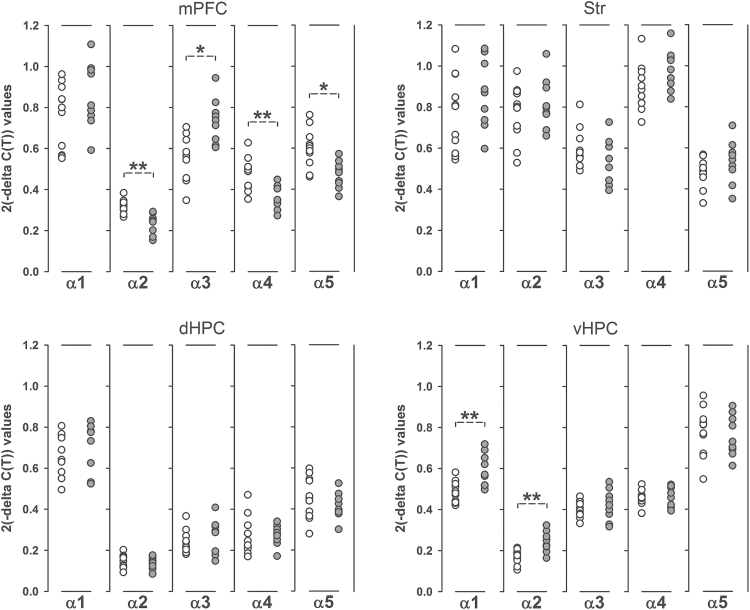
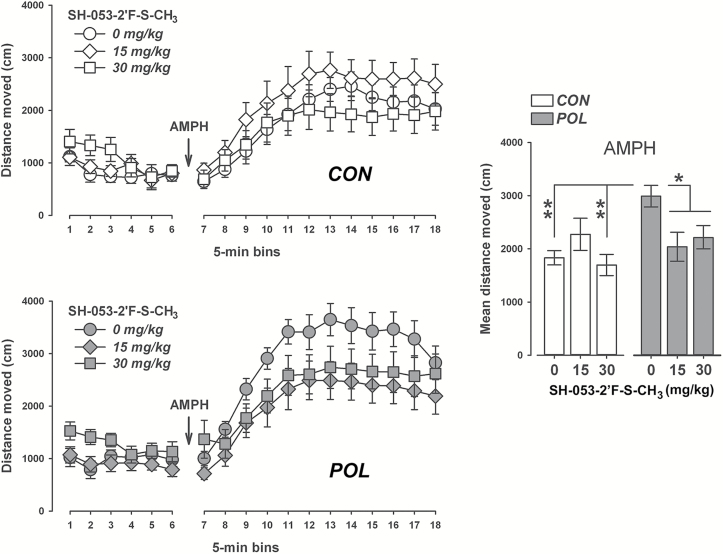
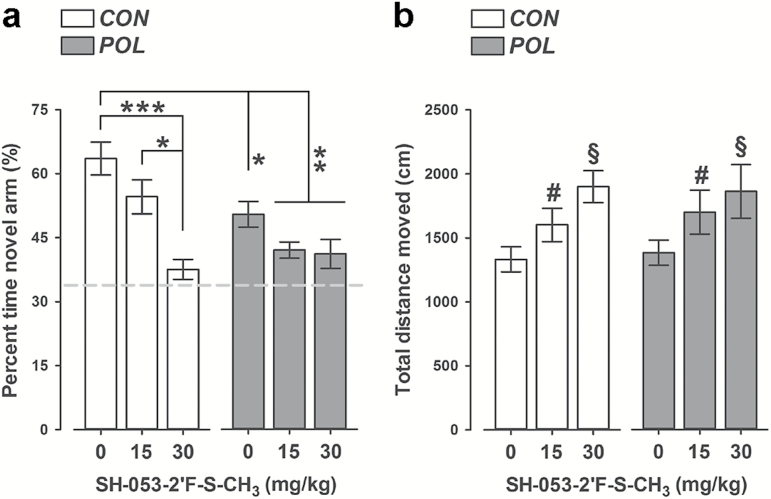
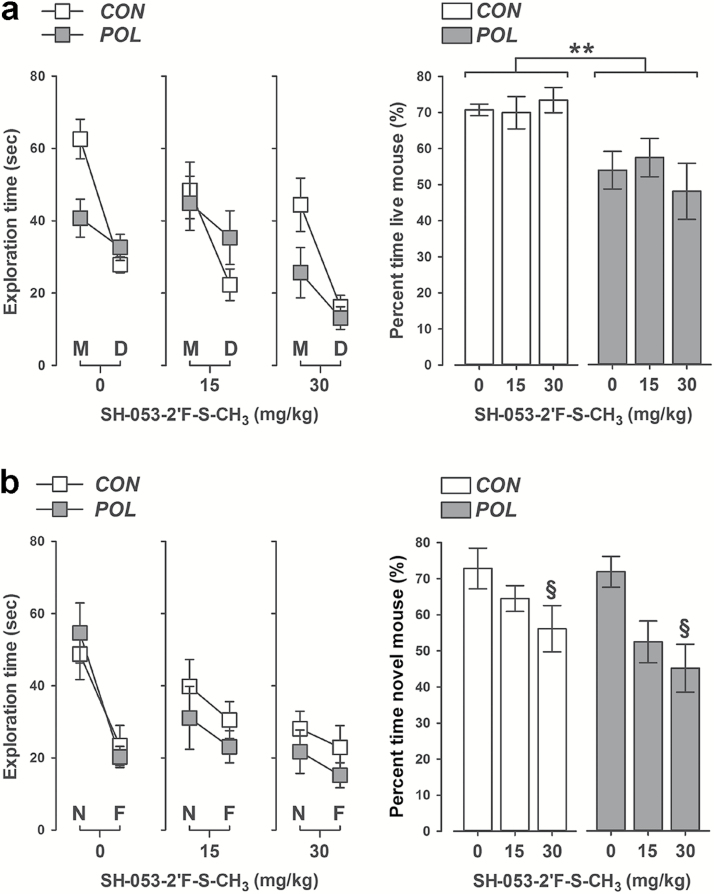
Real-time polymerase chain reaction analyses confirmed the expected alterations in GABAA receptor α subunit gene expression in the medial prefrontal cortices and ventral hippocampi of adult poly(I:C) offspring relative to control offspring. Systemic administration of SH-053-2'F-S-CH₃ failed to normalize the poly(I:C)-induced deficits in working memory and social interaction, but instead impaired performance in these cognitive and behavioral domains both in control and poly(I:C) offspring. In contrast, SH-053-2'F-S-CH₃ was highly effective in mitigating the poly(I:C)-induced amphetamine hypersensitivity phenotype without causing side effects in control offspring.
Our preclinical data suggest that benzodiazepine-like positive allosteric modulators with activity at the α2, α3, and α5 subunits of the GABAA receptor may be particularly useful in correcting pathological overactivity of the dopaminergic system, but they may be ineffective in targeting multiple pathological domains that involve the co-existence of psychotic, social, and cognitive dysfunctions.
γ-氨基丁酸(GABA)信号传导受损可能导致精神分裂症及相关精神障碍患者出现认知缺陷和皮质下多巴胺能亢进。在此背景下,有人提出针对GABA能功能障碍的药物干预可能有助于纠正此类认知障碍和多巴胺能失衡。
在此,我们在免疫介导的神经发育破坏模型中探究了苯二氮䓬类正变构调节剂SH-053-2'F-S-CH₃的潜在有益作用,该调节剂对GABAA受体的α2、α3和α5亚基具有部分选择性。该模型基于在小鼠孕期给予病毒模拟物聚肌苷酸-聚胞苷酸[poly(I:C)],已知该物质会引发与精神分裂症及相关疾病有关的各种GABA能、多巴胺相关和认知异常。
实时聚合酶链反应分析证实,相对于对照后代,成年poly(I:C)后代的内侧前额叶皮质和腹侧海马中GABAA受体α亚基基因表达出现了预期的变化。全身性给予SH-053-2'F-S-CH₃未能使poly(I:C)诱导的工作记忆和社交互动缺陷恢复正常,反而损害了对照和poly(I:C)后代在这些认知和行为领域的表现。相比之下,SH-053-2'F-S-CH₃在减轻poly(I:C)诱导的苯丙胺超敏表型方面非常有效,且不会在对照后代中引起副作用。
我们的临床前数据表明,对GABAA受体的α2、α3和α5亚基具有活性的苯二氮䓬类样正变构调节剂可能在纠正多巴胺能系统的病理性亢进方面特别有用,但它们可能无法针对涉及精神病性、社交和认知功能障碍共存的多个病理领域。