Beaudry H, Gendron L, Morón J A
Department of Anesthesiology, College of Physicians and Surgeons, Columbia University Medical Center, Columbia University, P&S Box 46, 630 West 168th Street, New York, NY, 10032, USA; Department of Physiology and Biophysics, Faculty of Medicine and Health Sciences, Université de Sherbrooke, 3001, 12th Avenue North, Sherbrooke, QC, J1H 5N4, Canada.
Eur J Neurosci. 2015 Apr;41(7):901--7. doi: 10.1111/ejn.12829. Epub 2015 Jan 9.
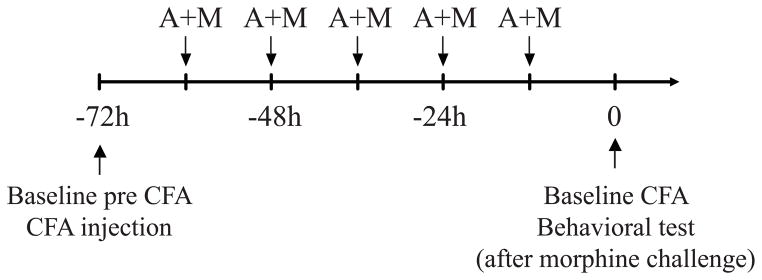
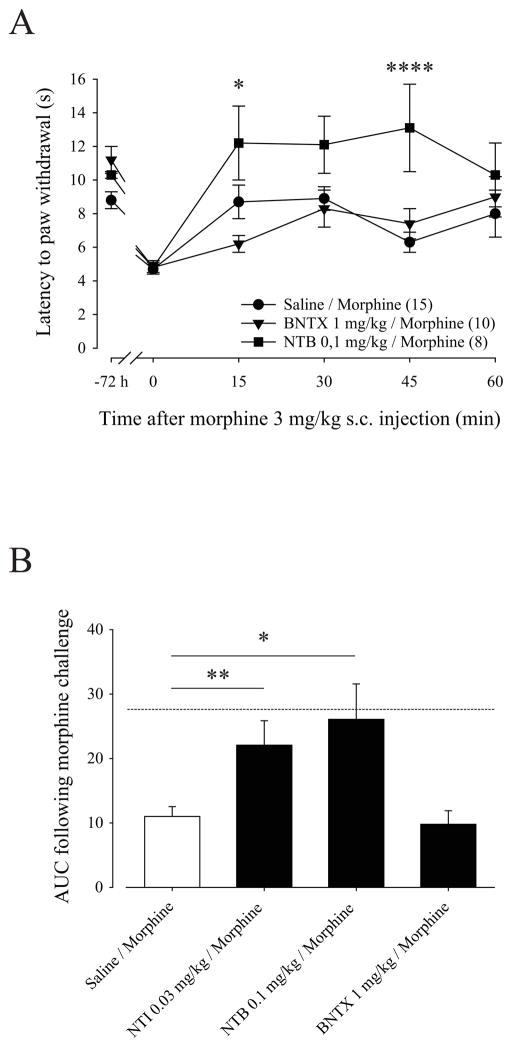
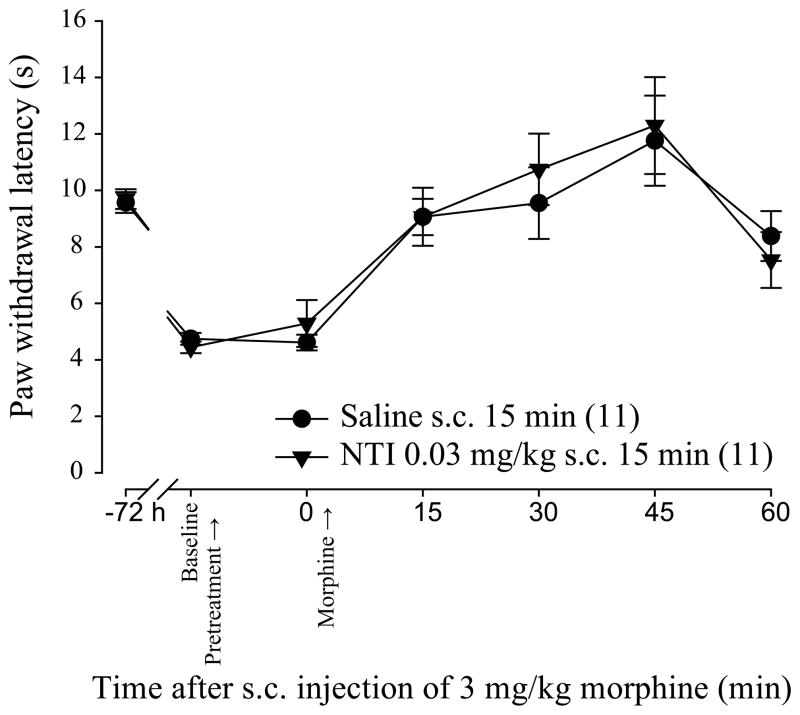
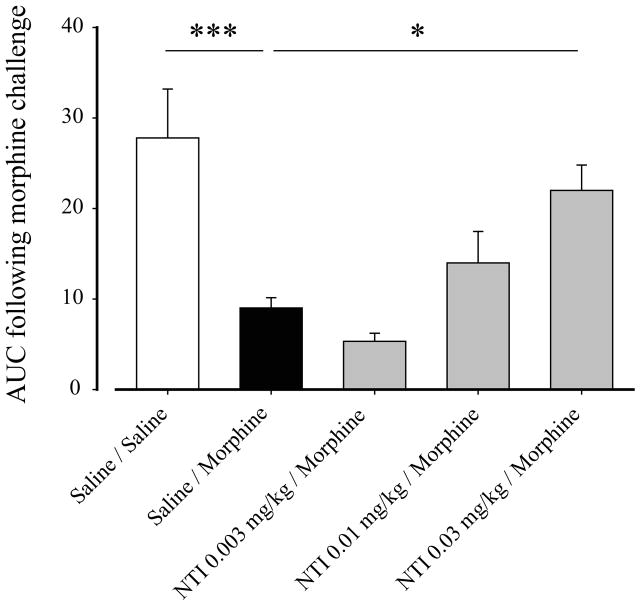
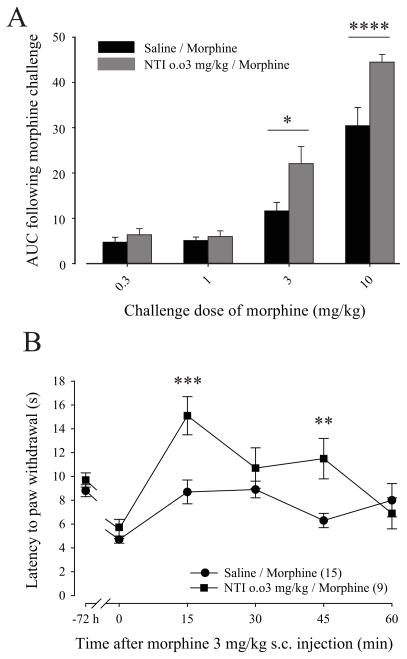
Opioids are well known for their robust analgesic effects. Chronic activation of mu opioid receptors (MOPs) is, however, accompanied by various unwanted effects such as analgesic tolerance. Among other mechanisms, interactions between MOPs and delta opioid receptors (DOPs) are thought to play an important role in morphine-induced behavioral adaptations. Interestingly, certain conditions such as inflammation enhance the function of the DOP through a MOP-dependent mechanism. Here, we investigated the role of DOPs during the development of morphine tolerance in an animal model of chronic inflammatory pain. Using behavioral approaches, we first established that repeated systemic morphine treatment induced morphine analgesic tolerance in rats coping with chronic inflammatory pain. We then observed that blockade of DOPs with subcutaneous naltrindole (NTI), a selective DOP antagonist, significantly attenuated the development of morphine tolerance in a dose-dependent manner. We confirmed that this effect was DOP mediated by showing that an acute injection of NTI had no effect on morphine-induced analgesia in naive animals. Previous pharmacological characterizations revealed the existence of DOP subtype 1 and DOP subtype 2. As opposed to NTI, 7-benzylidenenaltrexone and naltriben were reported to be selective DOP subtype 1 and DOP subtype 2 antagonists, respectively. Interestingly, naltriben but not 7-benzylidenenaltrexone was able to attenuate the development of morphine analgesic tolerance in inflamed rats. Altogether, our results suggest that targeting of DOP subtype 2 with antagonists provides a valuable strategy to attenuate the analgesic tolerance that develops after repeated morphine administration in the setting of chronic inflammatory pain.
阿片类药物以其强大的镇痛作用而闻名。然而,μ阿片受体(MOPs)的慢性激活伴随着各种不良影响,如镇痛耐受性。在其他机制中,MOPs与δ阿片受体(DOPs)之间的相互作用被认为在吗啡诱导的行为适应性中起重要作用。有趣的是,某些情况如炎症通过一种依赖MOP的机制增强DOP的功能。在此,我们在慢性炎症性疼痛的动物模型中研究了DOPs在吗啡耐受性形成过程中的作用。使用行为学方法,我们首先确定反复全身给予吗啡会在应对慢性炎症性疼痛的大鼠中诱导吗啡镇痛耐受性。然后我们观察到,用选择性DOP拮抗剂皮下注射纳曲吲哚(NTI)阻断DOPs,以剂量依赖的方式显著减弱了吗啡耐受性的形成。我们通过显示急性注射NTI对未接触过吗啡的动物的吗啡诱导的镇痛没有影响,证实了这种作用是由DOP介导的。先前的药理学特征揭示了DOP亚型1和DOP亚型2的存在。与NTI不同,7-亚苄基纳曲酮和纳曲苄分别被报道为选择性DOP亚型1和DOP亚型2拮抗剂。有趣的是,纳曲苄而非7-亚苄基纳曲酮能够减弱炎症大鼠中吗啡镇痛耐受性的形成。总之,我们的结果表明,用拮抗剂靶向DOP亚型2为减弱在慢性炎症性疼痛情况下反复给予吗啡后产生的镇痛耐受性提供了一种有价值的策略。