Bovy Arnaud, Schijlen Elio, Hall Robert D
Plant Research International, P.O. Box 16, 6700AA Wageningen, The Netherlands.
Plant Research International, P.O. Box 16, 6700AA Wageningen, The Netherlands ; Centre for BioSystems Genomics, P.O. Box 98, 6700PB Wageningen, The Netherlands.
Metabolomics. 2007;3:399-412. doi: 10.1007/s11306-007-0074-2. Epub 2007 Sep 9.
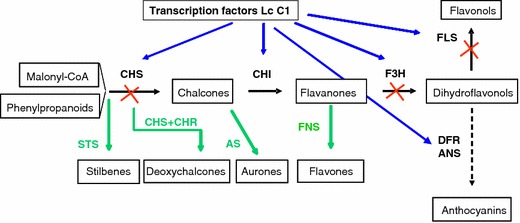
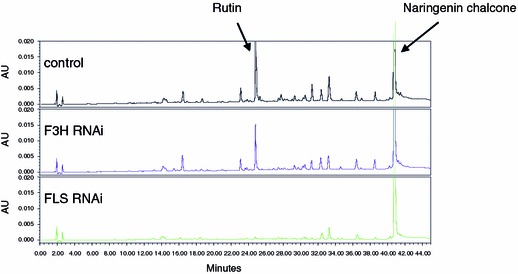
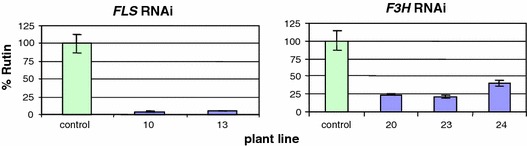
Flavonoids comprise a large and diverse group of polyphenolic plant secondary metabolites. In plants, flavonoids play important roles in many biological processes such as pigmentation of flowers, fruits and vegetables, plant-pathogen interactions, fertility and protection against UV light. Being natural plant compounds, flavonoids are an integral part of the human diet and there is increasing evidence that dietary polyphenols are likely candidates for the observed beneficial effects of a diet rich in fruits and vegetables on the prevention of several chronic diseases. Within the plant kingdom, and even within a single plant species, there is a large variation in the levels and composition of flavonoids. This variation is often due to specific mutations in flavonoid-related genes leading to quantitative and qualitative differences in metabolic profiles. The use of such specific flavonoid mutants with easily scorable, visible phenotypes has led to the isolation and characterisation of many structural and regulatory genes involved in the flavonoid biosynthetic pathway from different plant species. These genes have been used to engineer the flavonoid biosynthetic pathway in both model and crop plant species, not only from a fundamental perspective, but also in order to alter important agronomic traits, such as flower and fruit colour, resistance, nutritional value. This review describes the advances made in engineering the flavonoid pathway in tomato (). Three different approaches will be described; (I) Increasing endogenous tomato flavonoids using structural or regulatory genes; (II) Blocking specific steps in the flavonoid pathway by RNA interference strategies; and (III) Production of novel tomato flavonoids by introducing novel branches of the flavonoid pathway. Metabolite profiling is an essential tool to analyse the effects of pathway engineering approaches, not only to analyse the effect on the flavonoid composition itself, but also on other related or unrelated metabolic pathways. Metabolomics will therefore play an increasingly important role in revealing a more complete picture of metabolic perturbation and will provide additional novel insights into the effect of the introduced genes and the role of flavonoids in plant physiology and development.
类黄酮是一大类多样的多酚类植物次生代谢产物。在植物中,类黄酮在许多生物学过程中发挥重要作用,如花朵、果实和蔬菜的色素沉着、植物与病原体的相互作用、育性以及抵御紫外线。作为天然植物化合物,类黄酮是人类饮食中不可或缺的一部分,并且越来越多的证据表明,膳食多酚可能是富含水果和蔬菜的饮食对预防多种慢性疾病具有有益作用的潜在因素。在植物界,甚至在单一植物物种内,类黄酮的含量和组成都存在很大差异。这种差异通常是由于类黄酮相关基因的特定突变导致代谢谱在数量和质量上的差异。使用具有易于评分的可见表型的此类特定类黄酮突变体,已导致从不同植物物种中分离和鉴定了许多参与类黄酮生物合成途径的结构和调控基因。这些基因已被用于在模式植物和作物物种中构建类黄酮生物合成途径,不仅是从基础研究的角度,也是为了改变重要的农艺性状,如花和果实的颜色、抗性、营养价值。本综述描述了番茄类黄酮途径工程方面取得的进展。将描述三种不同的方法;(I)使用结构或调控基因增加番茄内源性类黄酮;(II)通过RNA干扰策略阻断类黄酮途径中的特定步骤;(III)通过引入类黄酮途径的新分支生产新型番茄类黄酮。代谢物谱分析是分析途径工程方法效果的重要工具,不仅用于分析对类黄酮组成本身的影响,还用于分析对其他相关或不相关代谢途径的影响。因此,代谢组学将在揭示更完整的代谢扰动情况方面发挥越来越重要的作用,并将为导入基因的作用以及类黄酮在植物生理和发育中的作用提供更多新颖的见解。