Wang Yugang, Wu Xinjun, Sun Pengfei, Li Jian
School of Mechanical Science & Engineering, Huazhong University of Science and Technology, Wuhan 430074, China.
Sensors (Basel). 2015 Feb 3;15(2):3471-90. doi: 10.3390/s150203471.
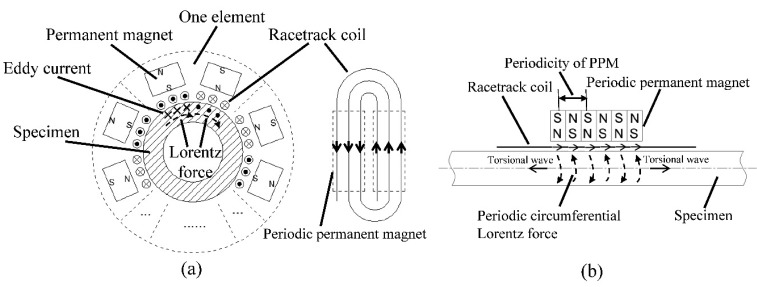
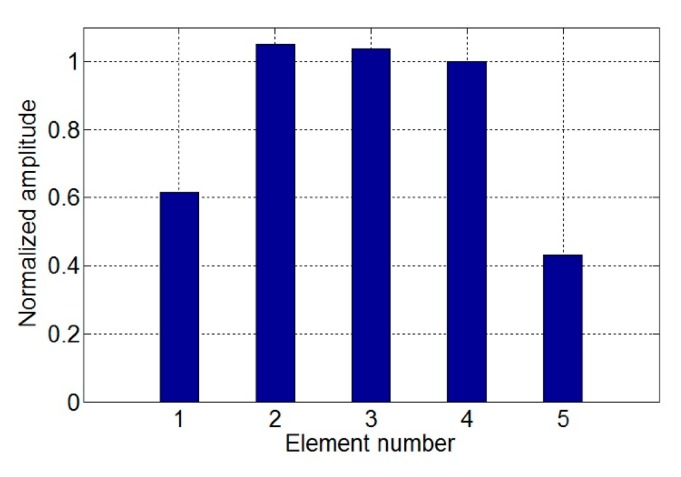
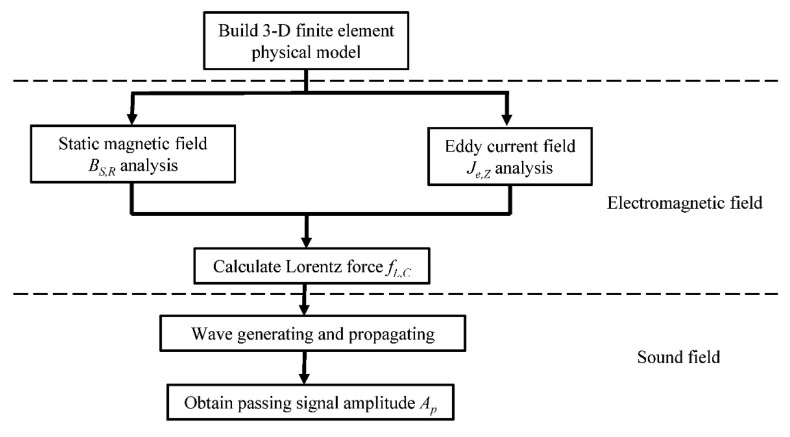
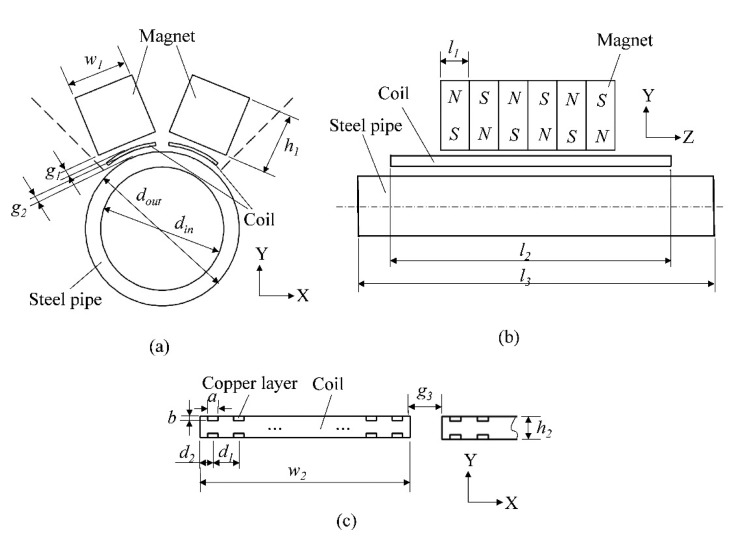
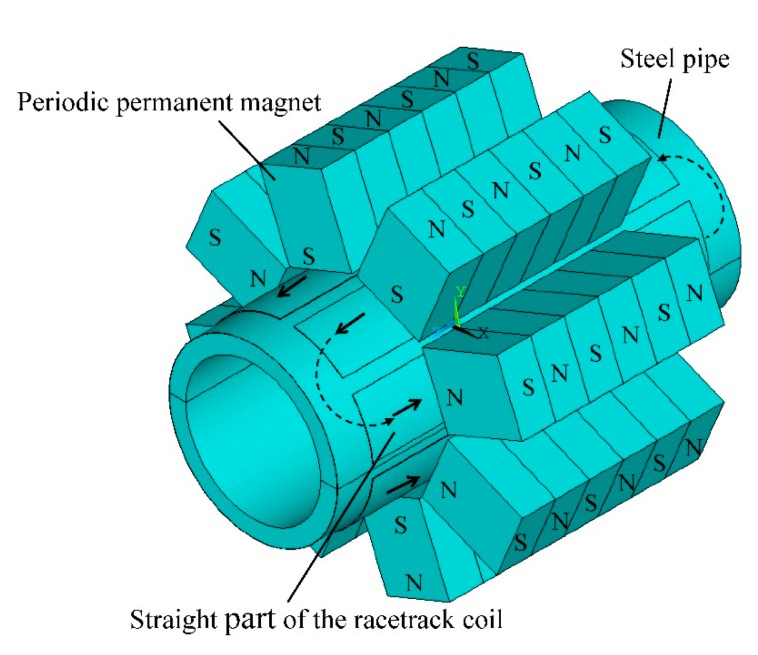
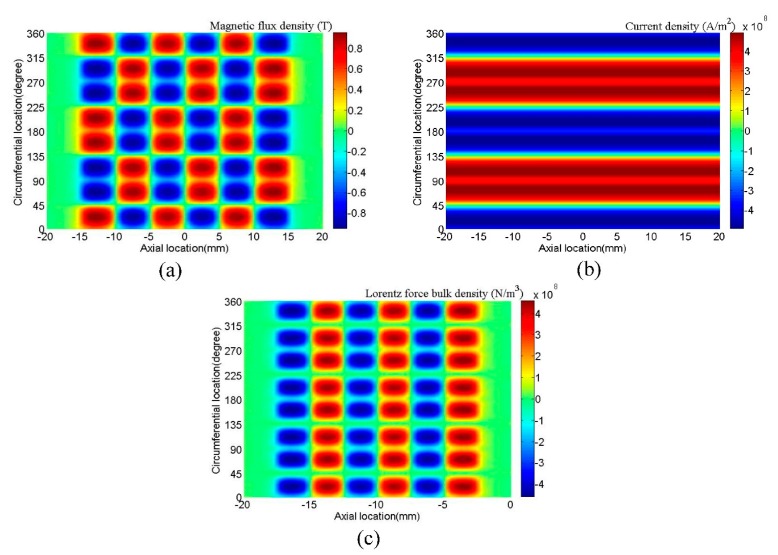
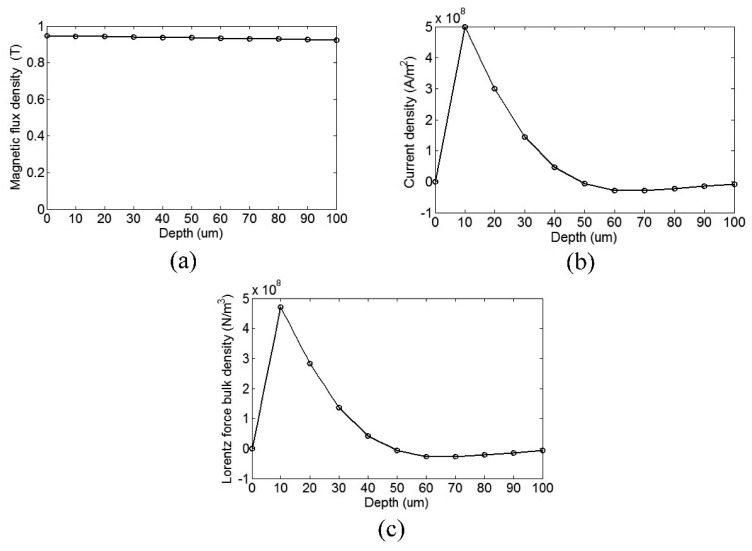
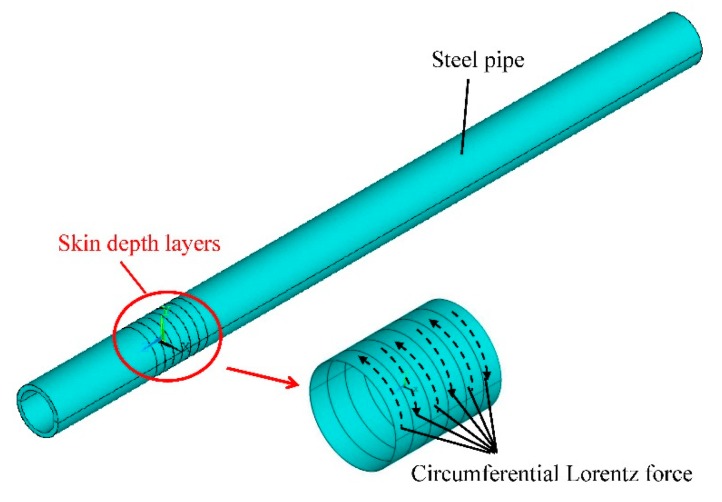
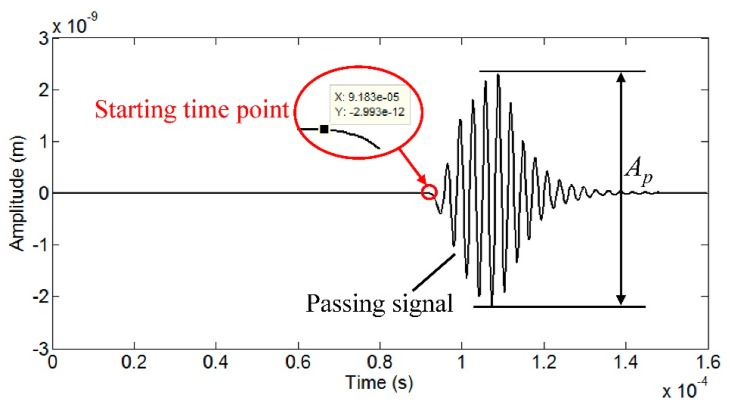
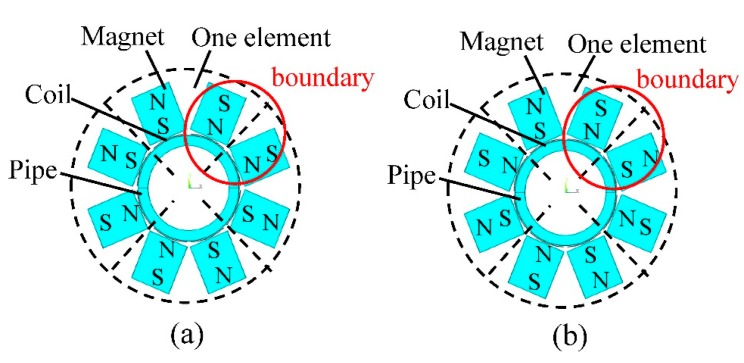
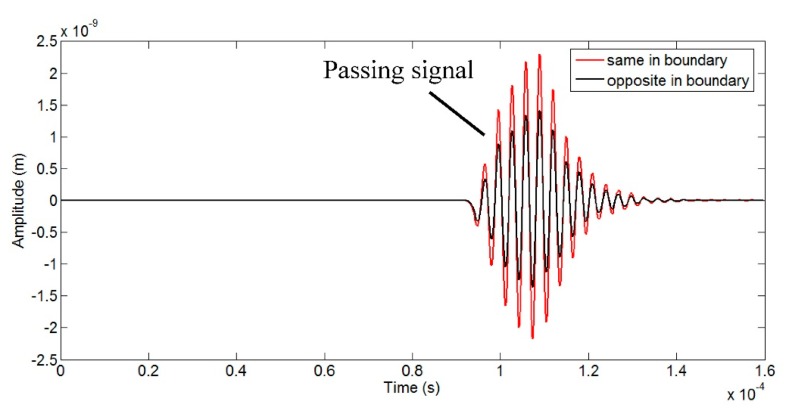
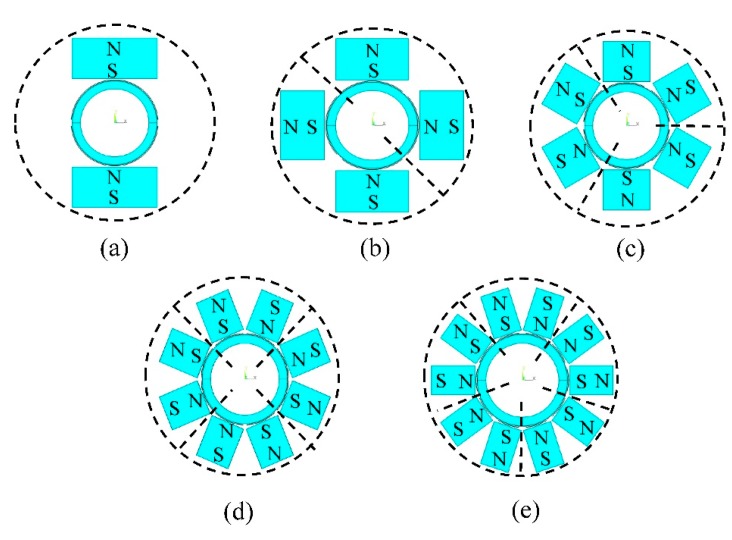
Electromagnetic acoustic transducers (EMATs) can generate non-dispersive T(0,1) mode guided waves in a metallic pipe for nondestructive testing (NDT) by using a periodic permanent magnet (PPM) EMAT circular array. In order to enhance the excitation efficiency of the sensor, the effects of varying the number of elements of the array on the excitation efficiency is studied in this paper. The transduction process of the PPM EMAT array is studied based on 3-D finite element method (FEM). The passing signal amplitude of the torsional wave is obtained to represent the excitation efficiency of the sensor. Models with different numbers of elements are established and the results are compared to obtain an optimal element number. The simulation result is verified by experiments. It is shown that after optimization, the amplitudes of both the passing signal and defect signal with the optimal element number are increased by 29%, which verifies the feasibility of this optimal method. The essence of the optimization is to find the best match between the static magnetic field and the eddy current field in a limited circumferential space to obtain the maximum circumferential Lorentz force.
电磁声换能器(EMAT)可以通过使用周期性永磁体(PPM)EMAT圆形阵列在金属管道中产生非色散T(0,1)模式导波,用于无损检测(NDT)。为了提高传感器的激励效率,本文研究了改变阵列元件数量对激励效率的影响。基于三维有限元方法(FEM)研究了PPM EMAT阵列的转换过程。通过获得扭转波的通过信号幅度来表示传感器的激励效率。建立了不同元件数量的模型并比较结果以获得最佳元件数量。通过实验验证了仿真结果。结果表明,优化后,最佳元件数量的通过信号和缺陷信号的幅度均提高了29%,验证了该优化方法的可行性。优化的本质是在有限的圆周空间内找到静磁场与涡流场的最佳匹配,以获得最大的圆周洛伦兹力。