An Yinghong, Guo Wanjun, Li Linna, Xu Chengwang, Yang Dexuan, Wang Shanshan, Lu Yaxin, Zhang Quan, Zhai Jiadai, Fan Hongxia, Qiu Chuanjiang, Qi Jie, Chen Yue, Yuan Shoujun
Clinical Laboratory Center, Chinese PLA Air Force General Hospital, Haidian, Beijing 100142, PR China.
Department of Pharmacology and Toxicology, Beijing Institute of Radiation Medicine, Beijing 100850, PR China.
PLoS One. 2015 Feb 6;10(2):e0116202. doi: 10.1371/journal.pone.0116202. eCollection 2015.
There is no highly effective chemotherapy for malignant gliomas to date. We found that dimethylaminomicheliolide (DMAMCL), a selective inhibitor of acute myeloid leukemia (AML) stem/progenitor cells, inhibited the growth of glioma cells.
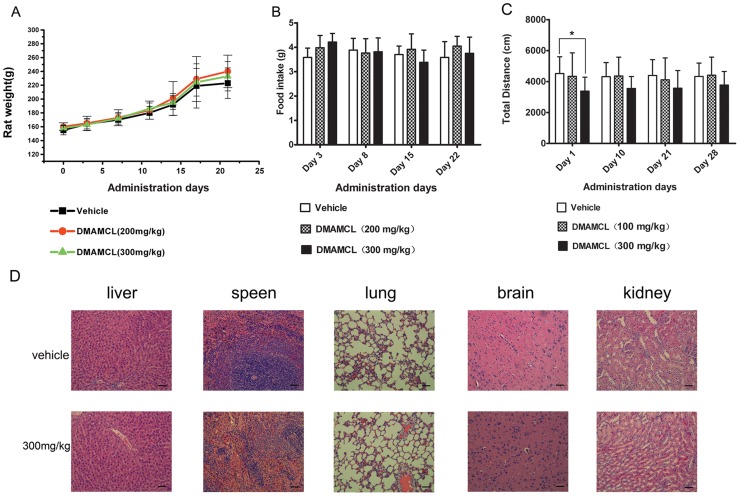
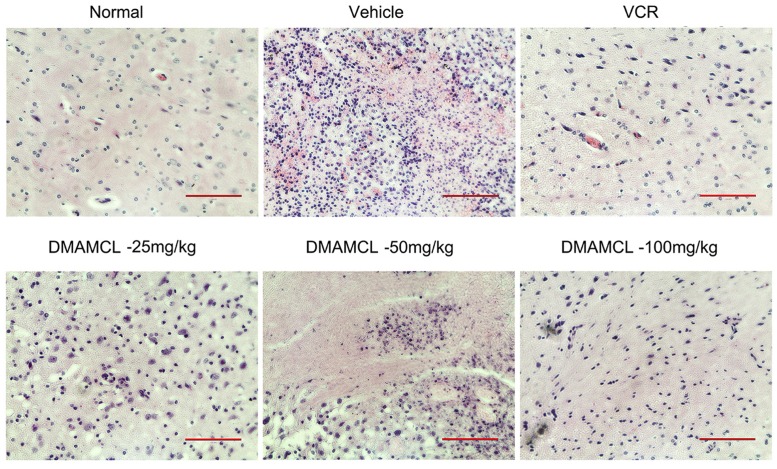
The distribution of DMAMCL in brain was analyzed by an ultraperformance liquid chromatography-mass spectrometry (UPLC-MS/MS) system. The anti-tumor evaluations of DMAMCL in vitro were performed by MTT, FACS and RT-PCR. In vivo, the mixture of C6 cells and matrigel was injected into caudatum, and the anti-tumor activity of DMAMCL was evaluated by tumor growth and rat survival. The toxicity of DMAMCL was evaluated by body weight, daily food intake, hematological or serum biochemical analyses, and histological appearance of tissues.
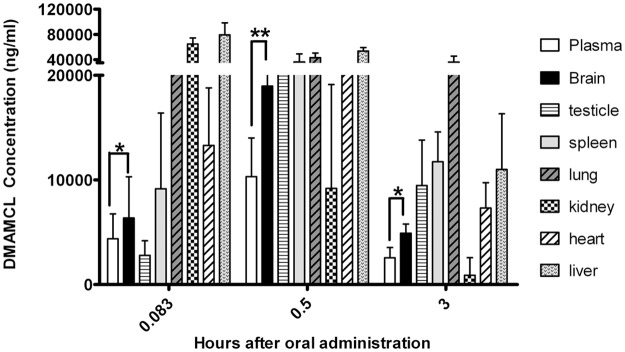
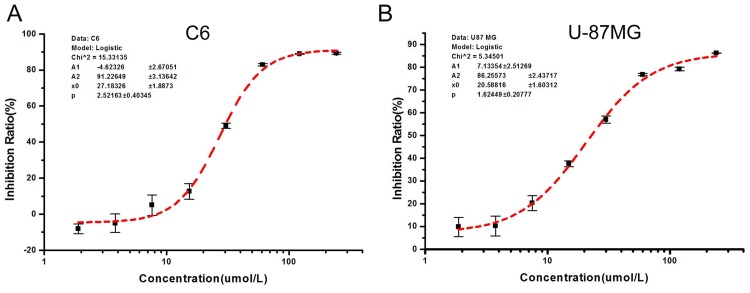
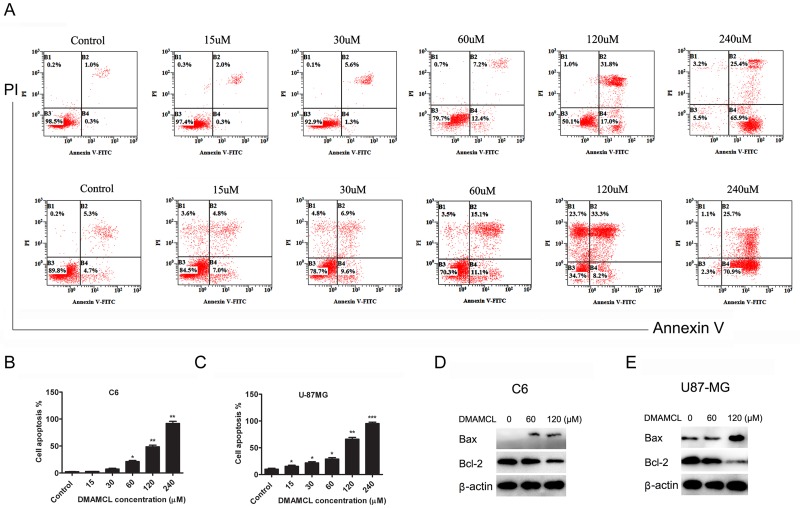
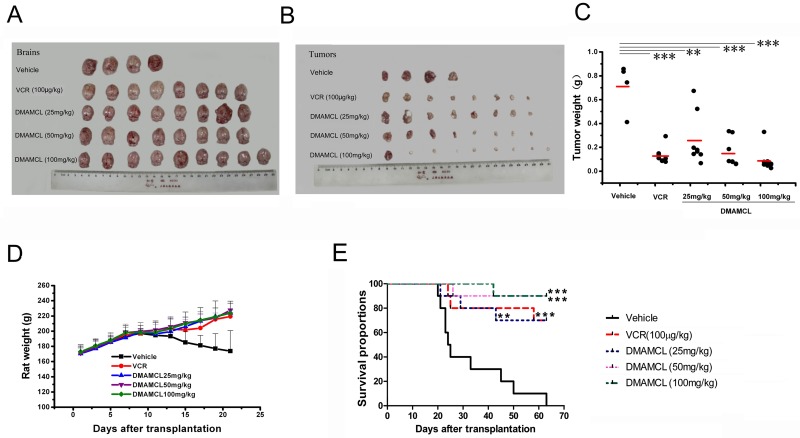
The IC50 values of DMAMCL against the C6 and U-87MG cell lines in vitro were 27.18 ± 1.89 μM and 20.58 ± 1.61 μM, respectively. DAMMCL down-regulated the anti-apoptosis gene Bcl-2 and increased apoptosis in C6 and U-87MG cells in a dose-dependent manner. In a C6 rat tumor model, daily administration of DMAMCL for 21 days reduced the burden of C6 tumors by 60% to 88% compared to controls, and more than doubled the mean lifespan of tumor-bearing rats. Distribution analysis showed that the DMAMCL concentration was higher in the brain than in plasma. Evaluations for toxicity revealed that oral administration of DMAMCL at 200 or 300 mg/kg once a day for 21 days did not result in toxicity.
These results suggest that DMAMCL is highly promising for the treatment of glioma.
迄今为止,恶性胶质瘤尚无高效化疗方法。我们发现,急性髓系白血病(AML)干/祖细胞的选择性抑制剂二甲基米氏内酯(DMAMCL)可抑制胶质瘤细胞生长。
采用超高效液相色谱-质谱联用(UPLC-MS/MS)系统分析DMAMCL在脑内的分布。通过MTT、FACS和RT-PCR对DMAMCL进行体外抗肿瘤评估。在体内,将C6细胞与基质胶的混合物注入尾状核,通过肿瘤生长和大鼠存活情况评估DMAMCL的抗肿瘤活性。通过体重、每日食物摄入量、血液学或血清生化分析以及组织的组织学外观评估DMAMCL的毒性。
DMAMCL对C6和U-87MG细胞系的体外IC₅₀值分别为27.18±1.89μM和20.58±1.61μM。DAMMCL下调抗凋亡基因Bcl-2,并以剂量依赖方式增加C6和U-87MG细胞的凋亡。在C6大鼠肿瘤模型中,与对照组相比,连续21天每日给予DMAMCL可使C6肿瘤负担降低60%至88%,并使荷瘤大鼠的平均寿命延长一倍以上。分布分析表明,脑内DMAMCL浓度高于血浆。毒性评估显示,每天口服200或300mg/kg DMAMCL,持续21天未产生毒性。
这些结果表明,DMAMCL在治疗胶质瘤方面极具前景。