Fernández-Mariño Ana Isabel, Cidad Pilar, Zafra Delia, Nocito Laura, Domínguez Jorge, Oliván-Viguera Aida, Köhler Ralf, López-López José R, Pérez-García María Teresa, Valverde Miguel Ángel, Guinovart Joan J, Fernández-Fernández José M
Laboratori de Fisiologia Molecular i Canalopaties, Departament de Ciències Experimentals i de la Salut, Universitat Pompeu Fabra, Barcelona, Spain.
Departamento de Bioquímica y Biología Molecular y Fisiología and Instituto de Biología y Genética Molecular (IBGM), Universidad de Valladolid and Consejo Superior de Investigaciones Científicas (CSIC), Valladolid, Spain.
PLoS One. 2015 Feb 6;10(2):e0118148. doi: 10.1371/journal.pone.0118148. eCollection 2015.
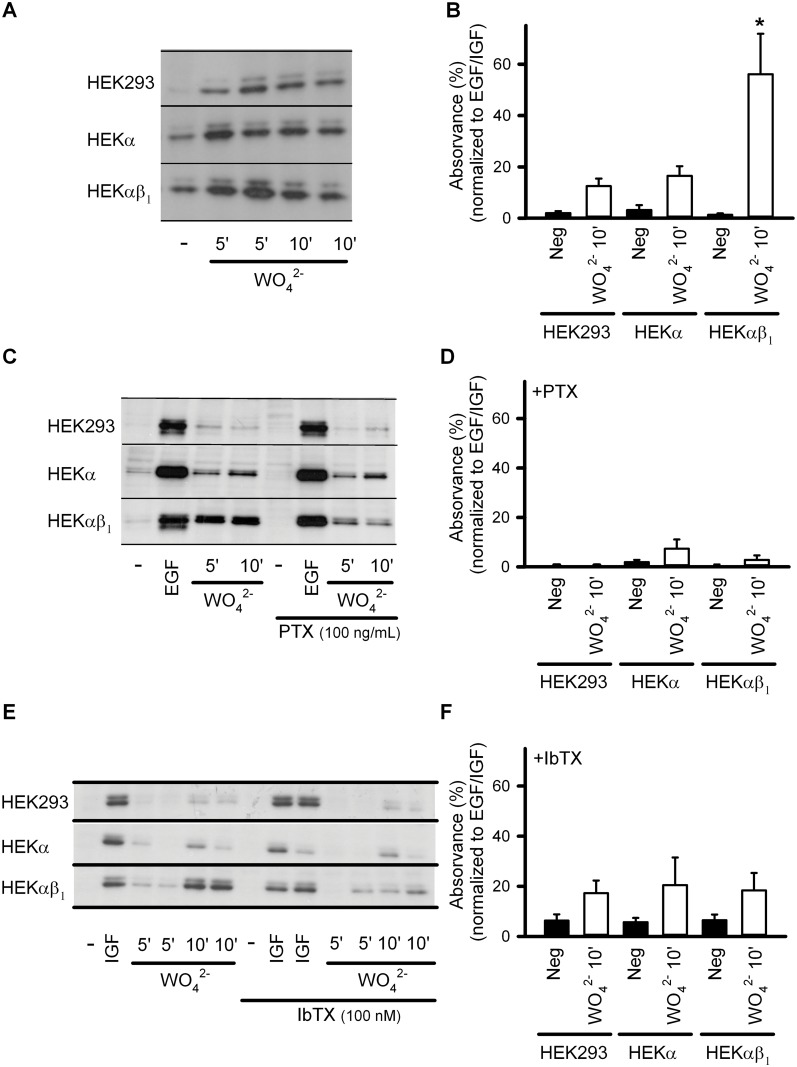
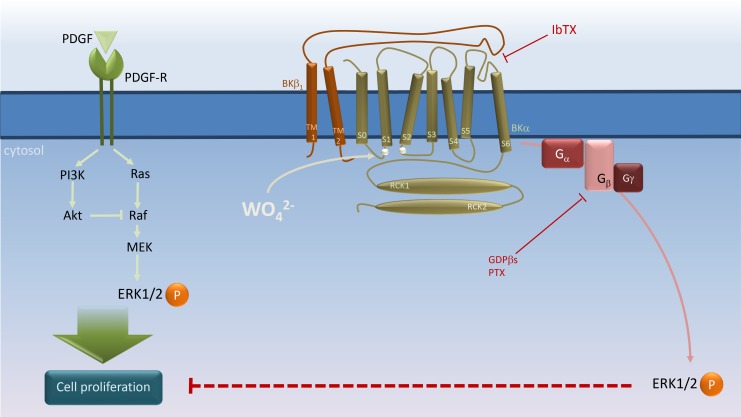
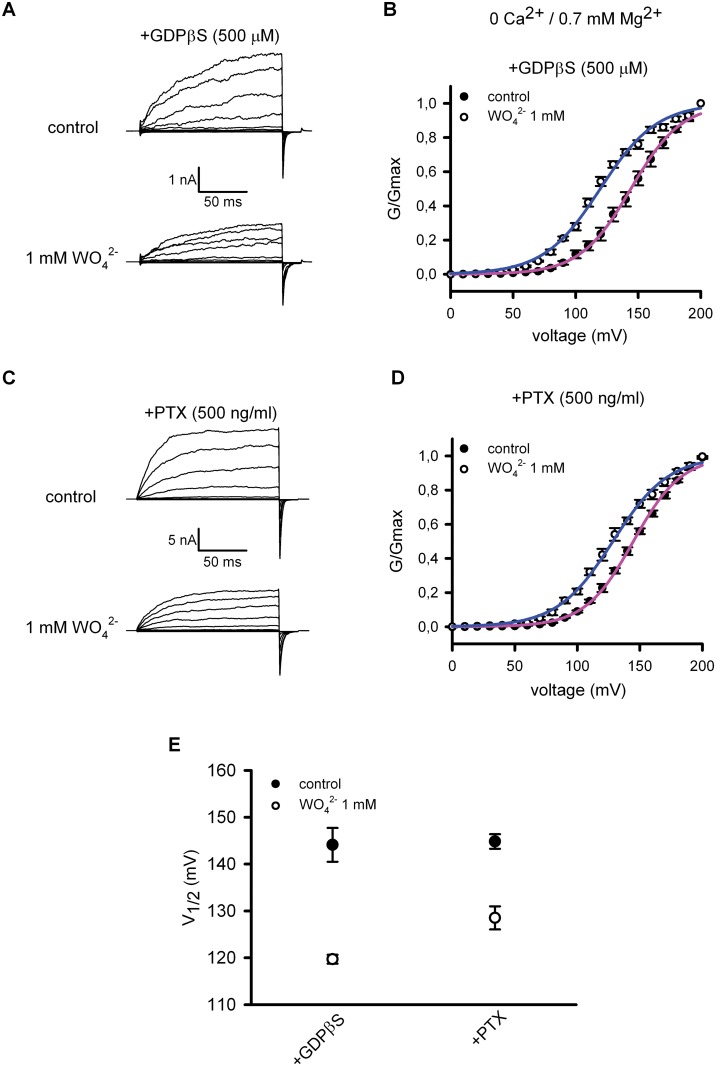
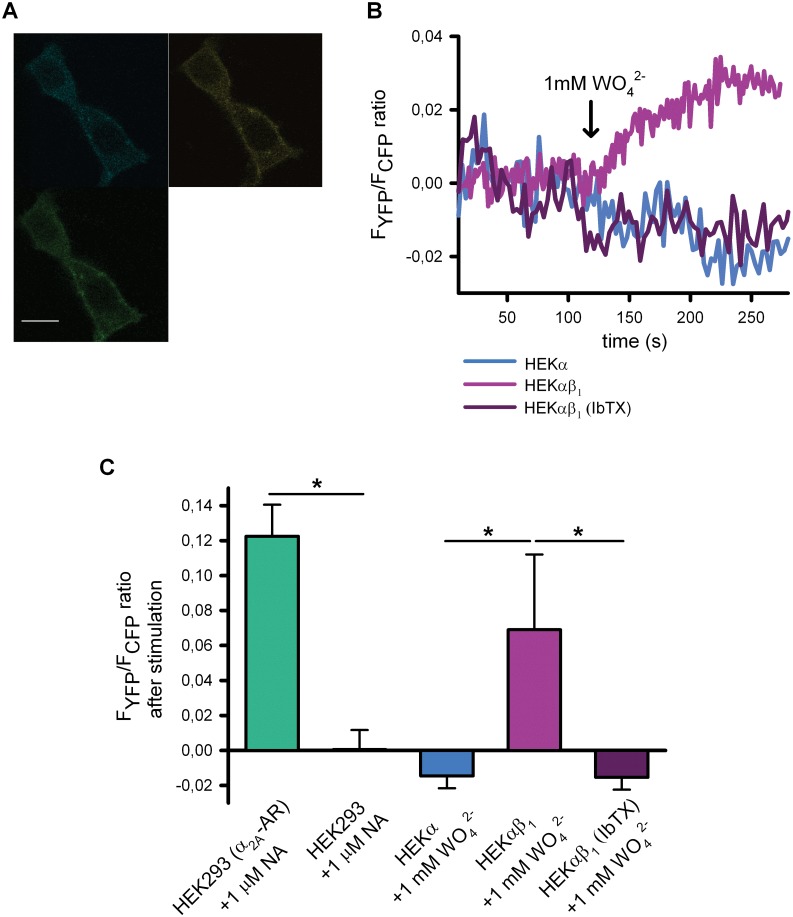
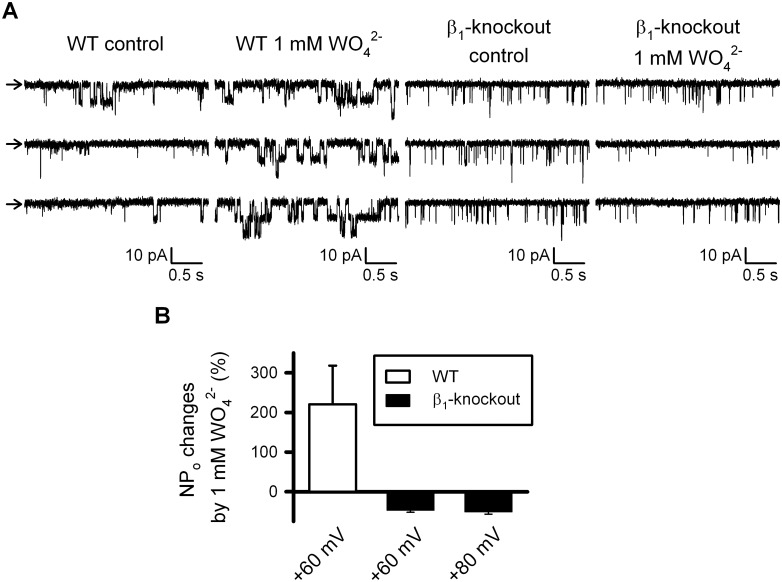
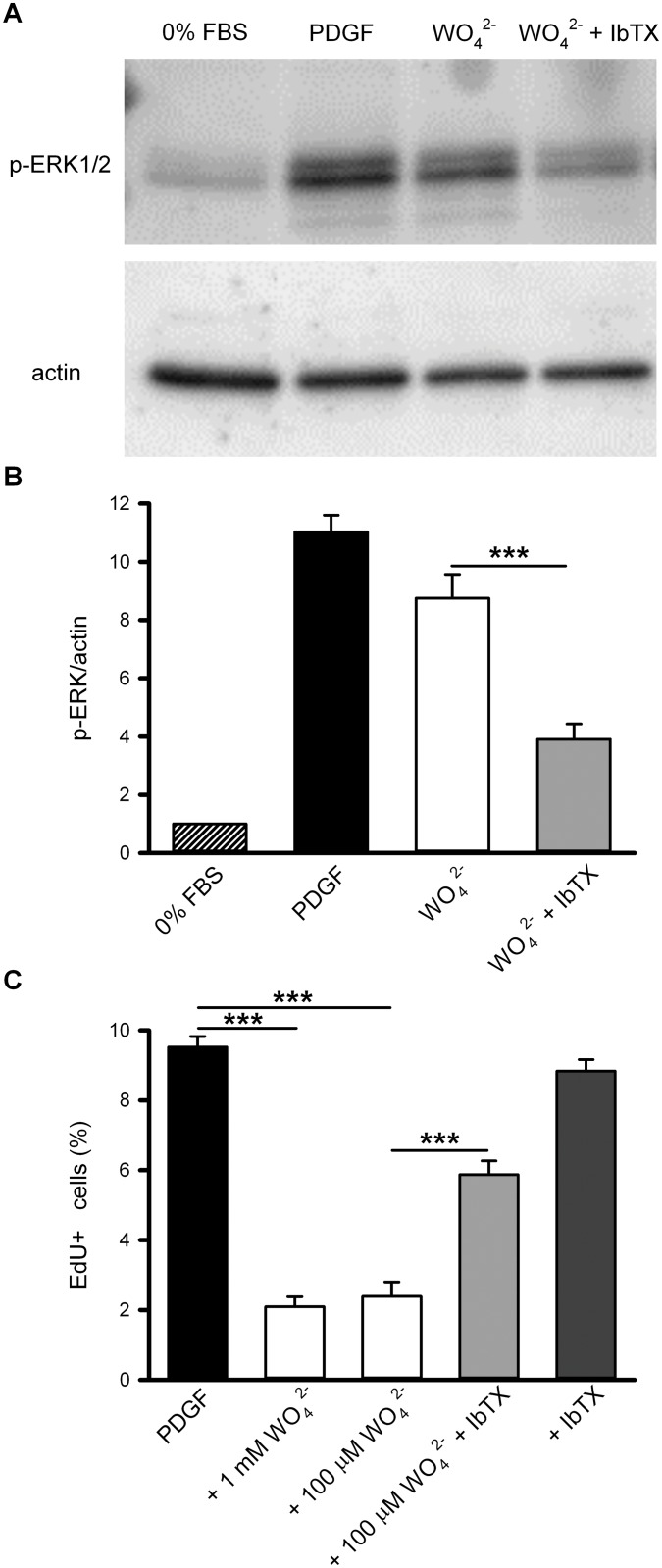
Despite the substantial knowledge on the antidiabetic, antiobesity and antihypertensive actions of tungstate, information on its primary target/s is scarce. Tungstate activates both the ERK1/2 pathway and the vascular voltage- and Ca2+-dependent large-conductance BKαβ1 potassium channel, which modulates vascular smooth muscle cell (VSMC) proliferation and function, respectively. Here, we have assessed the possible involvement of BKαβ1 channels in the tungstate-induced ERK phosphorylation and its relevance for VSMC proliferation. Western blot analysis in HEK cell lines showed that expression of vascular BKαβ1 channels potentiates the tungstate-induced ERK1/2 phosphorylation in a Gi/o protein-dependent manner. Tungstate activated BKαβ1 channels upstream of G proteins as channel activation was not altered by the inhibition of G proteins with GDPβS or pertussis toxin. Moreover, analysis of Gi/o protein activation measuring the FRET among heterologously expressed Gi protein subunits suggested that tungstate-targeting of BKαβ1 channels promotes G protein activation. Single channel recordings on VSMCs from wild-type and β1-knockout mice indicated that the presence of the regulatory β1 subunit was essential for the tungstate-mediated activation of BK channels in VSMCs. Moreover, the specific BK channel blocker iberiotoxin lowered tungstate-induced ERK phosphorylation by 55% and partially reverted (by 51%) the tungstate-produced reduction of platelet-derived growth factor (PDGF)-induced proliferation in human VSMCs. Our observations indicate that tungstate-targeting of BKαβ1 channels promotes activation of PTX-sensitive Gi proteins to enhance the tungstate-induced phosphorylation of ERK, and inhibits PDGF-stimulated cell proliferation in human vascular smooth muscle.
尽管对钨酸盐的抗糖尿病、抗肥胖和抗高血压作用已有大量了解,但其主要靶点的相关信息却很匮乏。钨酸盐可激活细胞外信号调节激酶1/2(ERK1/2)通路以及血管电压和Ca2+依赖性大电导BKαβ1钾通道,这两种通道分别调节血管平滑肌细胞(VSMC)的增殖和功能。在此,我们评估了BKαβ1通道在钨酸盐诱导的ERK磷酸化中的可能作用及其与VSMC增殖的相关性。在人胚肾(HEK)细胞系中进行的蛋白质免疫印迹分析表明,血管BKαβ1通道的表达以Gi/o蛋白依赖性方式增强了钨酸盐诱导的ERK1/2磷酸化。钨酸盐在G蛋白上游激活BKαβ1通道,因为用GDPβS或百日咳毒素抑制G蛋白并不会改变通道的激活。此外,通过测量异源表达的Gi蛋白亚基之间的荧光共振能量转移(FRET)来分析Gi/o蛋白激活情况,结果表明钨酸盐作用于BKαβ1通道可促进G蛋白激活。对野生型和β1基因敲除小鼠的VSMC进行单通道记录表明,调节性β1亚基的存在对于钨酸盐介导的VSMC中BK通道激活至关重要。此外,特异性BK通道阻滞剂iberiotoxin可使钨酸盐诱导的ERK磷酸化降低55%,并部分逆转(51%)钨酸盐导致的人VSMC中血小板衍生生长因子(PDGF)诱导的增殖减少。我们的观察结果表明,钨酸盐作用于BKαβ1通道可促进对百日咳毒素敏感的Gi蛋白激活,从而增强钨酸盐诱导的ERK磷酸化,并抑制人血管平滑肌中PDGF刺激的细胞增殖。