Hartlage-Rübsamen Maike, Waniek Alexander, Meissner Juliane, Morawski Markus, Schilling Stephan, Jäger Carsten, Kleinschmidt Martin, Cynis Holger, Kehlen Astrid, Arendt Thomas, Demuth Hans-Ulrich, Rossner Steffen
Paul Flechsig Institute for Brain Research, University of Leipzig, Jahnallee 59, 04109, Leipzig, Germany.
Acta Neuropathol. 2015 Apr;129(4):565-83. doi: 10.1007/s00401-015-1395-2. Epub 2015 Feb 11.
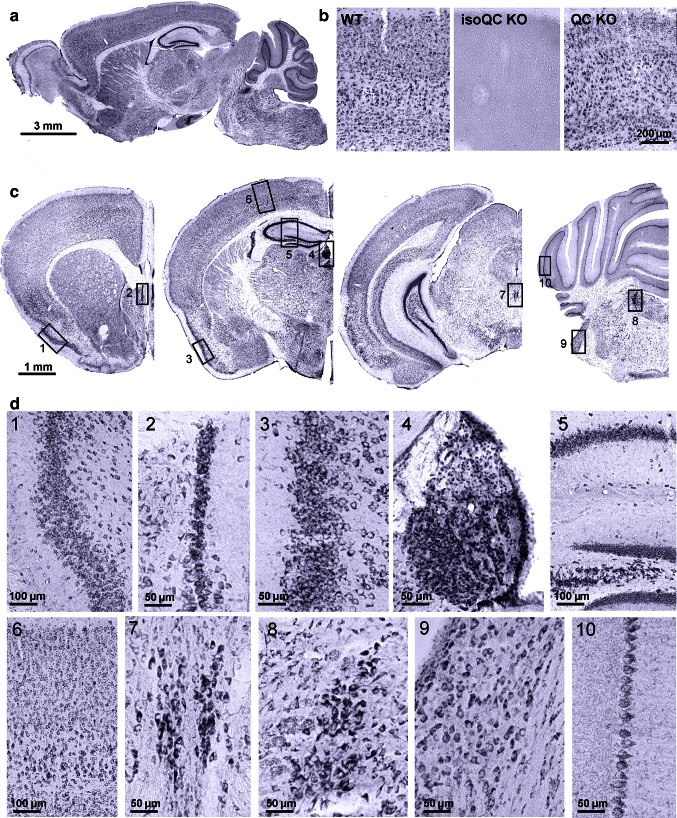
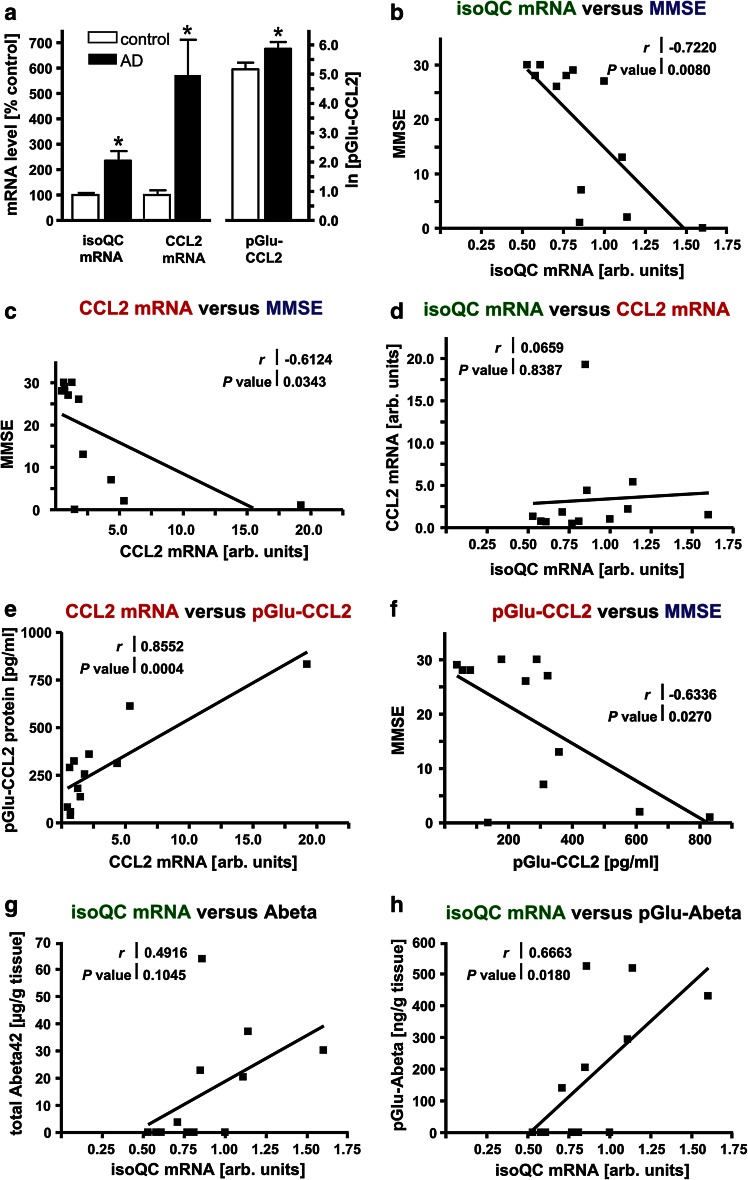
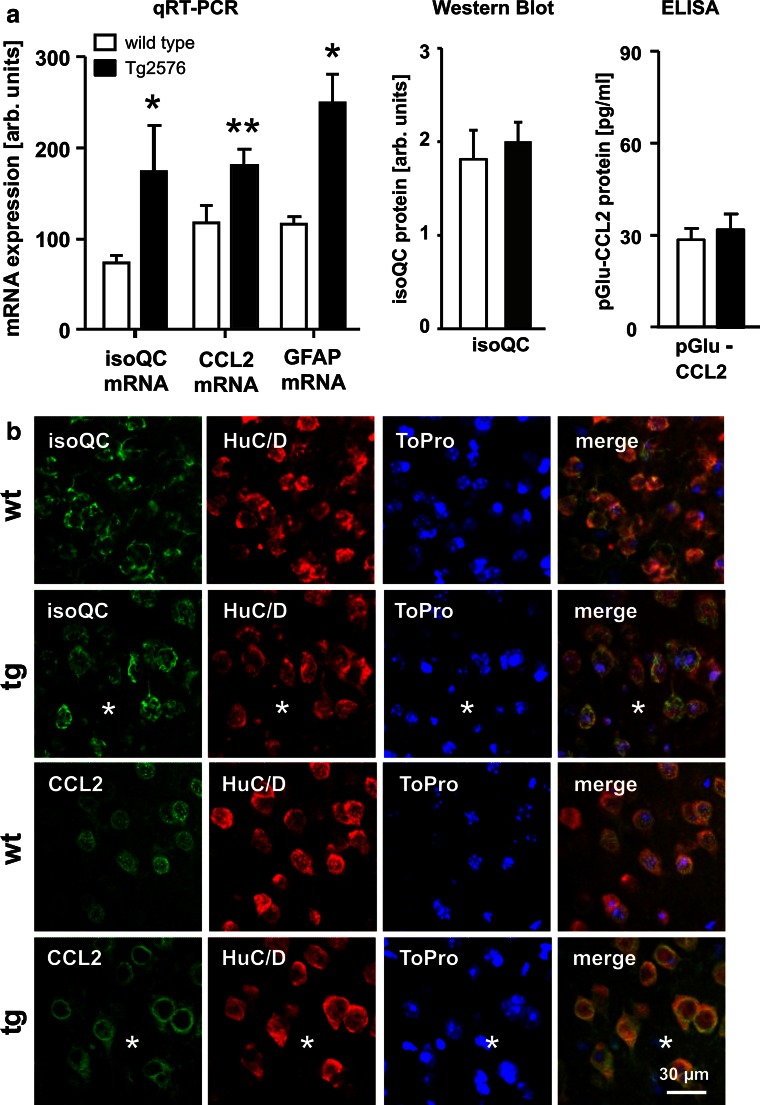
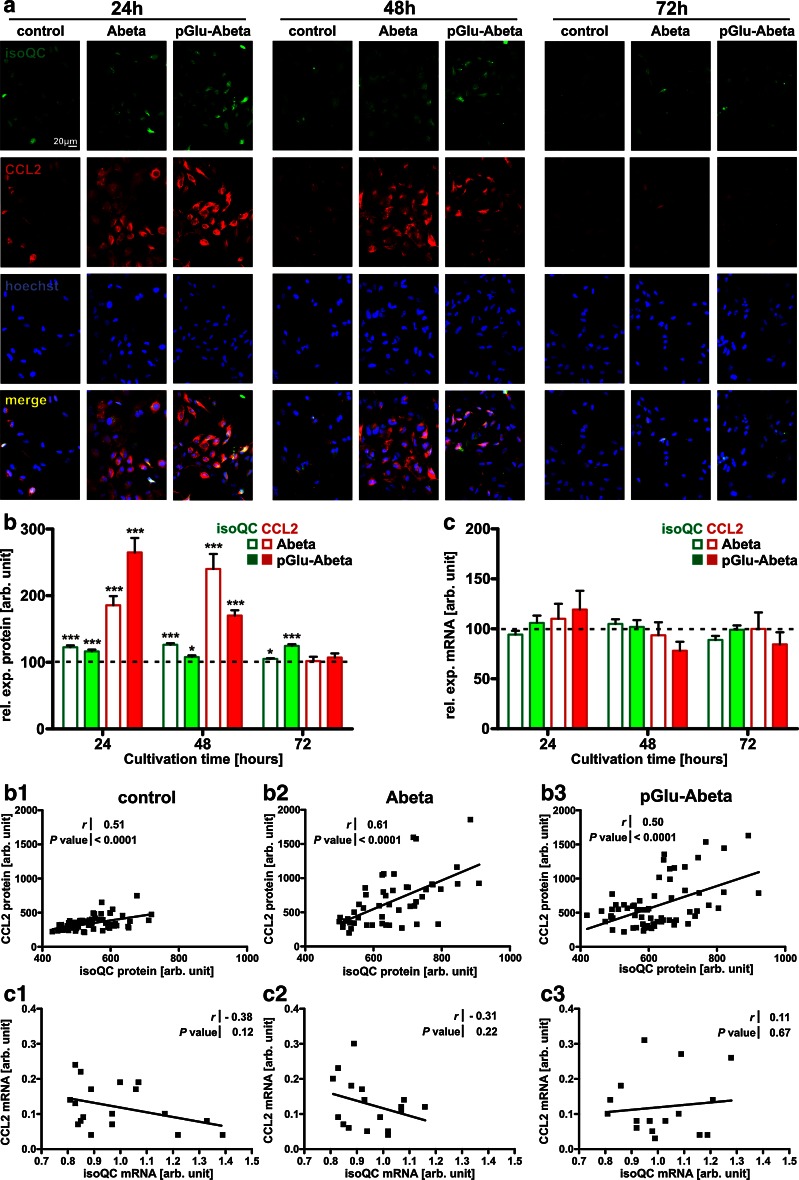
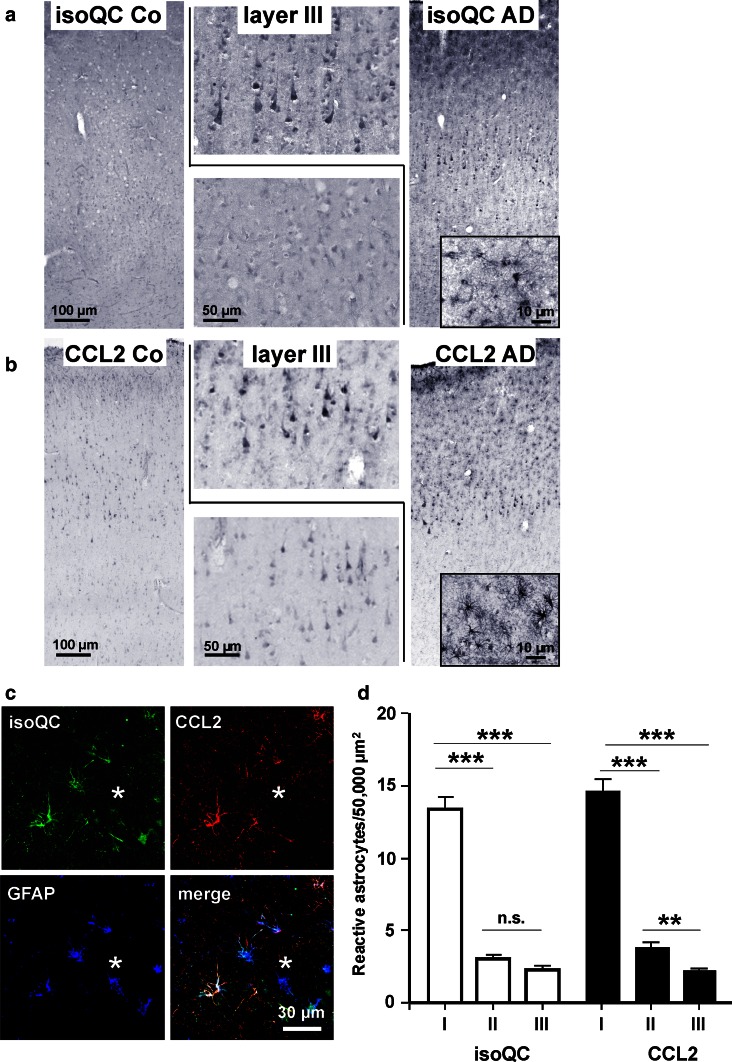
The brains of Alzheimer's disease (AD) patients are characterized by deposits of Abeta peptides and by accompanying chronic inflammation. Here, we provide evidence that the enzyme isoglutaminyl cyclase (isoQC) is a novel factor contributing to both aspects of AD pathology. Two putative substrates of isoQC, N-truncated Abeta peptides and the monocyte chemoattractant chemokine CCL2, undergo isoQC-catalyzed pyroglutamate (pGlu) modification. This triggers Abeta aggregation and facilitates the biological activity of CCL2, which collectively results in the formation of high molecular weight Abeta aggregates, glial cell activation, neuroinflammation and neuronal cell death. In mouse brain, we found isoQC to be neuron-specifically expressed in neocortical, hippocampal and subcortical structures, localized to the endoplasmic reticulum and Golgi apparatus as well as co-expressed with its substrate CCL2. In aged APP transgenic Tg2576 mice, both isoQC and CCL2 mRNA levels are up-regulated and isoQC and CCL2 proteins were found to be co-induced in Abeta plaque-associated reactive astrocytes. Also, in mouse primary astrocyte culture, a simultaneous up-regulation of isoQC and CCL2 expression was revealed upon Abeta and pGlu-Abeta stimulation. In brains of AD patients, the expression of isoQC and CCL2 mRNA and protein is up-regulated compared to controls and correlates with pGlu-Abeta load and with the decline in mini-mental state examination. Our observations provide evidence for a dual involvement of isoQC in AD pathogenesis by catalysis of pGlu-Abeta and pGlu-CCL2 formation which mutually stimulate inflammatory events and affect cognition. We conclude that isoQC inhibition may target both major pathological events in the development of AD.
阿尔茨海默病(AD)患者的大脑具有β-淀粉样肽沉积以及伴随的慢性炎症的特征。在此,我们提供证据表明,异谷氨酰胺环化酶(isoQC)是导致AD病理学这两个方面的一个新因素。isoQC的两个假定底物,N端截短的β-淀粉样肽和单核细胞趋化因子CCL2,会经历isoQC催化的焦谷氨酸(pGlu)修饰。这会引发β-淀粉样肽聚集并促进CCL2的生物活性,共同导致高分子量β-淀粉样肽聚集体的形成、神经胶质细胞活化、神经炎症和神经元细胞死亡。在小鼠大脑中,我们发现isoQC在新皮质、海马体和皮质下结构中神经元特异性表达,定位于内质网和高尔基体,并且与其底物CCL2共表达。在老年APP转基因Tg2576小鼠中,isoQC和CCL2的mRNA水平均上调,并且在β-淀粉样斑块相关的反应性星形胶质细胞中发现isoQC和CCL2蛋白共同被诱导。此外,在小鼠原代星形胶质细胞培养中,在β-淀粉样肽和pGlu-β-淀粉样肽刺激后,isoQC和CCL2的表达同时上调。在AD患者的大脑中,与对照组相比,isoQC和CCL2的mRNA及蛋白表达上调,并且与pGlu-β-淀粉样肽负荷以及简易精神状态检查评分的下降相关。我们的观察结果为isoQC通过催化pGlu-β-淀粉样肽和pGlu-CCL2的形成而双重参与AD发病机制提供了证据,这两者相互刺激炎症事件并影响认知。我们得出结论,抑制isoQC可能针对AD发展过程中的两个主要病理事件。