Johnson Heath E, King Samantha J, Asokan Sreeja B, Rotty Jeremy D, Bear James E, Haugh Jason M
Department of Chemical and Biomolecular Engineering, North Carolina State University, Raleigh, NC 27695.
UNC Lineberger Cancer Center, the Department of Cell Biology and Physiology, and Howard Hughes Medical Institute, The University of North Carolina-Chapel Hill, Chapel Hill, NC 27599 UNC Lineberger Cancer Center, the Department of Cell Biology and Physiology, and Howard Hughes Medical Institute, The University of North Carolina-Chapel Hill, Chapel Hill, NC 27599.
J Cell Biol. 2015 Feb 16;208(4):443-55. doi: 10.1083/jcb.201406102. Epub 2015 Feb 9.
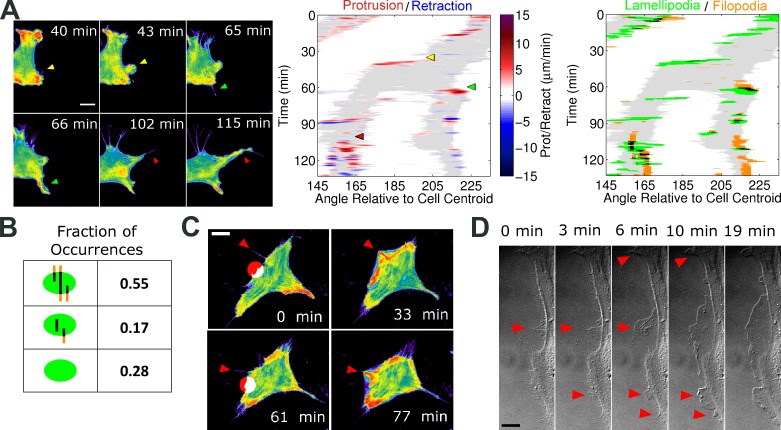
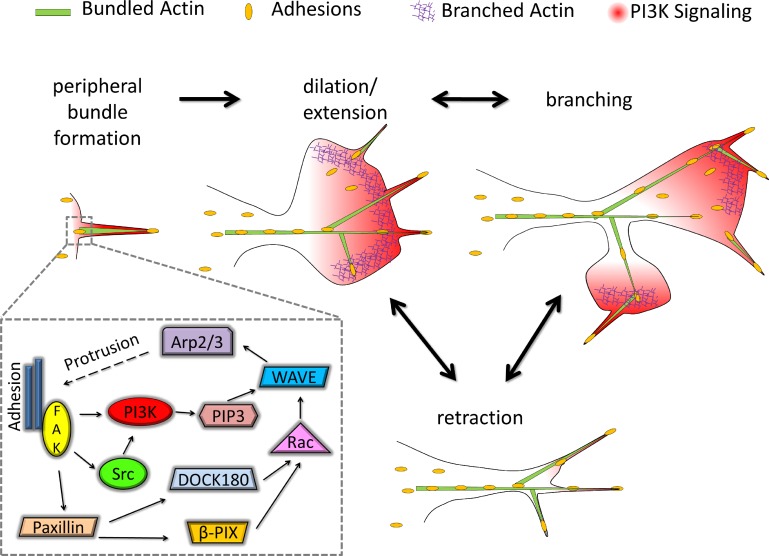
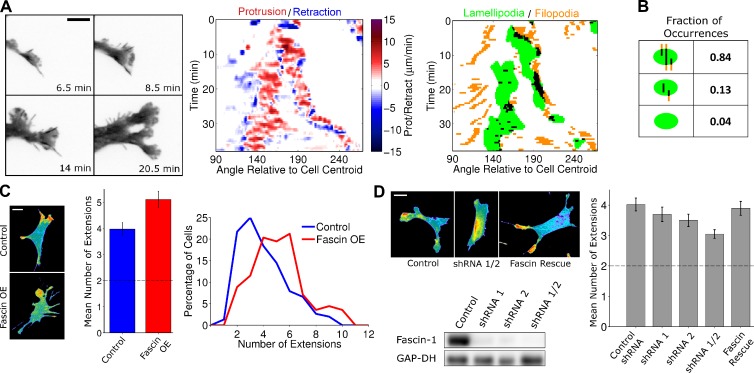
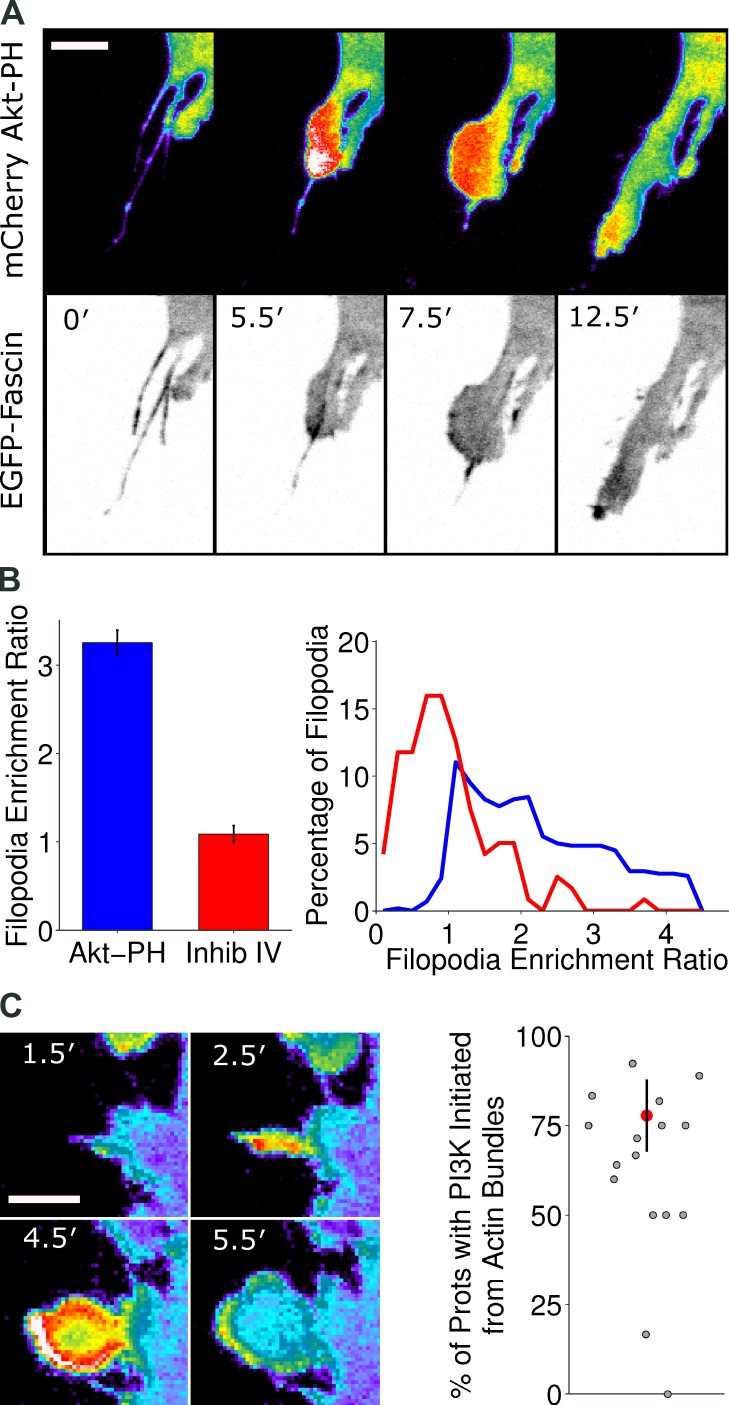
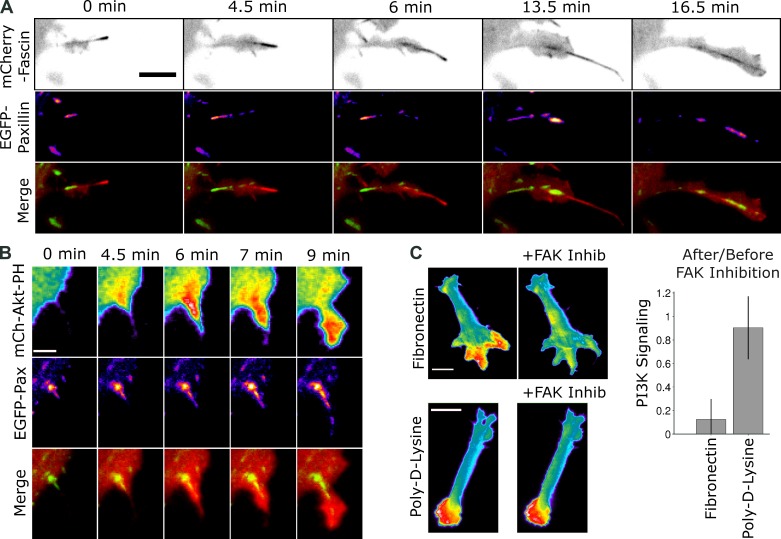
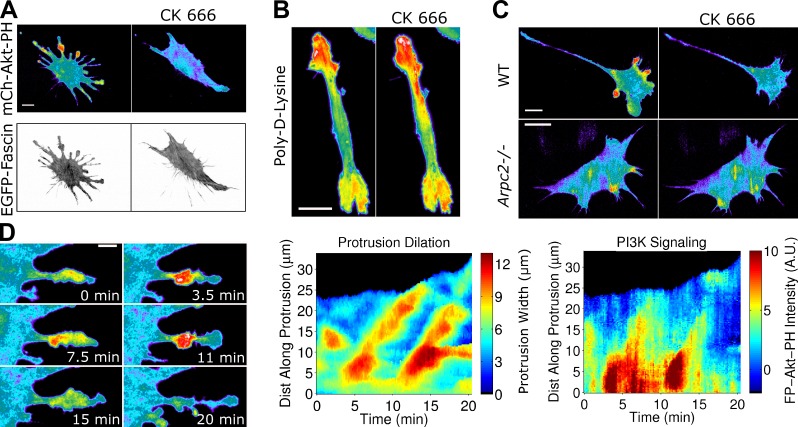
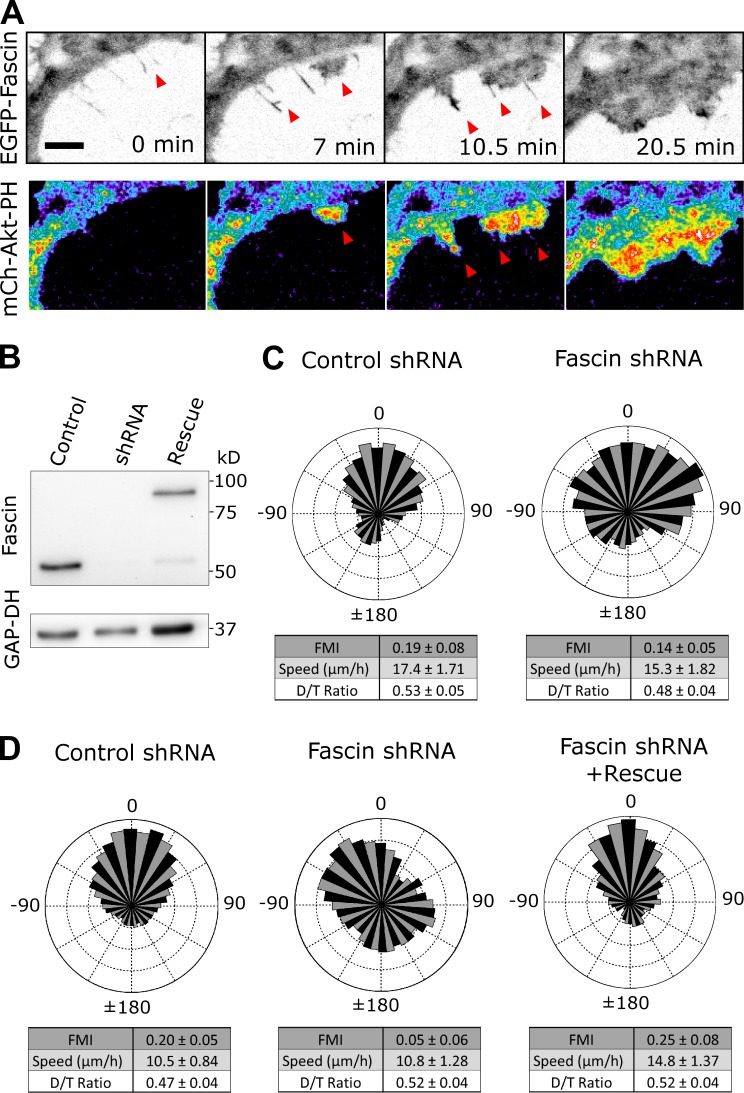
Mesenchymal cells such as fibroblasts are weakly polarized and reorient directionality by a lamellipodial branching mechanism that is stabilized by phosphoinositide 3-kinase (PI3K) signaling. However, the mechanisms by which new lamellipodia are initiated and directed are unknown. Using total internal reflection fluorescence microscopy to monitor cytoskeletal and signaling dynamics in migrating cells, we show that peripheral F-actin bundles/filopodia containing fascin-1 serve as templates for formation and orientation of lamellipodia. Accordingly, modulation of fascin-1 expression tunes cell shape, quantified as the number of morphological extensions. Ratiometric imaging reveals that F-actin bundles/filopodia play both structural and signaling roles, as they prime the activation of PI3K signaling mediated by integrins and focal adhesion kinase. Depletion of fascin-1 ablated fibroblast haptotaxis on fibronectin but not platelet-derived growth factor chemotaxis. Based on these findings, we conceptualize haptotactic sensing as an exploration, with F-actin bundles directing and lamellipodia propagating the process and with signaling mediated by adhesions playing the role of integrator.
成纤维细胞等间充质细胞极化较弱,通过由磷酸肌醇3激酶(PI3K)信号传导稳定的片状伪足分支机制重新定向方向性。然而,新的片状伪足起始和定向的机制尚不清楚。利用全内反射荧光显微镜监测迁移细胞中的细胞骨架和信号动力学,我们发现含有肌动蛋白结合蛋白-1(fascin-1)的外周F-肌动蛋白束/丝状伪足可作为片状伪足形成和定向的模板。因此,对fascin-1表达的调节可调整细胞形状,以形态学延伸的数量进行量化。比率成像显示,F-肌动蛋白束/丝状伪足同时发挥结构和信号作用,因为它们引发了由整合素和粘着斑激酶介导的PI3K信号传导的激活。fascin-1的缺失消除了成纤维细胞在纤连蛋白上的趋触性,但不影响血小板衍生生长因子的趋化性。基于这些发现,我们将趋触性感知概念化为一种探索过程,其中F-肌动蛋白束引导、片状伪足传播这一过程,而由黏附介导的信号传导发挥整合作用。