Stiros Stathis C, Saltogianni Vasso
Department of Civil Engineering, University of Patras, Patras, 26500 Greece.
Springerplus. 2014 Mar 17;3:145. doi: 10.1186/2193-1801-3-145. eCollection 2014.
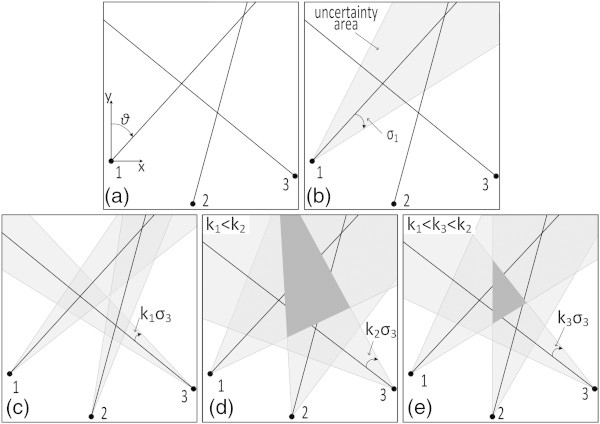
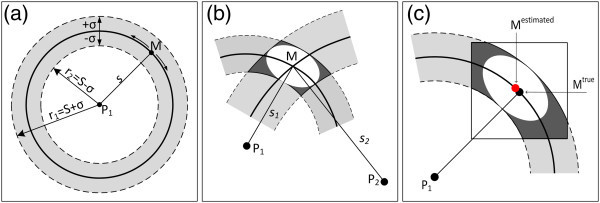
The TOPINV, Topological Inversion algorithm (or TGS, Topological Grid Search) initially developed for the inversion of highly non-linear redundant systems of equations, can solve a wide range of underdetermined systems of non-linear equations. This approach is a generalization of a previous conclusion that this algorithm can be used for the solution of certain integer ambiguity problems in Geodesy. The overall approach is based on additional (a priori) information for the unknown variables. In the past, such information was used either to linearize equations around approximate solutions, or to expand systems of observation equations solved on the basis of generalized inverses. In the proposed algorithm, the a priori additional information is used in a third way, as topological constraints to the unknown n variables, leading to an R(n) grid containing an approximation of the real solution. The TOPINV algorithm does not focus on point-solutions, but exploits the structural and topological constraints in each system of underdetermined equations in order to identify an optimal closed space in the R(n) containing the real solution. The centre of gravity of the grid points defining this space corresponds to global, minimum-norm solutions. The rationale and validity of the overall approach are demonstrated on the basis of examples and case studies, including fault modelling, in comparison with SVD solutions and true (reference) values, in an accuracy-oriented approach.
TOPINV,即拓扑反演算法(或TGS,拓扑网格搜索),最初是为高度非线性冗余方程组的反演而开发的,它可以求解各种欠定非线性方程组。这种方法是对先前一个结论的推广,即该算法可用于解决大地测量中的某些整周模糊度问题。总体方法基于未知变量的附加(先验)信息。过去,此类信息要么用于在近似解周围对方程进行线性化,要么用于扩展基于广义逆求解的观测方程组。在所提出的算法中,先验附加信息以第三种方式使用,即作为对未知n个变量的拓扑约束,从而得到一个包含真实解近似值的R(n)网格。TOPINV算法不关注点解,而是利用每个欠定方程组中的结构和拓扑约束,以便在包含真实解的R(n)中识别一个最优封闭空间。定义此空间的网格点的重心对应于全局最小范数解。通过与奇异值分解(SVD)解和真实(参考)值进行比较,并采用以精度为导向的方法,基于示例和案例研究(包括故障建模)证明了总体方法的基本原理和有效性。