Neely Michael, Louie Stan, Xu Jiaao, Anthony Patricia, Thuvamontolrat Kasalyn, Mordwinkin Nicholas, Kovacs Andrea
Laboratory of Applied Pharmacokinetics, Children's Hospital Los Angeles and the Keck School of Medicine at the University of Southern California, Los Angeles, CA, USA.
Titus Family Department of Clinical Pharmacy and Pharmaceutical Economics & Policy Faculty, School of Pharmacy, University of Southern California, Los Angeles, CA, USA.
J Clin Pharmacol. 2015 Jul;55(7):798-808. doi: 10.1002/jcph.481. Epub 2015 Mar 30.
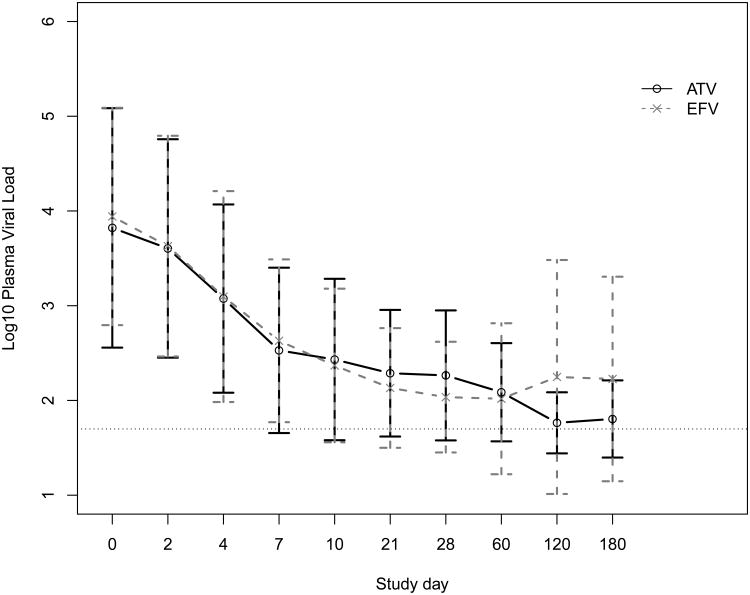
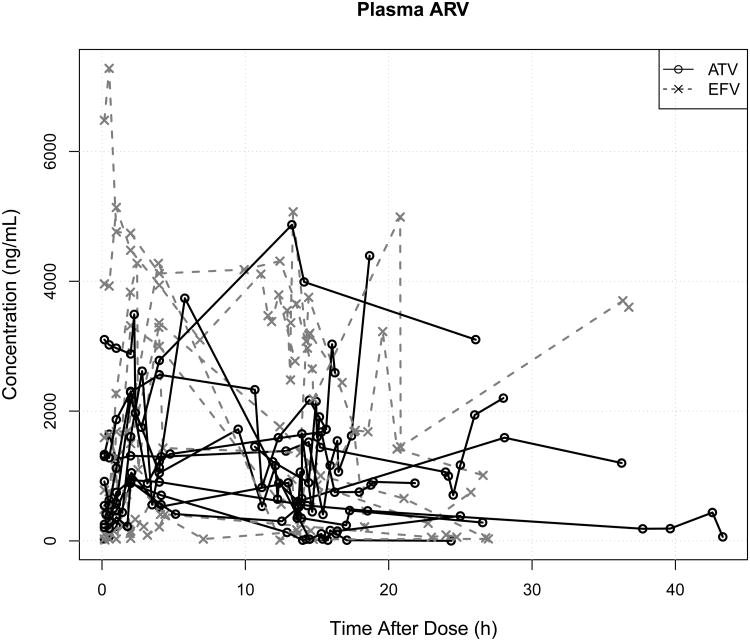
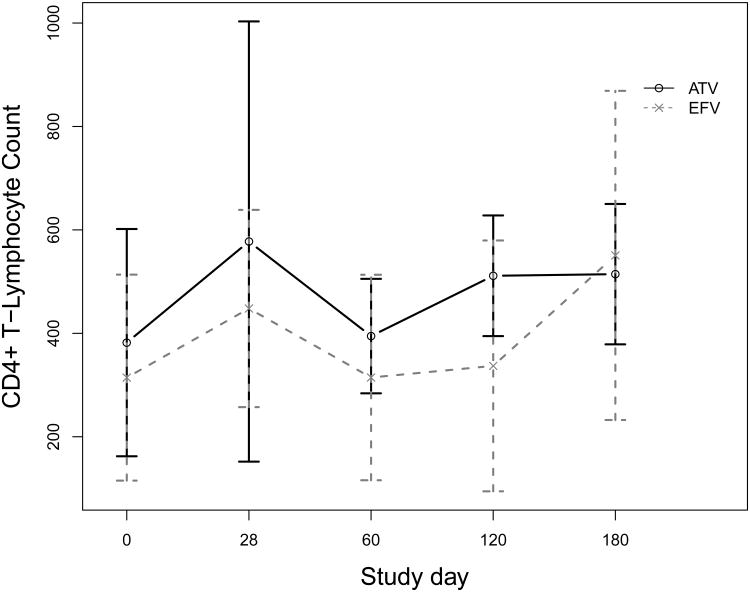
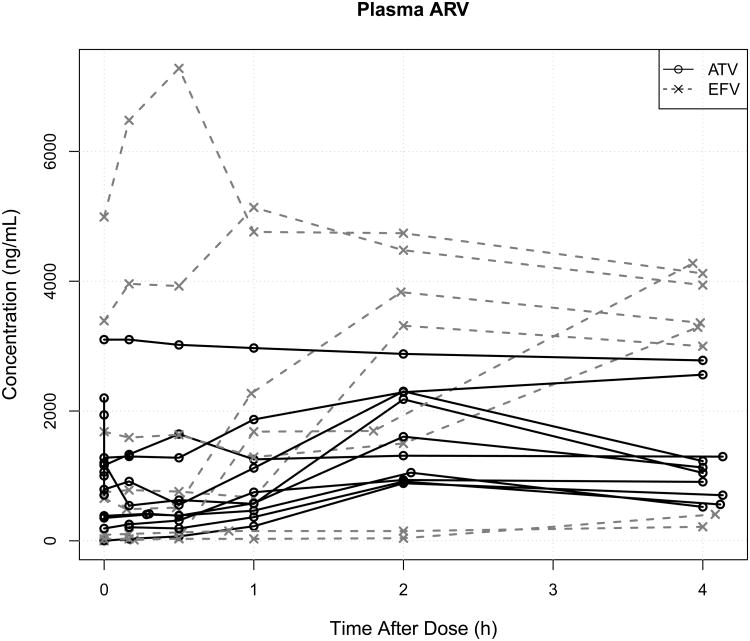
Few studies have characterized longitudinal female plasma and genital antiretroviral pharmacokinetics and pharmacodynamics. Among 20 regimen-naive HIV-infected adult women initiating atazanavir-based therapy (n = 9) or efavirenz-based therapy (n = 11), we measured blood CD4+ T lymphocytes, and paired plasma and genital HIV RNA and atazanavir or efavirenz 2 days before starting therapy and 2, 4, 7, 10, 21, 28, 60, 120, and 180 days after. The mean (range) log10 baseline plasma viral load was 4.89 copies/mL (2.64-6.09 copies/mL), and genital was3.30 (1.60-5.00). In the atazanavir and efavirenz groups, mean (SD) days to a 50% decrease in plasma viral load was 8.2 (4.9) versus 9.3 (7.4), P = .7, and in the genital tract it was 7.3 (3.5) versus 9.3 (7.7), P = .5. The median (interquartile range) plasma:genital concentration ratio for atazanavir was 0.11 (0.001-0.46) versus 0.34 (0.05-1.30) for efavirenz, P = .5. Average plasma efavirenz or atazanavir concentrations over time did not affect virologic response. Blood CD4+ percentages increased by +2.3 (P = .06) and +3.0 (P = .003) for every 1 mg/L increase in average plasma and genital drug concentration, respectively. Plasma and genital viral pharmacodynamics were similar between the groups and independent of average concentrations, but blood CD4+ response was related in particular to genital extravascular drug concentrations.
很少有研究对女性血浆和生殖道抗逆转录病毒药物的纵向药代动力学和药效学进行描述。在20名初治的HIV感染成年女性中,9名开始基于阿扎那韦的治疗,11名开始基于依非韦伦的治疗,我们在开始治疗前2天以及治疗后2、4、7、10、21、28、60、120和180天测量了血液CD4+T淋巴细胞、配对的血浆和生殖道HIV RNA以及阿扎那韦或依非韦伦。血浆病毒载量的平均(范围)log10基线为4.89拷贝/毫升(2.64 - 6.09拷贝/毫升),生殖道为3.30(1.60 - 5.00)。在阿扎那韦组和依非韦伦组中,血浆病毒载量降低50%的平均(标准差)天数分别为8.2(4.9)天和9.3(7.4)天,P = 0.7,在生殖道中分别为7.3(3.5)天和9.3(7.7)天,P = 0.5。阿扎那韦的血浆:生殖道浓度中位数(四分位间距)为0.11(0.001 - 0.46),依非韦伦为0.34(0.05 - 1.30),P = 0.5。随时间变化的平均血浆依非韦伦或阿扎那韦浓度不影响病毒学反应。平均血浆和生殖道药物浓度每增加1毫克/升,血液CD4+百分比分别增加+2.3(P = 0.06)和+3.0(P = 0.003)。两组之间血浆和生殖道病毒药效学相似且与平均浓度无关,但血液CD4+反应尤其与生殖道血管外药物浓度相关。