Laboratory of Chemical Pharmacology, Graduate School of Pharmaceutical Sciences, Chiba University Chuo-ku, Chiba, 260-8675, Japan.
Department of Pharmacology & Toxicology, College of Pharmacy, The University of Arizona Tucson, Arizona, 85721-0207.
Pharmacol Res Perspect. 2015 Feb;3(1):e00083. doi: 10.1002/prp2.83. Epub 2014 Nov 7.
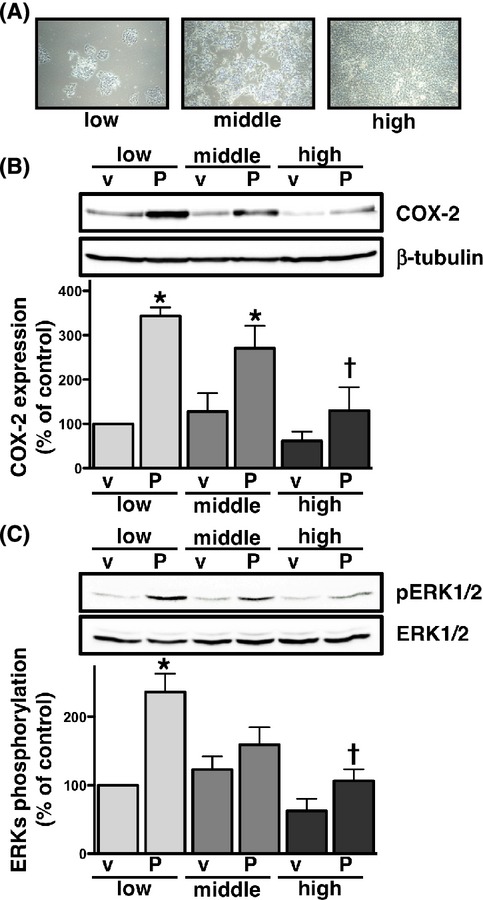
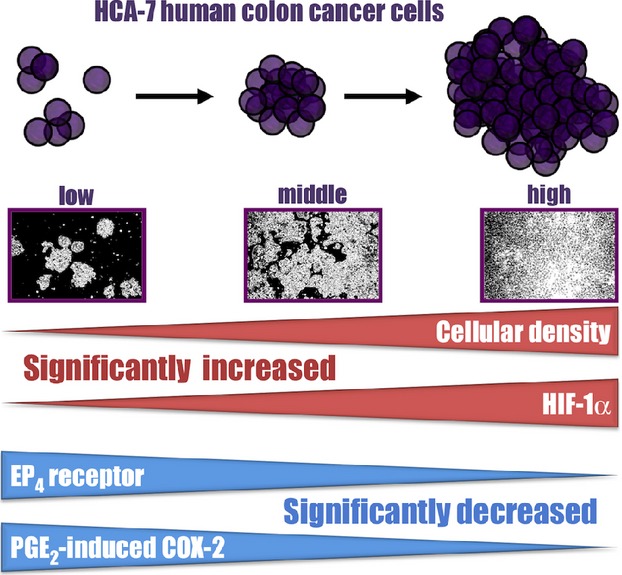
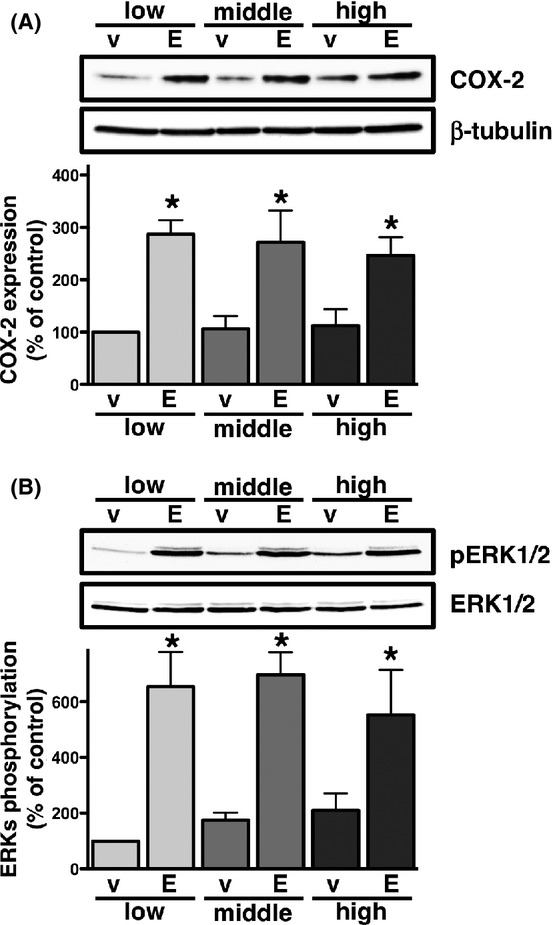
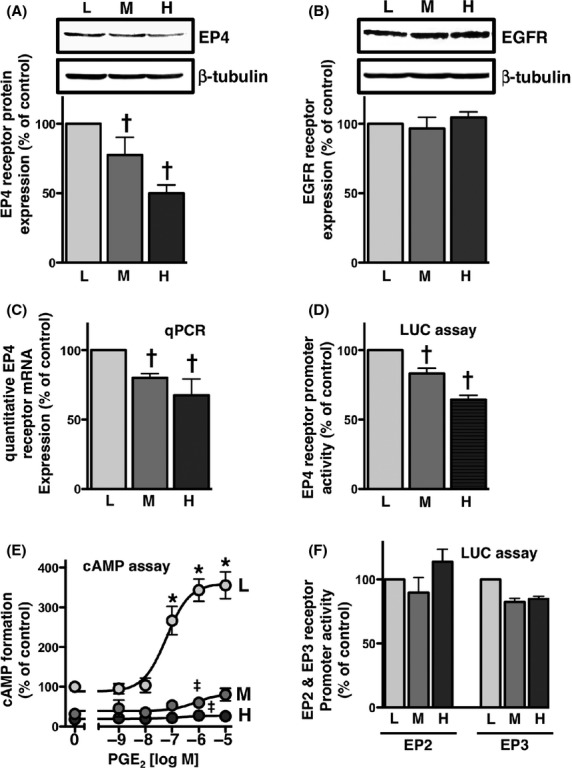
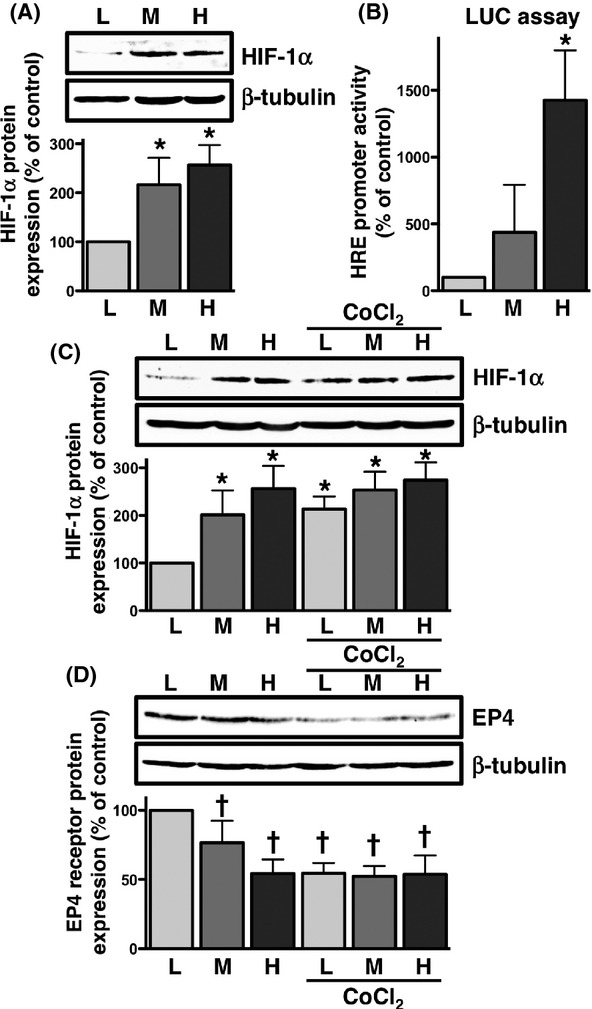
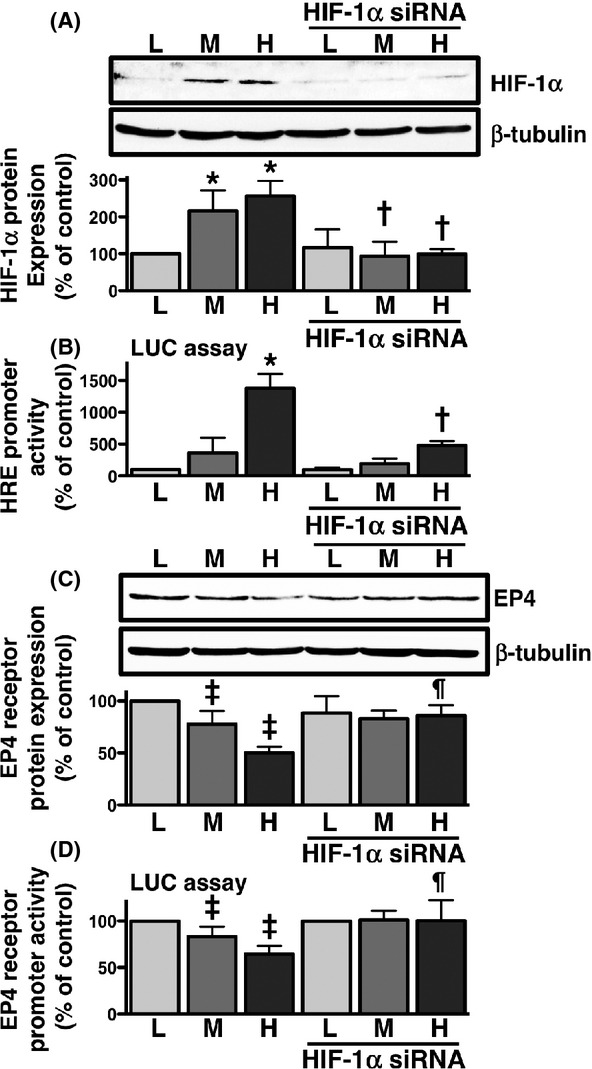
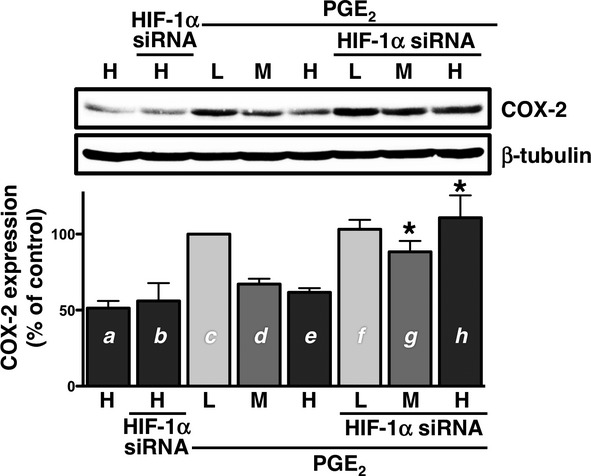
Increases in prostaglandin E2 (PGE2) and cyclooxygenase-2 (COX-2) levels are features of colon cancer. Among the different E-type prostanoid receptor subtypes, EP4 receptors are considered to play a crucial role in carcinogenesis by, for example, inducing COX-2 when stimulated with PGE2. However, EP4 receptor levels and PGE2-induced cellular responses are inconsistent among the cellular conditions. Therefore, the connections responsible for the expression of EP4 receptors were investigated in the present study by focusing on cell density-induced hypoxia-inducible factor-1α (HIF-1α). The expression of EP4 receptors was examined using immunoblot analysis, quantitative polymerase chain reaction, and reporter gene assays in HCA-7 human colon cancer cells with different cellular densities. The involvement of HIF-1α and its signaling pathways were also examined by immunoblot analysis, reporter gene assays, and with siRNA. We here demonstrated that EP4 receptors as well as EP4 receptor-mediated COX-2 expression levels decreased with an increase in cellular density. In contrast, HIF-1α levels increased in a cellular density-dependent manner. The knockdown of HIF-1α by siRNA restored the expression of EP4 receptors and EP4 receptor-mediated COX-2 in cells at a high density. Thus, the cellular density-dependent increase observed in HIF-1α expression levels reduced the expression of COX-2 by decreasing EP4 receptor levels. This novel regulation mechanism for the expression of EP4 receptors by HIF-1α may provide an explanation for the inconsistent actions of PGE2. The expression levels of EP4 receptors may vary depending on cellular density, which may lead to the differential activation of their signaling pathways by PGE2. Thus, cellular density-dependent PGE2-mediated signaling may determine the fate/stage of cancer cells, i.e., the surrounding environments could define the fate/stage of malignancies associated with colon cancer.
前列腺素 E2 (PGE2) 和环氧化酶-2 (COX-2) 水平的增加是结肠癌的特征。在不同的 E 型前列腺素受体亚型中,EP4 受体被认为通过例如在受到 PGE2 刺激时诱导 COX-2 而在癌变中发挥关键作用。然而,EP4 受体水平和 PGE2 诱导的细胞反应在不同的细胞条件下并不一致。因此,本研究通过关注细胞密度诱导的缺氧诱导因子-1α (HIF-1α) 来研究负责 EP4 受体表达的连接。在具有不同细胞密度的 HCA-7 人结肠癌细胞中,通过免疫印迹分析、定量聚合酶链反应和报告基因分析检查 EP4 受体的表达。还通过免疫印迹分析、报告基因分析和 siRNA 检查 HIF-1α 及其信号通路的参与。我们在这里证明,EP4 受体以及 EP4 受体介导的 COX-2 表达水平随着细胞密度的增加而降低。相反,HIF-1α 水平以细胞密度依赖性方式增加。siRNA 敲低 HIF-1α 可恢复高密度细胞中 EP4 受体和 EP4 受体介导的 COX-2 的表达。因此,观察到的 HIF-1α 表达水平的细胞密度依赖性增加通过降低 EP4 受体水平来减少 COX-2 的表达。HIF-1α 对 EP4 受体表达的这种新的调节机制可能为 PGE2 的不一致作用提供了解释。EP4 受体的表达水平可能因细胞密度而异,这可能导致 PGE2 对其信号通路的不同激活。因此,细胞密度依赖性 PGE2 介导的信号可能决定癌细胞的命运/阶段,即周围环境可以定义与结肠癌相关的恶性肿瘤的命运/阶段。