Caetano-Anollés Kelsey, Mishra Sanjibita, Rodriguez-Zas Sandra L
Department of Animal Sciences, University of Illinois at Urbana-Champaign, Urbana, Illinois, United States of America.
Department of Animal Sciences, University of Illinois at Urbana-Champaign, Urbana, Illinois, United States of America; Khorana Scholars Program, Indo-US Science and Technology Forum, New Delhi, India; National Institute of Technology, Rourkel, India.
PLoS One. 2015 Feb 24;10(2):e0116828. doi: 10.1371/journal.pone.0116828. eCollection 2015.
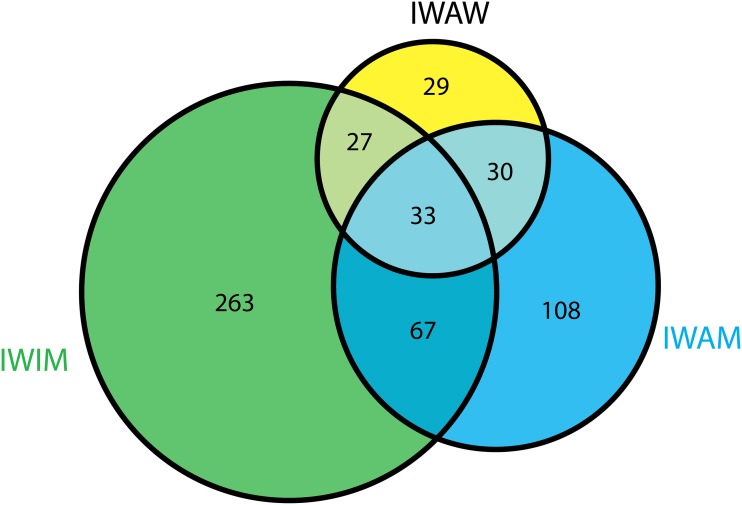
Levels of myostatin expression and physical activity have both been associated with transcriptome dysregulation and skeletal muscle hypertrophy. The transcriptome of triceps brachii muscles from male C57/BL6 mice corresponding to two genotypes (wild-type and myostatin-reduced) under two conditions (high and low physical activity) was characterized using RNA-Seq. Synergistic and antagonistic interaction and ortholog modes of action of myostatin genotype and activity level on genes and gene pathways in this skeletal muscle were uncovered; 1,836, 238, and 399 genes exhibited significant (FDR-adjusted P-value < 0.005) activity-by-genotype interaction, genotype and activity effects, respectively. The most common differentially expressed profiles were (i) inactive myostatin-reduced relative to active and inactive wild-type, (ii) inactive myostatin-reduced and active wild-type, and (iii) inactive myostatin-reduced and inactive wild-type. Several remarkable genes and gene pathways were identified. The expression profile of nascent polypeptide-associated complex alpha subunit (Naca) supports a synergistic interaction between activity level and myostatin genotype, while Gremlin 2 (Grem2) displayed an antagonistic interaction. Comparison between activity levels revealed expression changes in genes encoding for structural proteins important for muscle function (including troponin, tropomyosin and myoglobin) and for fatty acid metabolism (some linked to diabetes and obesity, DNA-repair, stem cell renewal, and various forms of cancer). Conversely, comparison between genotype groups revealed changes in genes associated with G1-to-S-phase transition of the cell cycle of myoblasts and the expression of Grem2 proteins that modulate the cleavage of the myostatin propeptide. A number of myostatin-feedback regulated gene products that are primarily regulatory were uncovered, including microRNA impacting central functions and Piezo proteins that make cationic current-controlling mechanosensitive ion channels. These important findings extend hypotheses of myostatin and physical activity master regulation of genes and gene pathways, impacting medical practices and therapies associated with muscle atrophy in humans and companion animal species and genome-enabled selection practices applied to food-production animal species.
肌肉生长抑制素的表达水平和身体活动都与转录组失调和骨骼肌肥大有关。利用RNA测序对雄性C57/BL6小鼠肱三头肌的转录组进行了表征,这些小鼠对应两种基因型(野生型和肌肉生长抑制素减少型),处于两种条件下(高身体活动和低身体活动)。揭示了肌肉生长抑制素基因型和活动水平在该骨骼肌中对基因和基因通路的协同和拮抗相互作用以及直系同源物作用模式;分别有1836、238和399个基因表现出显著的(经FDR校正的P值<0.005)活动-基因型相互作用、基因型和活动效应。最常见的差异表达谱为:(i)相对于活跃和不活跃的野生型,不活跃的肌肉生长抑制素减少型;(ii)不活跃的肌肉生长抑制素减少型和活跃的野生型;(iii)不活跃的肌肉生长抑制素减少型和不活跃的野生型。鉴定出了几个显著的基因和基因通路。新生多肽相关复合物α亚基(Naca)的表达谱支持活动水平和肌肉生长抑制素基因型之间的协同相互作用,而Gremlin 2(Grem2)表现出拮抗相互作用。活动水平之间的比较揭示了编码对肌肉功能重要的结构蛋白(包括肌钙蛋白、原肌球蛋白和肌红蛋白)以及脂肪酸代谢(一些与糖尿病和肥胖、DNA修复、干细胞更新以及各种形式的癌症相关)的基因的表达变化。相反,基因型组之间的比较揭示了与成肌细胞细胞周期的G1期到S期转变相关的基因以及调节肌肉生长抑制素前肽切割的Grem2蛋白表达的变化。发现了许多主要起调节作用的肌肉生长抑制素反馈调节基因产物,包括影响核心功能的微小RNA和形成控制阳离子电流的机械敏感离子通道的Piezo蛋白。这些重要发现扩展了肌肉生长抑制素和身体活动对基因和基因通路的主调控假说,影响与人类和伴侣动物物种肌肉萎缩相关的医学实践和治疗方法,以及应用于食用动物物种的基因组选择实践。