Koska Juraj, Sands Michelle, Burciu Camelia, D'Souza Karen M, Raravikar Kalyani, Liu James, Truran Seth, Franco Daniel A, Schwartz Eric A, Schwenke Dawn C, D'Alessio David, Migrino Raymond Q, Reaven Peter D
Department of Medicine, Phoenix VA Health Care System, Phoenix, AZ
Department of Medicine, Phoenix VA Health Care System, Phoenix, AZ.
Diabetes. 2015 Jul;64(7):2624-35. doi: 10.2337/db14-0976. Epub 2015 Feb 26.
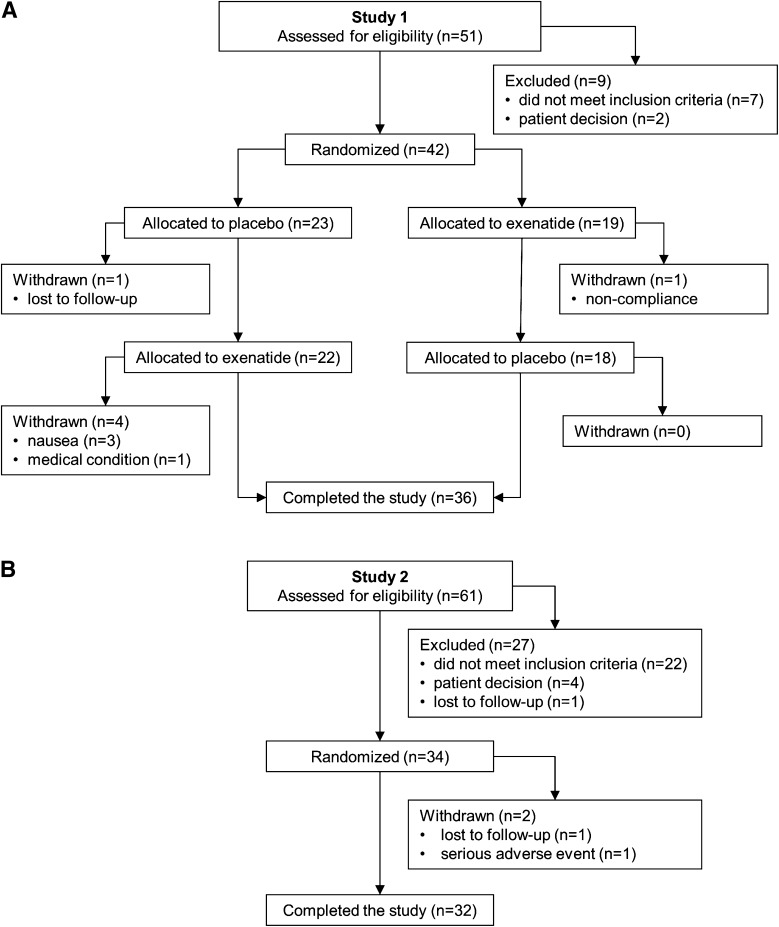
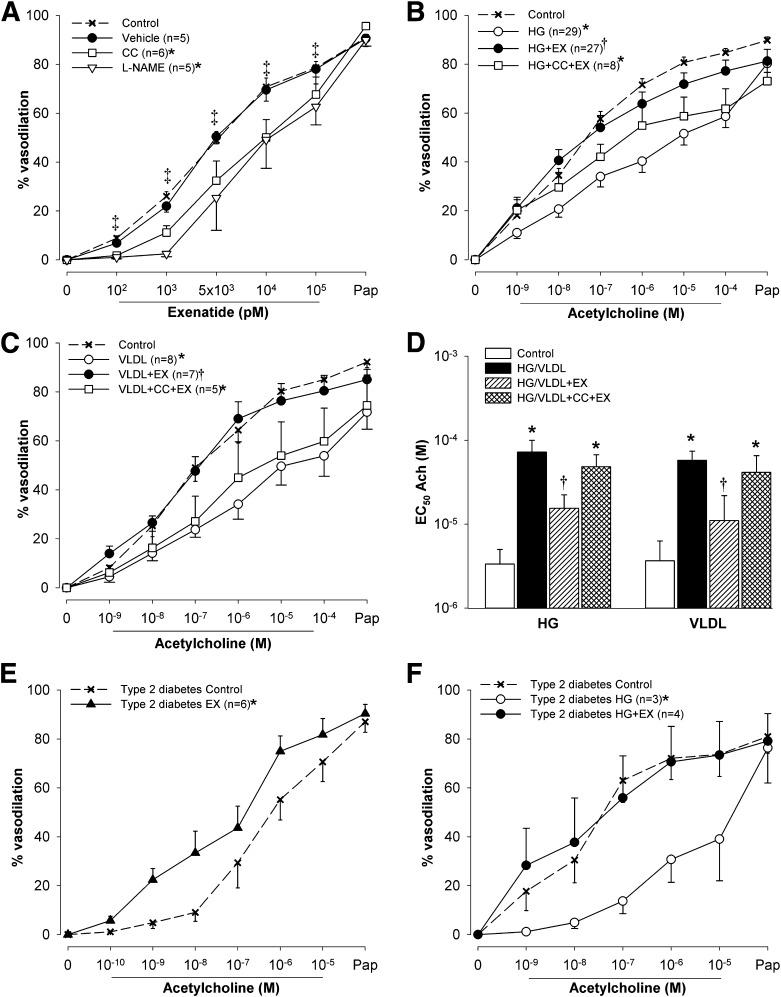
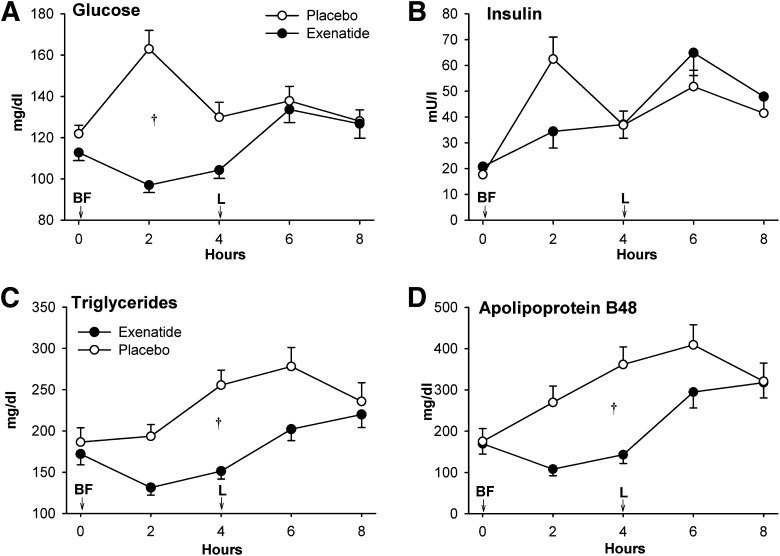
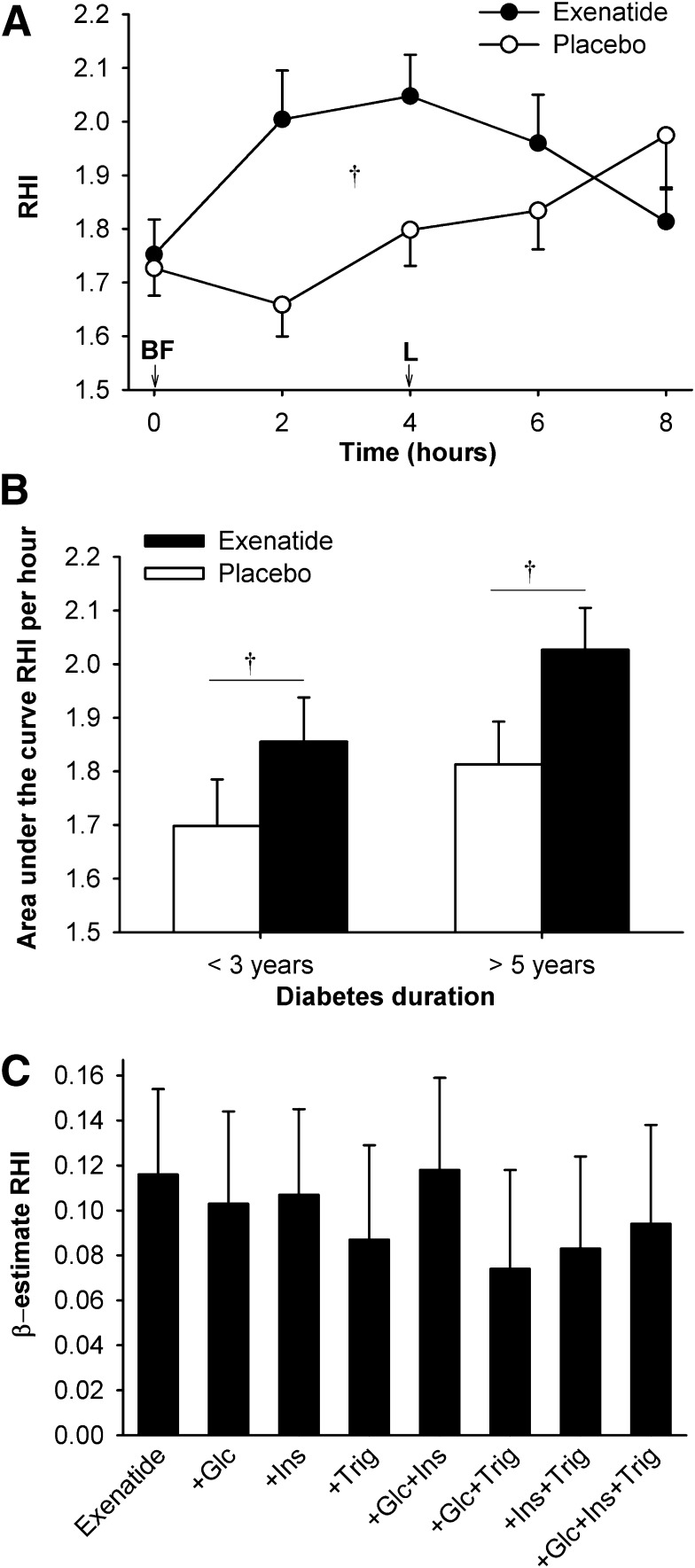
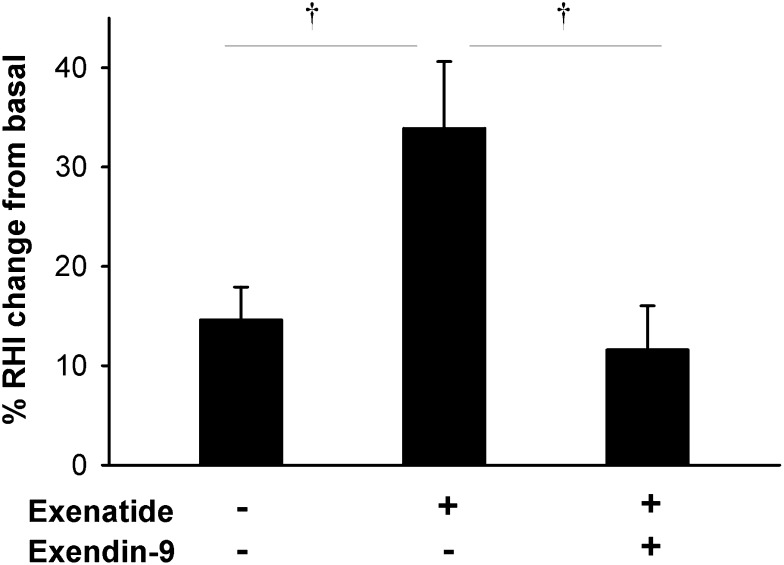
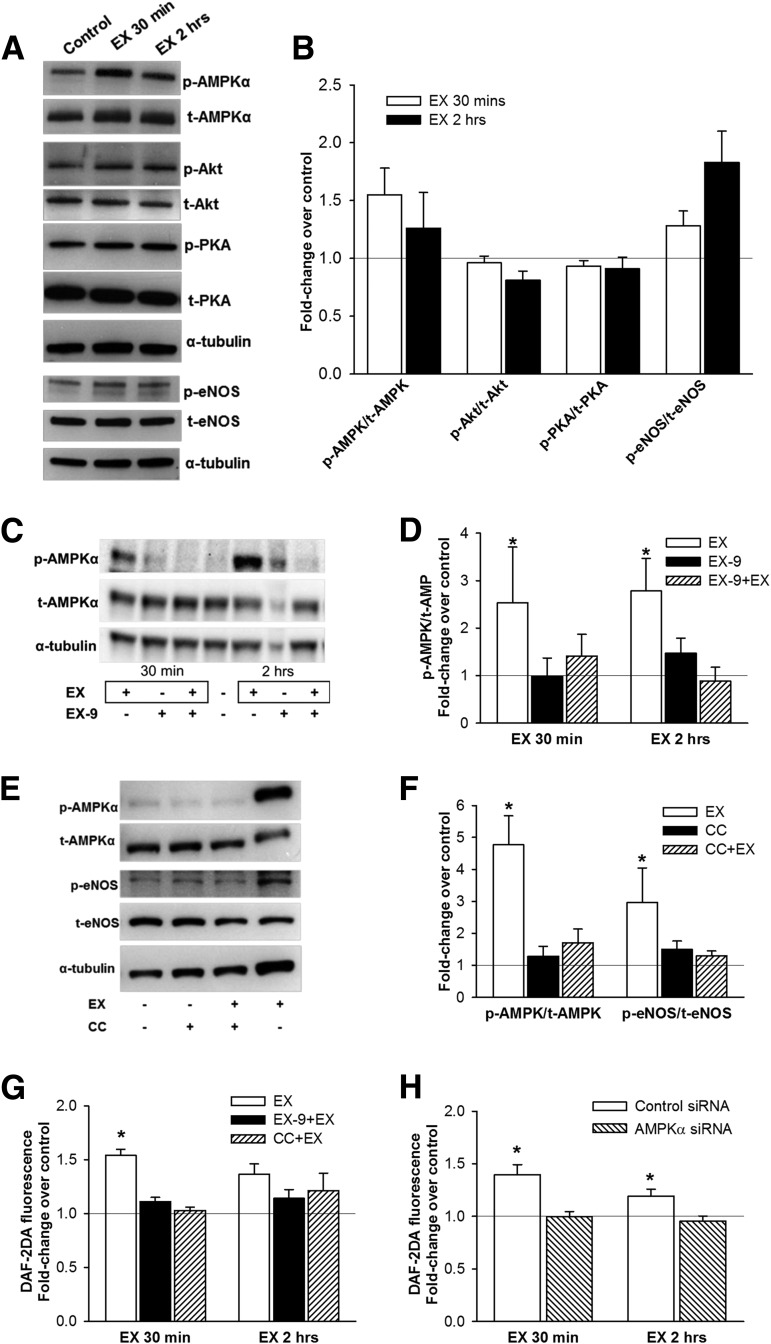
GLP-1 receptor (GLP-1R) agonists may improve endothelial function (EF) via metabolic improvement and direct vascular action. The current study determined the effect of GLP-1R agonist exenatide on postprandial EF in type 2 diabetes and the mechanisms underlying GLP-1R agonist-mediated vasodilation. Two crossover studies were conducted: 36 participants with type 2 diabetes received subcutaneous exenatide or placebo for 11 days and EF, and glucose and lipid responses to breakfast and lunch were determined; and 32 participants with impaired glucose tolerance (IGT) or diet-controlled type 2 diabetes had EF measured before and after intravenous exenatide, with or without the GLP-1R antagonist exendin-9. Mechanisms of GLP-1R agonist action were studied ex vivo on human subcutaneous adipose tissue arterioles and endothelial cells. Subcutaneous exenatide increased postprandial EF independent of reductions in plasma glucose and triglycerides. Intravenous exenatide increased fasting EF, and exendin-9 abolished this effect. Exenatide elicited eNOS activation and NO production in endothelial cells, and induced dose-dependent vasorelaxation and reduced high-glucose or lipid-induced endothelial dysfunction in arterioles ex vivo. These effects were reduced with AMPK inhibition. In conclusion, exenatide augmented postprandial EF in subjects with diabetes and prevented high-glucose and lipid-induced endothelial dysfunction in human arterioles. These effects were largely direct, via GLP-1R and AMPK activation.
胰高血糖素样肽-1受体(GLP-1R)激动剂可能通过改善代谢和直接的血管作用来改善内皮功能(EF)。本研究确定了GLP-1R激动剂艾塞那肽对2型糖尿病患者餐后EF的影响以及GLP-1R激动剂介导血管舒张的潜在机制。进行了两项交叉研究:36名2型糖尿病参与者接受皮下注射艾塞那肽或安慰剂11天,然后测定EF以及早餐和午餐后的血糖和血脂反应;32名糖耐量受损(IGT)或饮食控制的2型糖尿病参与者在静脉注射艾塞那肽前后测量EF,注射时或同时使用GLP-1R拮抗剂艾塞那肽-9。在体外对人皮下脂肪组织小动脉和内皮细胞研究了GLP-1R激动剂的作用机制。皮下注射艾塞那肽可增加餐后EF,且与血浆葡萄糖和甘油三酯的降低无关。静脉注射艾塞那肽可增加空腹EF,而艾塞那肽-9可消除这种作用。艾塞那肽可在内皮细胞中引起内皮型一氧化氮合酶(eNOS)激活和一氧化氮(NO)生成,并在体外诱导小动脉剂量依赖性血管舒张,减轻高糖或高脂诱导的内皮功能障碍。这些作用在AMPK抑制时减弱。总之,艾塞那肽增强了糖尿病患者的餐后EF,并预防了高糖和高脂诱导的人小动脉内皮功能障碍。这些作用在很大程度上是直接的,通过GLP-1R和AMPK激活实现。