Suwińska Anna, Lenartowski Robert, Smoliński Dariusz Jan, Lenartowska Marta
Laboratory of Developmental Biology, Faculty of Biology and Environment Protection, Nicolaus Copernicus University, Toruń, Poland.
Plant Cell Rep. 2015 Jul;34(7):1189-99. doi: 10.1007/s00299-015-1777-x. Epub 2015 Mar 3.
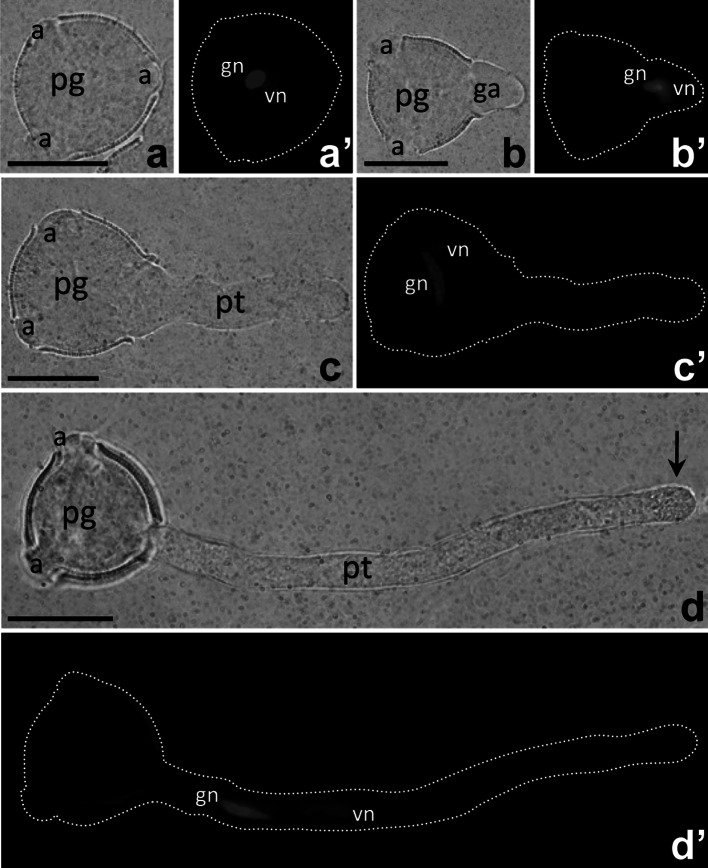
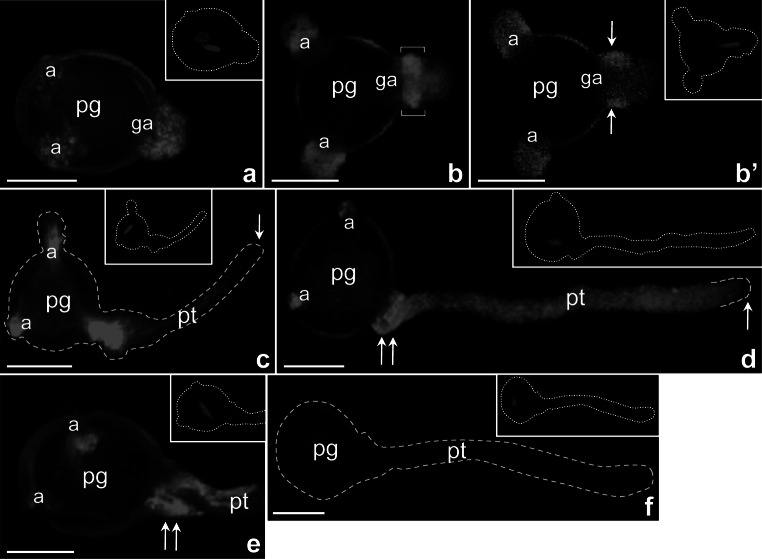
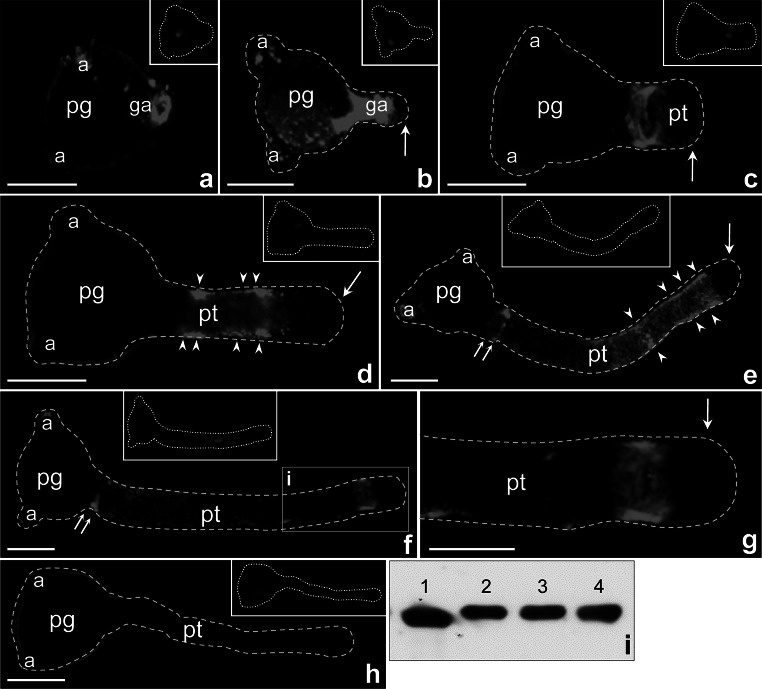
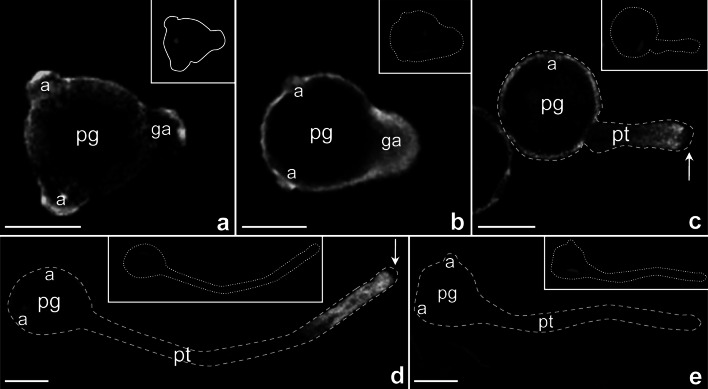
In germinating pollen grains and growing pollen tubes, CRT is translated on ER membrane-bound ribosomes in the regions where its activity is required for stabilization of tip-focused Ca (2+) gradient. Pollen tube growth requires coordination of signaling, exocytosis, and actin cytoskeletal organization. Many of these processes are thought to be controlled by finely tuned regulation of cytoplasmic Ca(2+) in discrete regions of the tube cytoplasm. Most notably, a mechanism must function to maintain a steep gradient of Ca(2+) that exists at the tip of growing pollen tube. Several pieces of evidence point to calreticulin (CRT) as a key Ca(2+)-binding/-buffering protein involved in pollen germination and pollen tube growth. We previously hypothesized that in germinating pollen and growing tubes, CRT is translated on the ribosomes associated with endoplasmic reticulum (ER) in the regions where its activity might be required. In this report, we have addressed this idea by identifying the sites where CRT mRNA, CRT protein, 18S rRNA, and rough ER are localized in Petunia pollen tubes. We observed all four components in the germinal aperture of pollen grains and in subapical regions of elongating tubes. These results seem to support our idea that CRT is translated on ER membrane-bound ribosomes during pollen germination and pollen tube growth. In elongated pollen tubes, we found CRT mainly localized in the subapical zone, where ER and Golgi stacks are abundant. In eukaryotic cells, these organelles serve as mobile intracellular stores of easily releasable Ca(2+), which can be buffered by proteins such as CRT. Therefore, we postulate that subapical-localized CRT is involved in pollen tube growth by maintaining the stable tip-focused Ca(2+) gradient and thus modulating local Ca(2+) concentration within the tube cytoplasm.
在萌发的花粉粒和生长的花粉管中,钙网蛋白(CRT)是在内质网(ER)膜结合核糖体上翻译的,这些区域需要其活性来稳定顶端聚焦的Ca(2+)梯度。花粉管生长需要信号传导、胞吐作用和肌动蛋白细胞骨架组织的协调。许多这些过程被认为是由花粉管细胞质离散区域中细胞质Ca(2+)的精细调节所控制。最值得注意的是,必须有一种机制来维持生长中的花粉管顶端存在的陡峭Ca(2+)梯度。几条证据表明钙网蛋白(CRT)是参与花粉萌发和花粉管生长的关键Ca(2+)结合/缓冲蛋白。我们之前假设,在萌发的花粉和生长的花粉管中,CRT是在可能需要其活性的区域中与内质网(ER)相关的核糖体上翻译的。在本报告中,我们通过确定CRT mRNA、CRT蛋白、18S rRNA和粗面内质网在矮牵牛花粉管中的定位位点来验证这一想法。我们在花粉粒的萌发孔和伸长花粉管的亚顶端区域观察到了所有这四种成分。这些结果似乎支持了我们的观点,即CRT在花粉萌发和花粉管生长过程中是在内质网膜结合核糖体上翻译的。在伸长的花粉管中,我们发现CRT主要定位于亚顶端区域,那里内质网和高尔基体堆叠丰富。在真核细胞中,这些细胞器作为易于释放的Ca(2+)的移动细胞内储存库,其可以被诸如CRT的蛋白质缓冲。因此,我们推测亚顶端定位的CRT通过维持稳定的顶端聚焦Ca(2+)梯度并由此调节花粉管细胞质内的局部Ca(2+)浓度来参与花粉管生长。