Asakawa Sanki, Kishimoto Yu, Takano Takayuki, Okita Kiyuki, Takakuwa Shiho, Sato Taiki, Hiratsuka Masahiro, Takeuchi Osamu, Hirasawa Noriyasu
Laboratory of Pharmacotherapy of Life-Style Related Diseases, Graduate School of Pharmaceutical Sciences, Tohoku University, Sendai, Miyagi, Japan.
Laboratory of Infection and Prevention, Institute for Virus Research, Kyoto University, Shogoin Kawara-cho, Sakyo-ku, Kyoto, Japan.
PLoS One. 2015 Mar 5;10(3):e0119428. doi: 10.1371/journal.pone.0119428. eCollection 2015.
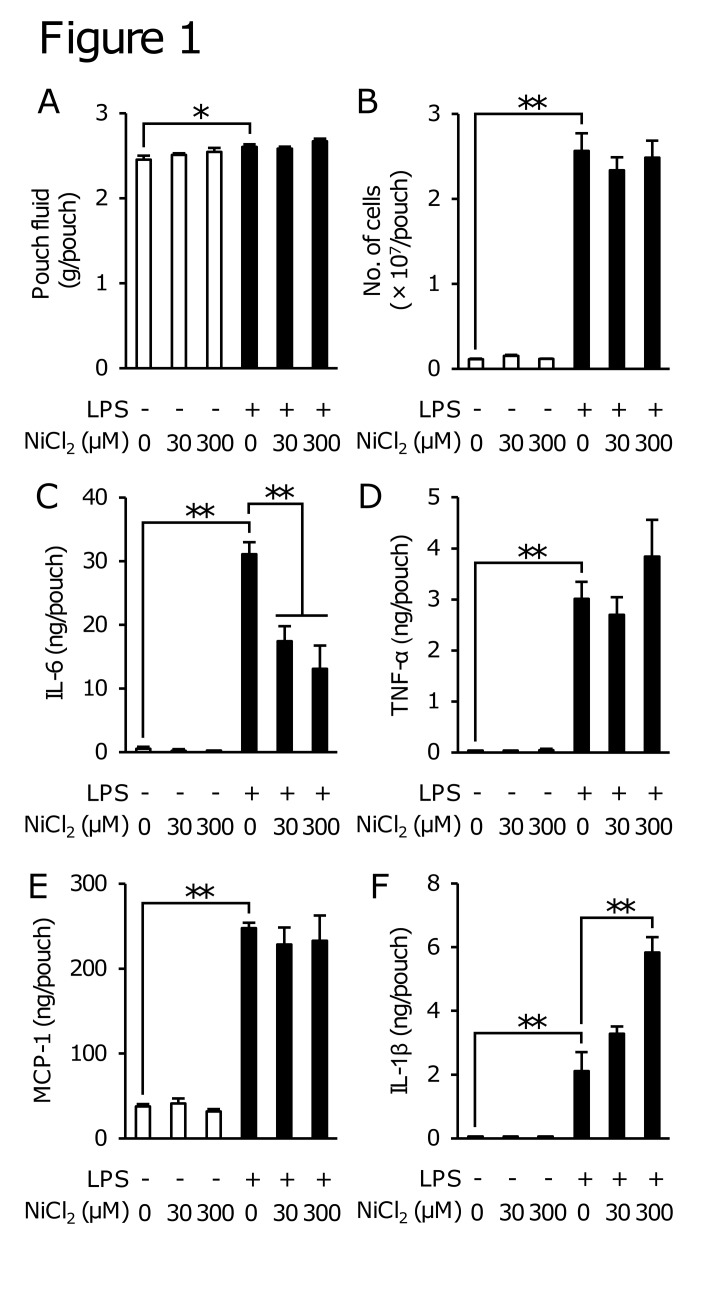
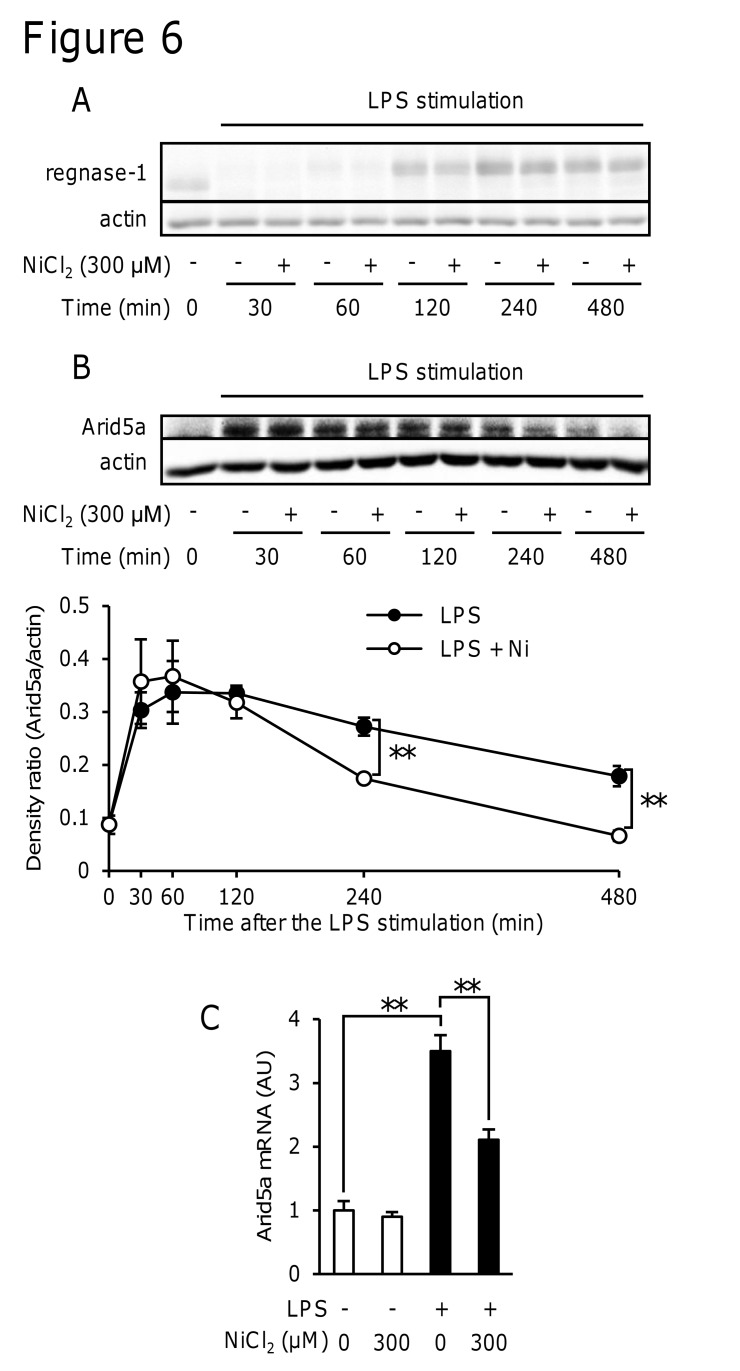
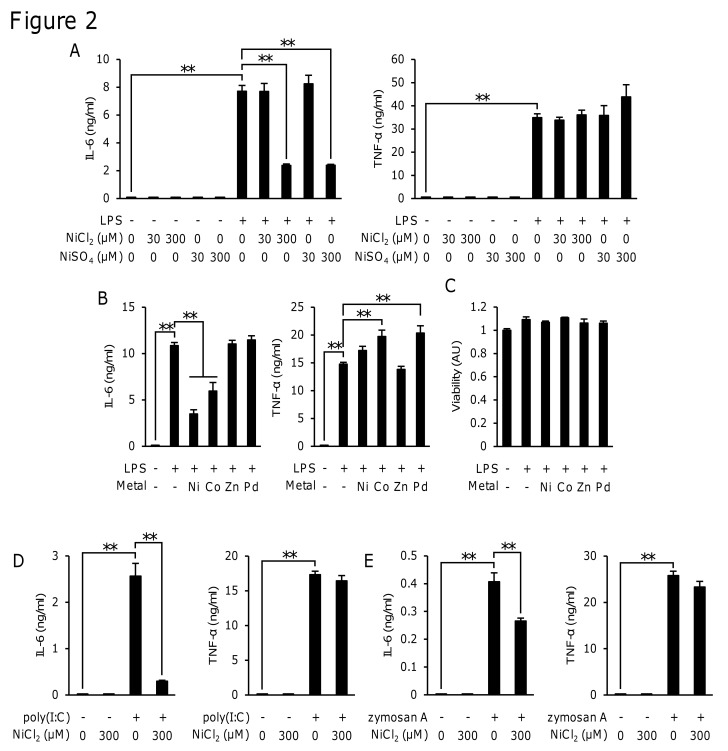
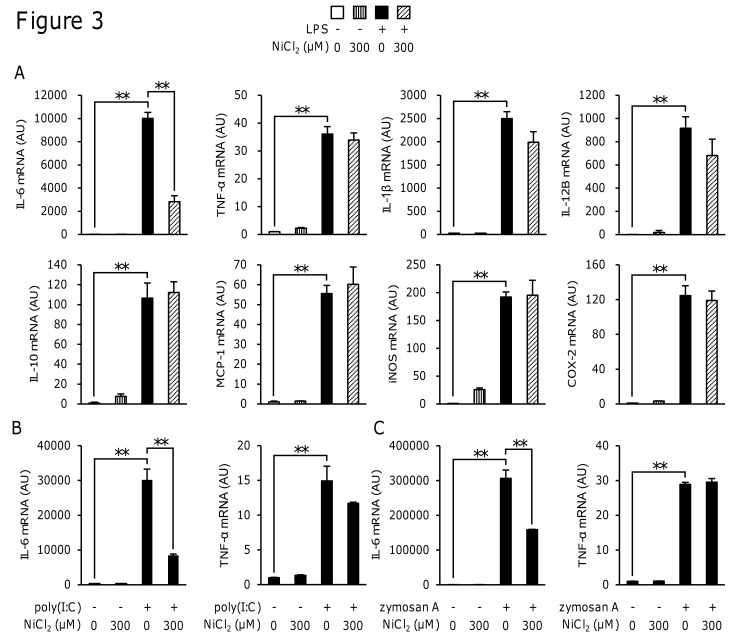
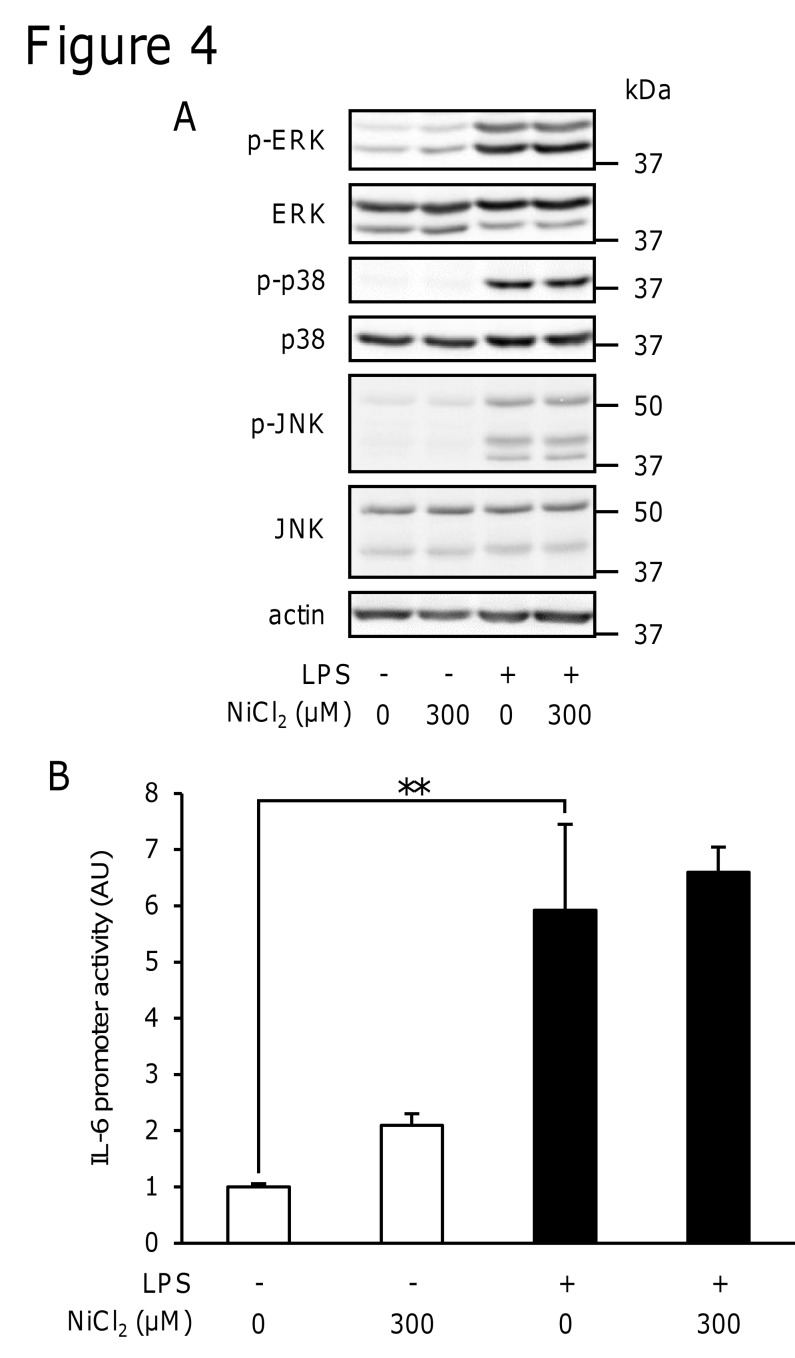
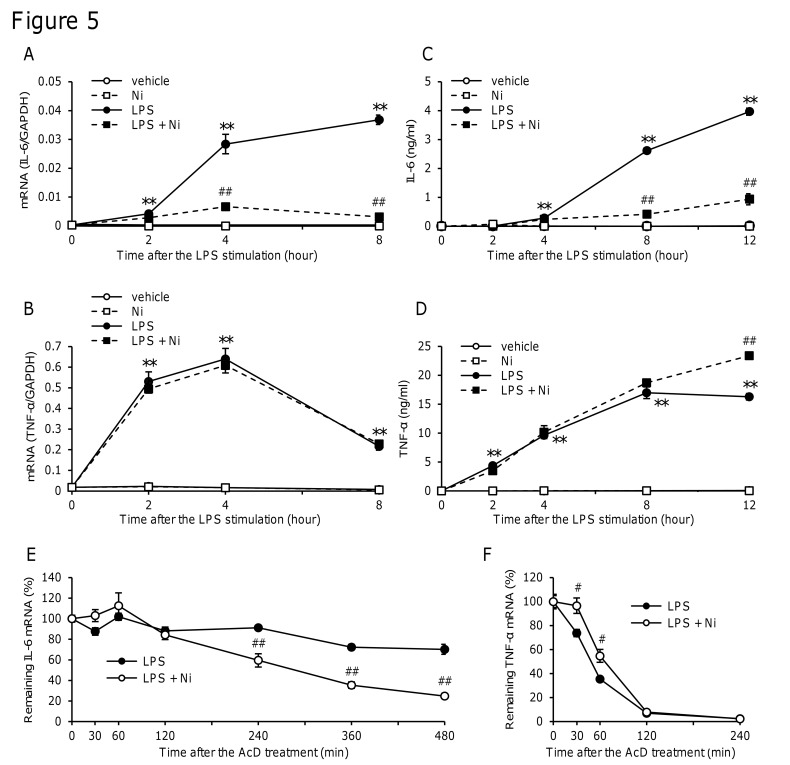
Nickel (Ni) ions easily elute from many alloys and elicit inflammation and allergies. Previous studies have shown that infections due to the implantation of medical devices cause inflammation and enhance the elution of Ni ions (Ni²⁺). However, cross-talk between infection- and Ni²⁺-induced signaling pathways has not yet been elucidated in detail. In the present study, we investigated the effects of Ni2+ on the lipopolysaccharide (LPS)-induced production of cytokines in a LPS-induced air pouch-type inflammation model in BALB/c mice and the murine macrophage cell line RAW264. We demonstrated that Ni²⁺ inhibited the LPS-induced production of interleukin (IL)-6, but not that of tumor necrosis factor (TNF)-α both in vivo and in vitro. This inhibitory effect was also observed with cobalt ion (Co²⁺), but not with chloride ion (Cl⁻), zinc ion (Zn²⁺), or palladium ion (Pd²⁺), and was highly selective to the production of IL-6. Ni²⁺ did not inhibit the activation of ERK1/2, p38 MAPK, or JNK. Although Ni²⁺ decreased IL-6 mRNA levels, it failed to inhibit the LPS-induced activation of the IL-6 promoter. An experiment using actinomycin D, a transcription inhibitor, revealed that Ni²⁺ decreased the stability of IL-6 mRNA. Moreover, Ni²⁺ inhibited the LPS-induced expression of Arid5a, but not regnase-1. These results demonstrated that Ni²⁺ may have selectively inhibited the LPS-induced production of IL-6 by decreasing the Arid5a-dependent stabilization of IL-6 mRNA.
镍(Ni)离子很容易从许多合金中洗脱出来,并引发炎症和过敏反应。先前的研究表明,医疗器械植入引发的感染会导致炎症,并增强镍离子(Ni²⁺)的洗脱。然而,感染诱导信号通路与Ni²⁺诱导信号通路之间的相互作用尚未得到详细阐明。在本研究中,我们在BALB/c小鼠的脂多糖(LPS)诱导气袋型炎症模型和小鼠巨噬细胞系RAW264中,研究了Ni²⁺对LPS诱导的细胞因子产生的影响。我们证明,Ni²⁺在体内和体外均抑制LPS诱导的白细胞介素(IL)-6的产生,但不抑制肿瘤坏死因子(TNF)-α的产生。钴离子(Co²⁺)也观察到这种抑制作用,但氯离子(Cl⁻)、锌离子(Zn²⁺)或钯离子(Pd²⁺)则没有,并且这种抑制作用对IL-6的产生具有高度选择性。Ni²⁺不抑制ERK1/2、p38丝裂原活化蛋白激酶(MAPK)或JNK的激活。尽管Ni²⁺降低了IL-6 mRNA水平,但它未能抑制LPS诱导的IL-6启动子的激活。使用转录抑制剂放线菌素D的实验表明,Ni²⁺降低了IL-6 mRNA的稳定性。此外,Ni²⁺抑制LPS诱导的Arid5a的表达,但不抑制regnase-1的表达。这些结果表明,Ni²⁺可能通过降低Arid5a依赖的IL-6 mRNA稳定性,选择性地抑制LPS诱导的IL-6的产生。