Tandon Manuj, Salamoun Joseph M, Carder Evan J, Farber Elisa, Xu Shuping, Deng Fan, Tang Hua, Wipf Peter, Wang Q Jane
Department of Pharmacology and Chemical Biology, University of Pittsburgh, Pittsburgh, Pennsylvania, 15261, United States of America.
Department of Chemistry, University of Pittsburgh, Pittsburgh, Pennsylvania, 15261, United States of America.
PLoS One. 2015 Mar 6;10(3):e0119346. doi: 10.1371/journal.pone.0119346. eCollection 2015.
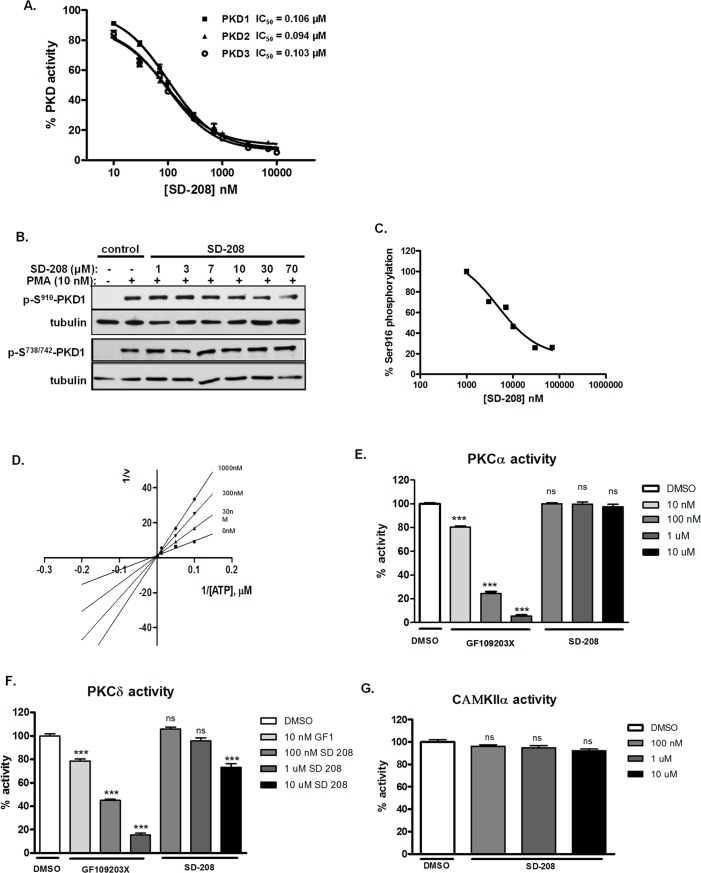
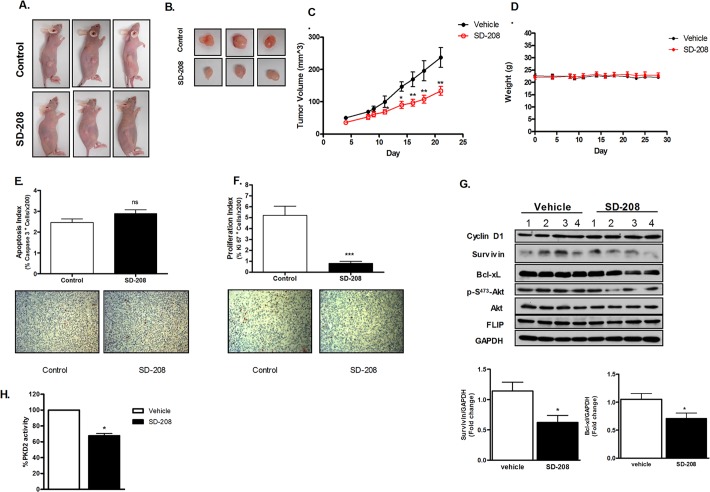
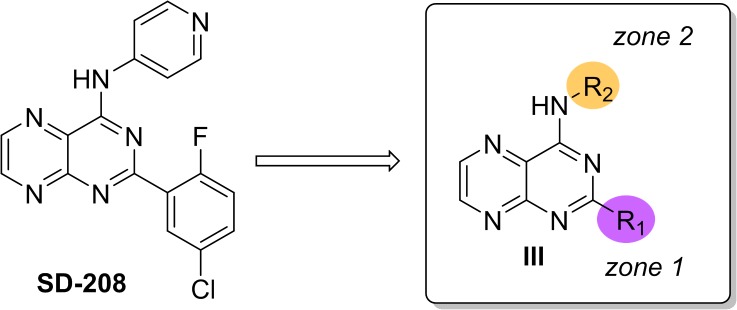
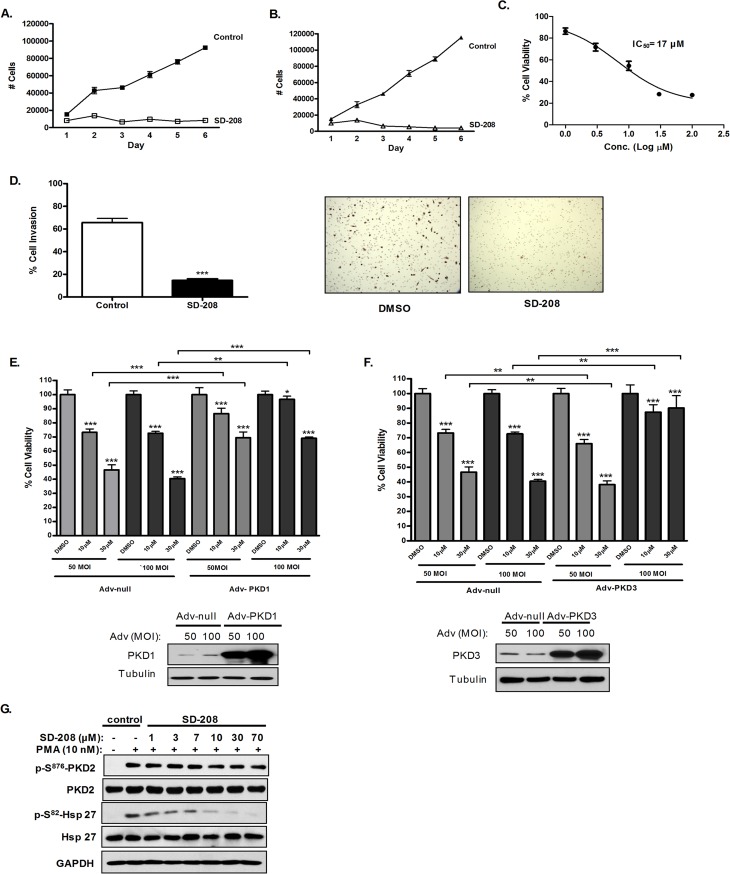
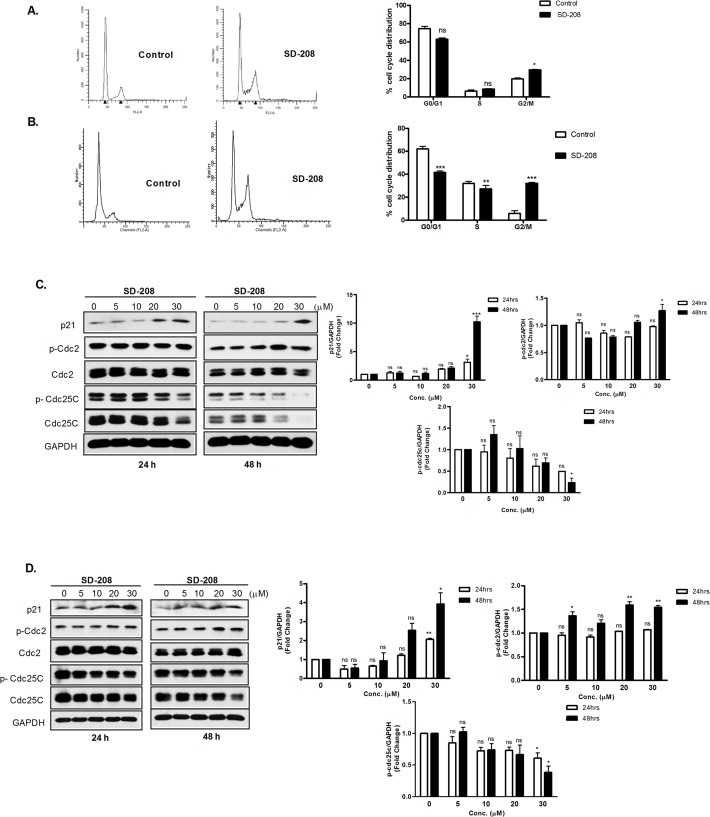
Protein kinase D (PKD) has been implicated in many aspects of tumorigenesis and progression, and is an emerging molecular target for the development of anticancer therapy. Despite recent advancement in the development of potent and selective PKD small molecule inhibitors, the availability of in vivo active PKD inhibitors remains sparse. In this study, we describe the discovery of a novel PKD small molecule inhibitor, SD-208, from a targeted kinase inhibitor library screen, and the synthesis of a series of analogs to probe the structure-activity relationship (SAR) vs. PKD1. SD-208 displayed a narrow SAR profile, was an ATP-competitive pan-PKD inhibitor with low nanomolar potency and was cell active. Targeted inhibition of PKD by SD-208 resulted in potent inhibition of cell proliferation, an effect that could be reversed by overexpressed PKD1 or PKD3. SD-208 also blocked prostate cancer cell survival and invasion, and arrested cells in the G2/M phase of the cell cycle. Mechanistically, SD-208-induced G2/M arrest was accompanied by an increase in levels of p21 in DU145 and PC3 cells as well as elevated phosphorylation of Cdc2 and Cdc25C in DU145 cells. Most importantly, SD-208 given orally for 24 days significantly abrogated the growth of PC3 subcutaneous tumor xenografts in nude mice, which was accompanied by reduced proliferation and increased apoptosis and decreased expression of PKD biomarkers including survivin and Bcl-xL. Our study has identified SD-208 as a novel efficacious PKD small molecule inhibitor, demonstrating the therapeutic potential of targeted inhibition of PKD for prostate cancer treatment.
蛋白激酶D(PKD)与肿瘤发生和进展的多个方面相关,是抗癌治疗开发中一个新兴的分子靶点。尽管在高效和选择性PKD小分子抑制剂的开发方面取得了最新进展,但体内活性PKD抑制剂的可用性仍然稀少。在本研究中,我们描述了从靶向激酶抑制剂文库筛选中发现一种新型PKD小分子抑制剂SD - 208,以及合成一系列类似物以探究其与PKD1的构效关系(SAR)。SD - 208显示出较窄的SAR谱,是一种具有低纳摩尔效力的ATP竞争性泛PKD抑制剂,且具有细胞活性。SD - 208对PKD的靶向抑制导致细胞增殖受到有效抑制,这种作用可通过过表达的PKD1或PKD3逆转。SD - 208还阻断前列腺癌细胞的存活和侵袭,并使细胞停滞在细胞周期的G2/M期。从机制上讲,SD - 208诱导的G2/M期停滞伴随着DU145和PC3细胞中p21水平的升高以及DU145细胞中Cdc2和Cdc25C磷酸化的增加。最重要的是,口服SD - 208 24天可显著抑制裸鼠体内PC3皮下肿瘤异种移植瘤的生长,这伴随着增殖减少、凋亡增加以及包括survivin和Bcl - xL在内的PKD生物标志物表达降低。我们的研究已将SD - 208鉴定为一种新型有效的PKD小分子抑制剂,证明了靶向抑制PKD在前列腺癌治疗中的治疗潜力。