Zhou Jingmin, Jiang Kun, Ding Xuefeng, Fu Mingqiang, Wang Shijun, Zhu Lingti, He Tao, Wang Jingfeng, Sun Aijun, Hu Kai, Chen Li, Zou Yunzeng, Ge Junbo
Department of Cardiology, Shanghai Institute of Cardiovascular Diseases, Zhongshan Hospital, Fudan University, Shanghai, China.
J Cell Mol Med. 2015 May;19(5):1114-21. doi: 10.1111/jcmm.12512. Epub 2015 Mar 6.
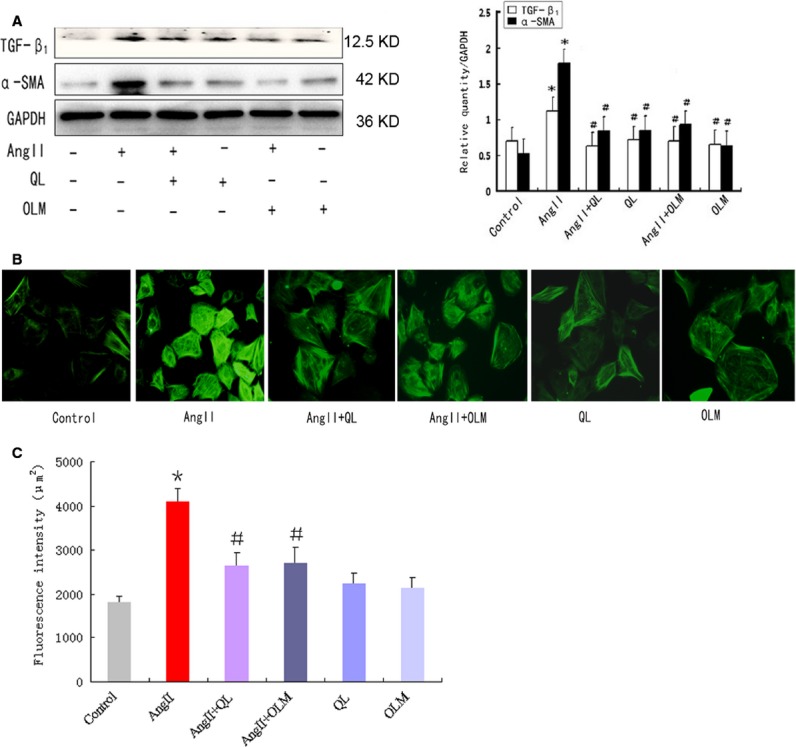
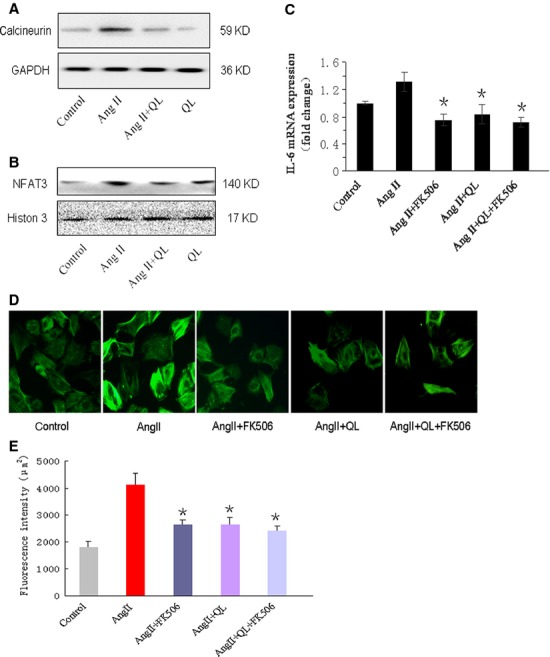
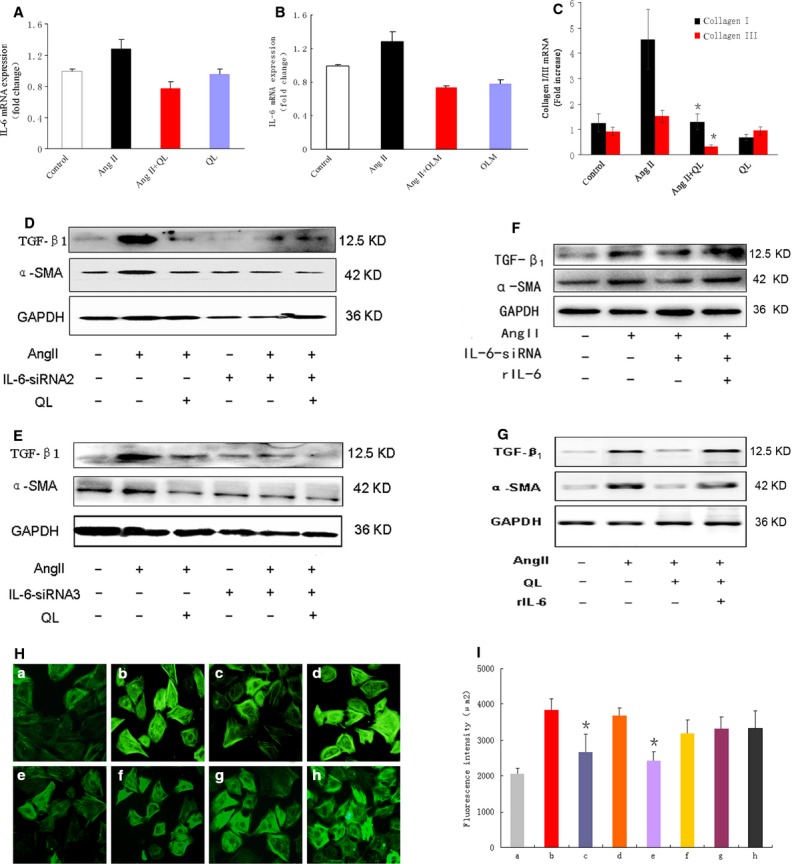
Qiliqiangxin (QL), a traditional Chinese medicine, had long been used to treat chronic heart failure. Recent studies revealed that differentiation of cardiac fibroblasts (CFs) into myofibroblasts played an important role in cardiac remodelling and development of heart failure, however, little was known about the underlying mechanism and whether QL treatment being involved. This study aimed to investigate the effects of QL on angiotensin II (AngII)-induced CFs transdifferentiation. Study was performed on in vitro cultured CFs from Sprague-Dawley rats. CFs differentiation was induced by AngII, which was attenuated by QL through reducing transforming growth factor-β1 (TGF-β1 ) and α-smooth muscle actin (α-SMA). Our data showed that AngII-induced IL-6 mRNA as well as typeI and typeIII collagens were reduced by QL. IL-6 deficiency could suppress TGF-β1 and α-SMA, and both IL-6 siRNA and QL-mediated such effect was reversed by foresed expression of recombined IL-6. Increase in actin stress fibres reflected the process of CFs differentiation, we found stress fibres were enhanced after AngII stimulation, which was attenuated by pre-treating CFs with QL or IL-6 siRNA, and re-enhanced after rIL-6 treatment. Importantly, we showed that calcineurin-dependent NFAT3 nuclear translocation was essential to AngII-mediated IL-6 transcription, QL mimicked the effect of FK506, the calcineurin inhibitor, on suppression of IL-6 expression and stress fibres formation. Collectively, our data demonstrated the negative regulation of CFs differentiation by QL through an IL-6 transcriptional mechanism that depends on inhibition of calcineurin/NFAT3 signalling.
芪苈强心(QL)是一种传统中药,长期以来一直用于治疗慢性心力衰竭。最近的研究表明,心脏成纤维细胞(CFs)向肌成纤维细胞的分化在心脏重塑和心力衰竭的发展中起重要作用,然而,其潜在机制以及QL治疗是否参与其中尚不清楚。本研究旨在探讨QL对血管紧张素II(AngII)诱导的CFs转分化的影响。研究采用体外培养的Sprague-Dawley大鼠的CFs进行。AngII诱导CFs分化,而QL通过降低转化生长因子-β1(TGF-β1)和α-平滑肌肌动蛋白(α-SMA)来减弱这种分化。我们的数据表明,QL可降低AngII诱导的IL-6 mRNA以及I型和III型胶原蛋白的表达。IL-6缺乏可抑制TGF-β1和α-SMA,并且IL-6小干扰RNA(siRNA)和QL介导的这种作用可通过重组IL-6的强制表达而逆转。肌动蛋白应激纤维的增加反映了CFs分化过程,我们发现AngII刺激后应激纤维增强,而用QL或IL-6 siRNA预处理CFs可减弱这种增强,rIL-6处理后则再次增强。重要的是,我们表明钙调神经磷酸酶依赖性NFAT3核转位对于AngII介导的IL-6转录至关重要,QL模拟了钙调神经磷酸酶抑制剂FK506对IL-6表达和应激纤维形成的抑制作用。总的来说,我们的数据表明QL通过依赖于抑制钙调神经磷酸酶/NFAT3信号传导的IL-6转录机制对CFs分化具有负调节作用。