Department of Surgery, Department of Gastroenterological Surgery, Graduate School of Medicine, Osaka University, Osaka, Japan.
Department of Chemistry, Biomedical Research Centre for Signal Transduction Networks, Inha University, Incheon, Korea.
Mol Ther Nucleic Acids. 2015 Mar 10;4(3):e231. doi: 10.1038/mtna.2015.5.
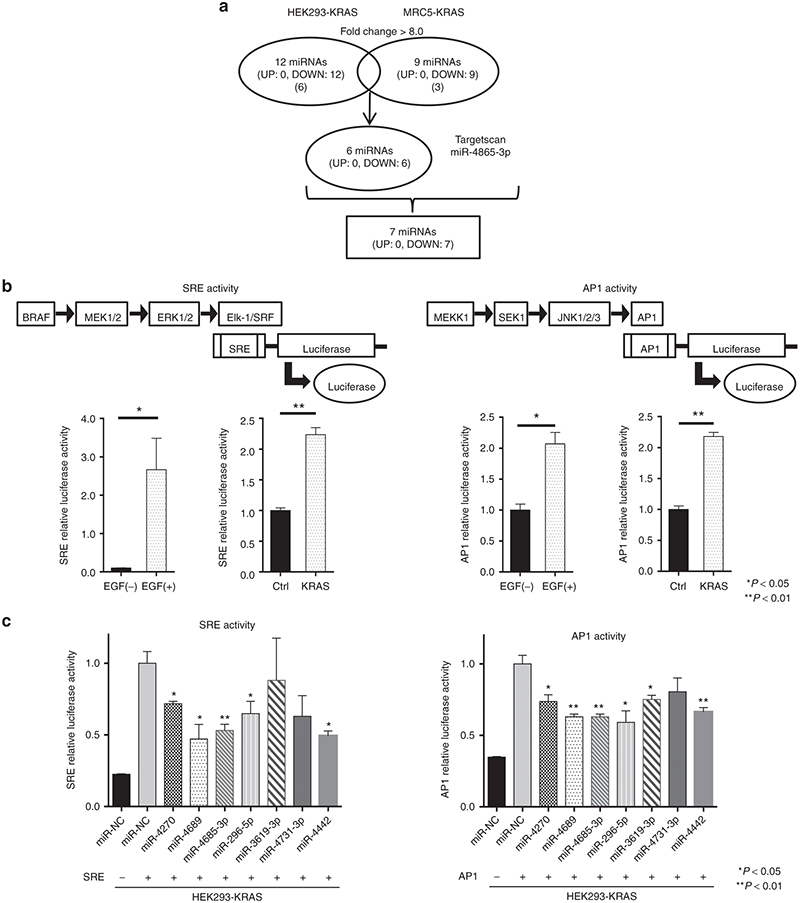
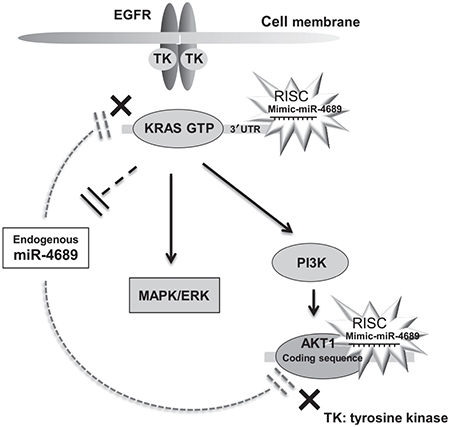
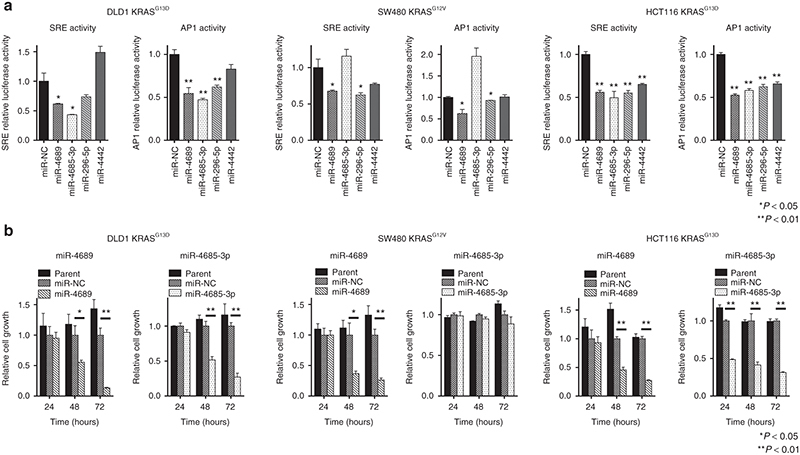
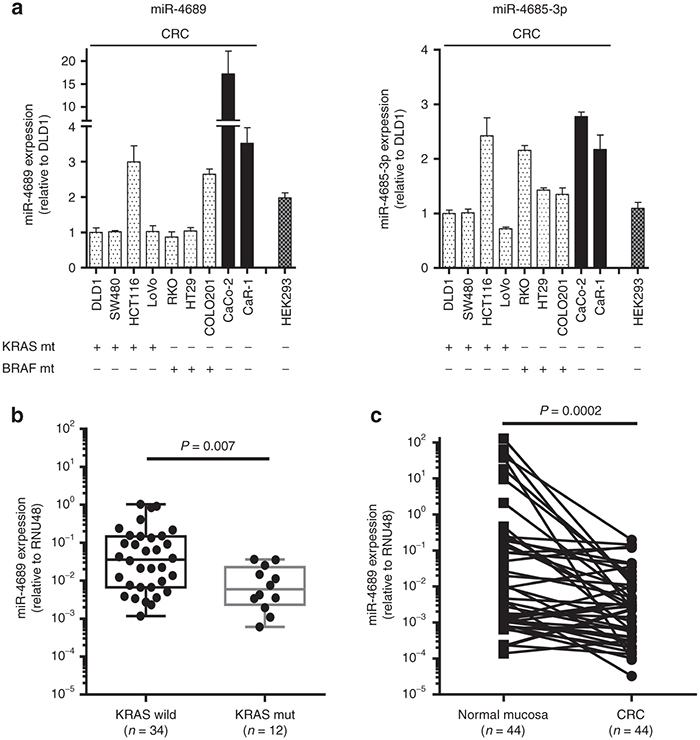
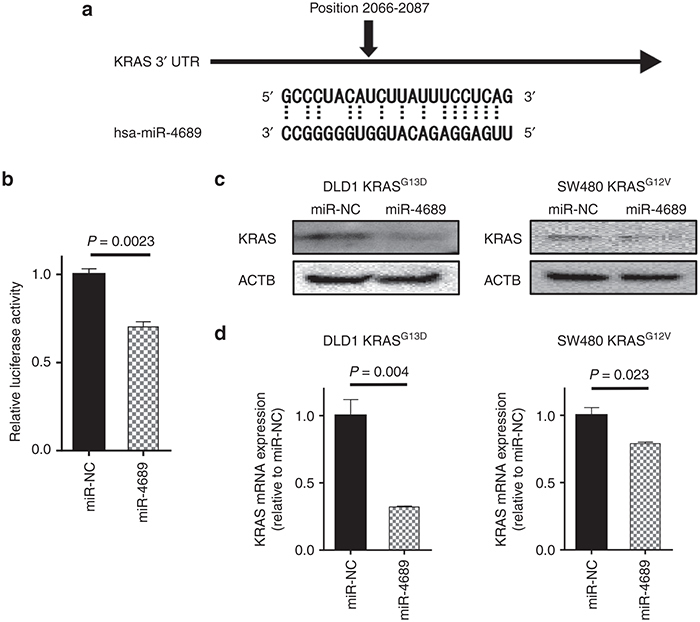
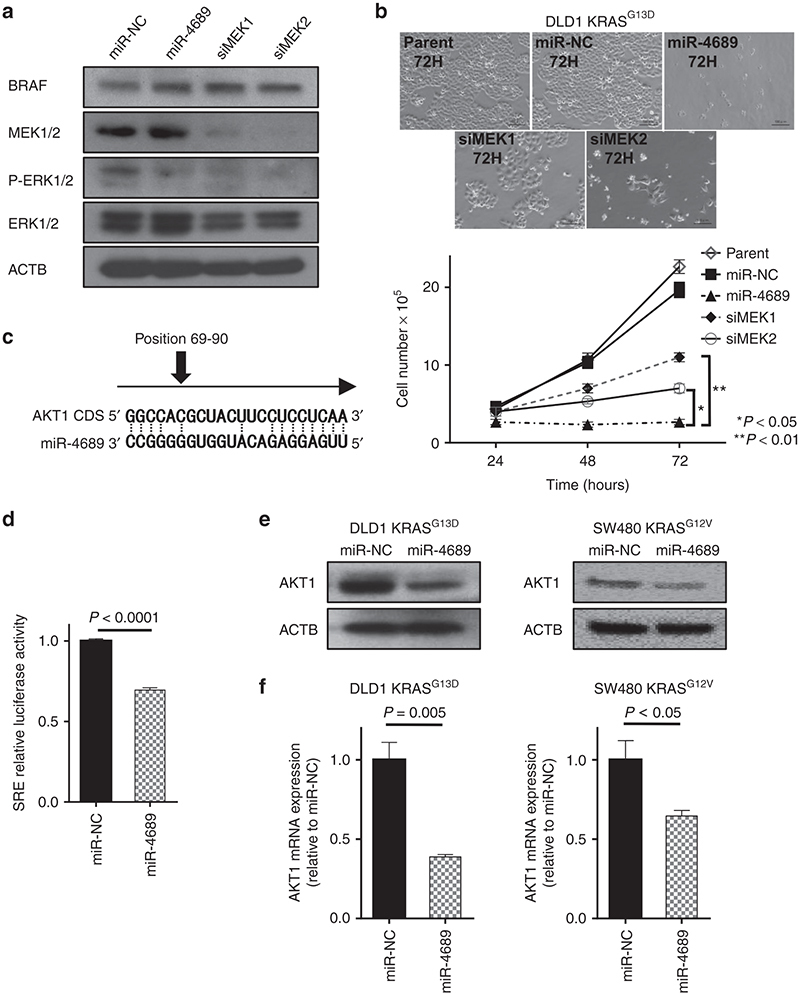
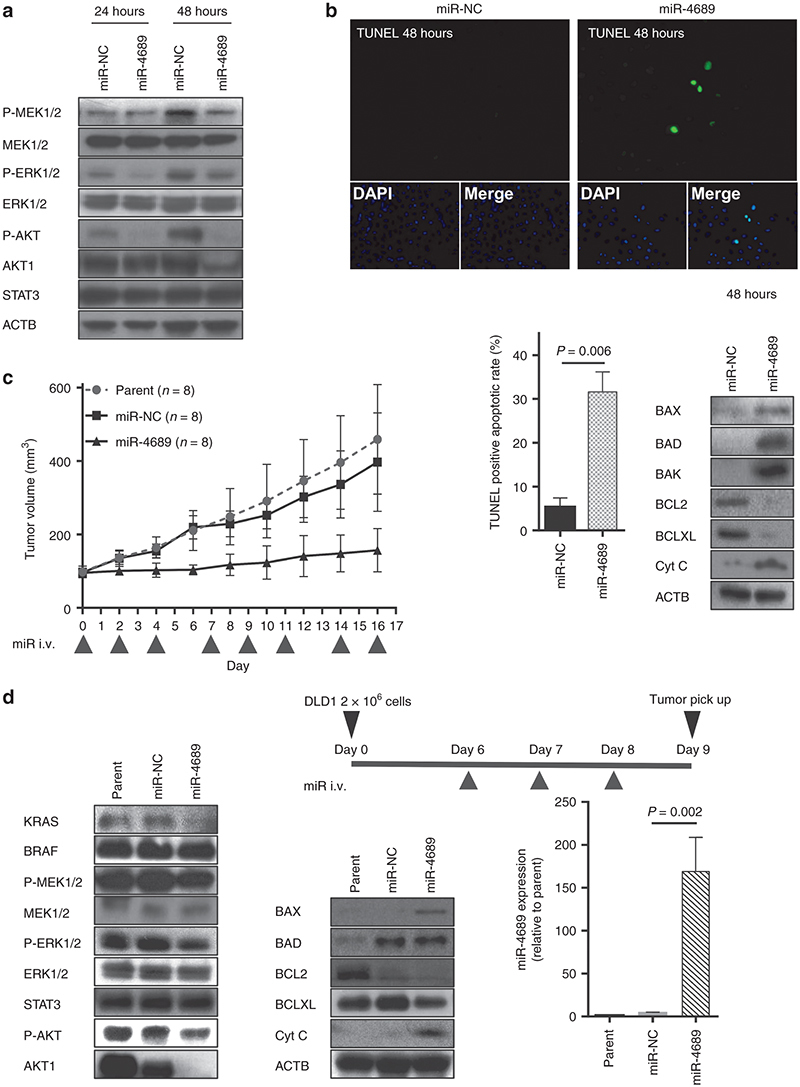
KRAS mutations are a major cause of drug resistance to molecular-targeted therapies. Aberrant epidermal growth factor receptor (EGFR) signaling may cause dysregulation of microRNA (miRNA) and gene regulatory networks, which leads to cancer initiation and progression. To address the functional relevance of miRNAs in mutant KRAS cancers, we transfected exogenous KRAS(G12V) into human embryonic kidney 293 and MRC5 cells with wild-type KRAS and BRAF genes, and we comprehensively profiled the dysregulated miRNAs. The result showed that mature miRNA oligonucleotide (miR)-4689, one of the significantly down-regulated miRNAs in KRAS(G12V) overexpressed cells, was found to exhibit a potent growth-inhibitory and proapoptotic effect both in vitro and in vivo. miR-4689 expression was significantly down-regulated in cancer tissues compared to normal mucosa, and it was particularly decreased in mutant KRAS CRC tissues. miR-4689 directly targets v-ki-ras2 kirsten rat sarcoma viral oncogene homolog (KRAS) and v-akt murine thymoma viral oncogene homolog 1(AKT1), key components of two major branches in EGFR pathway, suggesting KRAS overdrives this signaling pathway through inhibition of miR-4689. Overall, this study provided additional evidence that mutant KRAS functions as a broad regulator of the EGFR signaling cascade by inhibiting miR-4689, which negatively regulates both RAS/mitogen-activated protein kinase (MAPK) and phosphoinositide 3-kinase (PI3K)/AKT pathways. These activities indicated that miR-4689 may be a promising therapeutic agent in mutant KRAS CRC.
KRAS 突变是导致分子靶向治疗药物耐药的主要原因。异常的表皮生长因子受体 (EGFR) 信号可能导致 microRNA (miRNA) 和基因调控网络失调,从而导致癌症的发生和发展。为了研究 miRNA 在突变型 KRAS 癌症中的功能相关性,我们将外源性 KRAS(G12V) 转染到具有野生型 KRAS 和 BRAF 基因的人胚肾 293 和 MRC5 细胞中,我们全面分析了失调的 miRNA。结果表明,在 KRAS(G12V)过表达细胞中显著下调的成熟 miRNA 寡核苷酸 (miR)-4689 是一种有效的体外和体内生长抑制和促凋亡作用。miR-4689 在癌症组织中的表达明显低于正常黏膜,在突变型 KRAS CRC 组织中表达尤其降低。miR-4689 直接靶向 v-ki-ras2 kirsten 大鼠肉瘤病毒致癌基因同源物 (KRAS) 和 v-akt 鼠胸腺瘤病毒致癌基因同源物 1(AKT1),这是 EGFR 通路中两个主要分支的关键组成部分,表明 KRAS 通过抑制 miR-4689 过度驱动该信号通路。总的来说,这项研究提供了额外的证据表明,突变型 KRAS 通过抑制 miR-4689 作为 EGFR 信号级联的广泛调节剂发挥作用,miR-4689 负调控 RAS/丝裂原活化蛋白激酶 (MAPK) 和磷酸肌醇 3-激酶 (PI3K)/AKT 途径。这些活性表明 miR-4689 可能是突变型 KRAS CRC 的一种有前途的治疗剂。